
About Vladimír Janoušek
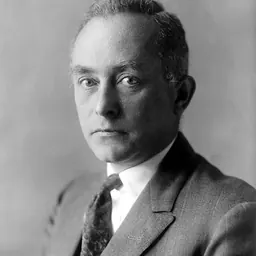
Lived 1922 – 1986 (aged 64). Vladimír Janoušek was a Czech sculptor and painter.
Vladimír Janoušek (30 January 1922 – 8 September 1986) was a Czech sculptor and painter. He was founding member of the UB 12 group and husband of the sculptor Věra Janoušková. In the 1960s he was a sought-after collaborator of architects. Janoušek almost never abandoned figuration, but the moving parts of his sculptures represent a radicalisation of form that breaks away from the traditional concept of sculpture. The originality and conceptual approach gives his sculpture a European significance. He is one of the few Czech sculptors listed in the New Dictionary of Modern Sculpture, published in Paris in 1970. After Warsaw Pact invasion of Czechoslovakia and so called normalization he lost the possibility to exhibit and became one of the most persecuted Czech artists.
Life Vladimír Janoušek was born in Ždírnice, in the family of Vojtěch Janoušek (1895-1984), a legionary and officer of the Czechoslovak army, who was in charge of building Czechoslovak border fortifications. His younger brother Jiří also served in the army. Vladimír Janoušek's cousin is the art historian Jaromír Zemina. Janoušek's uncle Otakar Zemina (1899-1990) was a painter and a teacher at the School of Arts and Crafts in Brno. His grandfather was Karel Otakar Svoboda, a head teacher in Kalná Voda, violinist and amateur painter, friend of František Kaván. Thanks to his youth spent in the countryside, Vladimír Janoušek perceived the functionality of folk architecture, the local pottery and stonemasonry tradition, as well as the sculptures in nearby Kuks and Hořice. In Úpice, he attended lectures on theatre organized by the Central Union of Theatre Amateurs. After 1948 Czechoslovak coup d'état he refused to join the Communist Party of Czechoslovakia and for one year became a member of the Czechoslovak Social Democracy. He finished his studies in 1950 with his graduation thesis - a monumental sculpture of Master Jan Hus, of which only a photograph has survived. From 1951 he was a member of the Umělecká beseda and the Czechoslovak Union of Artists (until 1970).
In 1948, during his studies, he married the sculptor Věra Havlová and spent two semesters with her at the Academy of Fine Arts in Sofia. More than teaching, he enjoyed their joint trips to the Bulgarian countryside, from where he brought back a number of drawings with folk themes. and younger artists. Among his friends were Čestmír Kafka, Hugo Demartini, Jitka Svobodová, Stanislav Kolíbal or Rudolf Uher. In 1964, they moved to their own studio built according to Vladimír Janoušek's design and Josef Hrubý's project on a vacant plot in Prague-Košíře.
Janoušek became an unnamed spokesman for the UB 12 group in the 1960s, and he communicated his views on sculpture in interviews for magazines and in his own articles. He was critical of the "Brussels style" of Expo 58, which he regarded as superficial decorativism and was untouched by informel and the principle of the "inner model". He set himself against the sculptors exhibiting in 1964 at the Nová síň Gallery (Koblasa, Sekal, Veselý, Nepraš, etc. - Exhibition D), which resulted in mutual hostility lasting several years. In the late 1960s, he was the first sculptor to exhibit solo at the Nová síň Gallery. Jiří Kotalík invited him to become the head of the sculpture studio at the Prague Academy, but after the Warsaw Pact invasion of Czechoslovakia in August 1968 and the uproar over his sculpture Threat of War at Expo '70, this was no longer an option.
In 1954, Vladimír Janoušek participated in the Venice Biennale. He was invited to the Expo 58 in Brussels, Expo 67 in Montreal and Expo 70 in Osaka. There he had a large sculptural installation The Threat of War, which was a response to the Warsaw Pact invasion of Czechoslovakia. He was then subjected to political persecution and was not allowed to exhibit officially until the late 1980s. Exceptions were the 1982 exhibitions in Orlová and in the unofficial exhibition hall of the Institute of Macromolecular Chemistry, Czech Academy of Sciences. Other prepared exhibitions at the Sculpture Gallery in Hořice (1980, 1987), the Stavoprojekt Gallery in Brno (1986), for which a catalogue was published, and the Podkrkonošské Museum in Nová Paka (1987) were banned. For principled reasons, he refused to participate in collective exhibitions organised by the Communist Party of Czechoslovakia on various anniversaries. His sculptures are a tragic testimony of a lonely man who projected into them an obsessive feeling of a never-ending dialogue with a self-proclaimed investigator. He is buried together with Věra Janoušková in Byšičky. The tombstone using Janoušek's statue The Last Fall was designed by Czech architect Alena Šrámková.
All works of the couple are now managed by the Věra and Vladimír Janoušek Foundation, founded by Věra Janoušková.
Work Professor Josef Wagner influenced early sculptures of Vladimír Janoušek, based on harmonious shapes and a lyrical subtext (Sculpture for Magician's Lantern, 1958–1959). In his view the modernity of art was in distinction from visible reality, without denying its validity. He rejected the vulgar descriptiveness of Socialist Realism and sought as a starting point the generalization of human types and the abstracting order of compositions originating in the Renaissance. but the crushing pressure of the Communist regime, which was impossible to resist, created a state of permanent overload and a sense of abyss and fall with no way back. In the construction of his sculptures, he combines expressiveness of conception with the momentum of form.
1955–1960 Since his student years, Janoušek was attracted to spatial realisations, which he understood as an aesthetic element that organizes and characterizes space with its form and implications. Janoušek created also reliefs and numerous studies of sculptures for integration into architecture. Thanks to his cooperation with architects, he was commissioned to create four reliefs for the new milk drying plant in Zábřeh (1955). According to Janoušek's design, V. Bartůněk made a large sandstone relief for the House of Fashion on Wenceslas Square (1956). The relief deals primarily with the internal links of the figures and their relationship to the architecture, and is characterised by smooth transitions of convex volumes and harmony of form. His sculpture of a Seated girl with a crystal (1959) for the newly opened Magician's Lantern This work is the starting point in its conception of space and tectonics as well as constructive detail for the next period of Janoušek's work. What follows are figures enclosed in a rectangular construction (a space within a space) that define the sculpture as an object in an original way.
Janoušek's sculptures from the late 1950s are characterised by an emphasis on modelling volumes and silhouettes and a generalisation of form. He was one of the leading representatives of the revival process, who rejected the official and typified concept of "socialist man" and even in his reliefs with the theme of the work referred rather to the civilism of Group 42, active in 1942–1948. In 1958-1960 he created a monumental statue of Karel Hynek Mácha for Doksy, based on a concrete form, but conceived as an unconventional metaphor of a solitary man absorbed in himself, to which he subordinated formal elements such as drapery, gesture or the positioning of the torso and head.
1960–1970 Although Janoušek's teachers were Karel Dvořák and Josef Wagner, and of the Czech sculptors he was most influenced by Otto Gutfreund, he turned for inspiration to the forerunners of modern sculpture such as Henry Moore, Alberto Giacometti, Lynn Chadwick, Anthony Caro, Germaine Richier, César or Yves Klein, and later also metal sculptors (Alexander Calder, David Smith, Richard Stankiewicz). His models were initially mainly sculptures emphasizing mass and volume rather than the outline of the sculpture. He aspired to a super-personal ideal, according to which the sculpture must stand on its own and the creator recedes into the background.
Initially, his conception of sculpture was close to the working method of Henry Moore, who, according to Janoušek, created his sculptures with the intellectual component suppressed, as if he was guided mainly by his sense of touch and modelled blindly. Moore was also close to him in his exemption from detail, dignity of content, emotional closure and organic form that blended naturally with nature and enlivened rectangular modern architecture. In the 1960s, the sculptor gradually abandoned traditional materials and used asbestos-cement or reinforced concrete, fiberglass and plaster with acronex. His new theme became the blending of the growth of organic form with crystals (Crystal, 1961, An Hour of Botany, 1961–1962). In 1962, a Czech translation of Ernst Fischer's On the Necessity of Art (Orbis, Prague) was published, which includes a chapter devoted to crystals. Janoušek was at that time striving to organise and separate the essential from the amorphousness of matter, and in his sculpture Pillar - Crystals (1963) he outlined his idea of the emergence of a crystal from matter. By his sculpture The Sun (1964-1965) he became the main representative of brutalism in sculpture.
As early as 1957, during his collaboration with Jiří Novák, he learned to weld metal From the mid-1960s onwards, to depict the relationship between figures and space, he created metal sculptures in which he contrasted the indeterminate outlines of figures with a solid geometric structure. It was at this time that he discovered the work of Alberto Giacometti, which in his own work marked a turn towards personal experience, inwardness and sensual unsteadiness. His artistic style became more open and loosely related to surrealism (Homage to Chirico, 1963) or existentialism. The connection between the human figure and the puppet, which he had been considering for a long time, was made clear to him by Giorgio de Chirico. Janoušek installed some of his sculptures in a metal construction that enclosed the outer space. The linear order of the vire cage symbolized law, while the organic shape inside was a manifestation of randomness. At the same time, the construction grew through the figure and transferred its inner state to the outside (One Day, or The Tenant, 1965).
Janoušek's welded sculptures, in which he highlighted their existential dimension and emphasised the role of individual freedom as a prerequisite for creation, represent a new level of expression. Using the technique of welding, he arrived at magical figures, similar to the figures in the paintings of František Janoušek or Václav Tikal, consisting of ephemeral imagery (Lyrical Creature, 1966). Sculptures such as Unexpected Guest (1966) represented a fundamental departure from his original work, which was characterised by a distinct structure and order. In contrast to the static balance of his previous work, an element of movement gradually began to appear in his works, to the point of its incorporation into the sculpture. This was not only a formal question, but a subjective experience of time in relation to its objective scope.
From the second half of the 1960s, he created interactive sculptures with mobile elements in the form of pendulums, or small kinetic sculptures made of moving elements (Table Pendulum, 1966, Blue Pendulum, 1967). The pendulums brought Janoušek's work closer to contemporary tendencies of kinetic art, but their binding to a static base also limited him. Behind the modernist appearance of his sculptures, unacceptable to many, there were always primary artistic laws that he trusted. inspired him to create the sculpture The Eternal Pedestrian - Isaac Laquedem (1966), which uses the motion of a pendulum to measure not only his time, but also ours. A lighter, even caricaturing sculpture on the same theme is Modern Man Measures His Time (1966). The theme of time in the form of a pendulum is also represented by other sculptures from the same period (Last Hour, Yesterday, Today, Tomorrow, Time, Figure with Time Motif, all from 1966). The sculpture Untitled (Pendulum) (1967-1969), depicting a seated figure without a chair with its head turned downwards, which cannot be returned to its natural position, expresses Janoušek's inner feeling of the perversity of values.
Of existential significance, related to the sudden illness and premature death of his mother, is the sculpture Pendulum I (1965), consisting of two black squares, the front of which is set in motion by a pendulum in the shape of a scythe. Pendulums that appeared in Czech poetic poetry (V. Nezval: Prisoner-Madrigal, František Halas: Flood-Hunger) or in surrealist paintings by J. Štyrský, F. Janoušek, B. Lacina or F. Zykmund, became a metaphor of human finitude. Janoušek's pendulums were not set in motion by any mechanism and counted on the participation of the viewer. In addition to Janoušek, Radoslav Kratina's variables or some Karel Nepraš´s sculptures equipped with bearings and a crank (Feel free to rotate) had a similar purpose.
A solitary work is the sculpture A Piece of Earth (1969), covered by wrinkled relief of an imaginary landscape. Its static is disturbed by thin iron rods of hidden pendulums inside, that animate the dead matter with their movement like the pulse of the earth. It is not a purely abstract work, but a personal reflection of the artist's experience of the end of the war. The sculpture is also the starting point for the next series of flat reliefs composed of elements mounted on a vertical panel, of which the opening Iron Landscape (1969) represents a fundamental shift in the composition of Janoušek's works.
Janoušek's multi-figure metal sculpture The Threat of War (3 x 14 m) for the Expo 70 in Osaka, which depicted a crowd of apocalyptic militant figures marching with guns pointed at the Czechoslovak pavilion from the neighbouring Soviet pavilion, was fatal for him. A reminder of the inexorability of time was embodied by the movement of his four-metre pendulum, which culminated in a section of the Czech exposition called Time of Anxiety. The Czechoslovac government's Commission for Exhibition Industry and the relevant department of the Foreign Ministry described the management of the exhibition as a "centre of anti-socialist elements", did not allow other artists to travel to the Expo '70, and the sculptures and pavilion remained in Japan when the exhibition was closed. At the same time, Vladimír Janoušek created another monumental sculpture Metalworkers and Metallurgists (10 figures, 3.5 x 8.5 x 1.8 m) for the cultural house in Kladno, but due to the political situation of the emerging "normalization" (according to official document Lessons from the Crisis Development, issued by the Communist party) it was no longer allowed to be installed in its original place and remained in the garden of his studio in Košíře. He postponed a number of designs for public competitions because his name alone became a reason for elimination by the jury. He dealt with projects for the placement of sculptures in the landscape as well as an architectural and artistic reclamation of the North Bohemian landscape, devastated by mining (a relief in the Municipal Theatre in Most).
His 1969 relief Iron Landscape represents a departure from the welded sculptures of the 1960s and an oscillation between sculpture and painting (painting-cum-relief). Although the surface is loosely placed in space, there is an obvious painterly interest, which is evident in the emphasis on the surface and outline of the individual parts. The variability of the arrangement and layering of the surface became the new formal elements of his works. Janoušek's pictorial reliefs after 1970 have backgrounds treated with paint, drawing, engraving and sand structures and movable parts made of steel and aluminium sheet, plywood, fiberboard or plexiglas. They are connected by screws, swinging hinges and fastened with rods and strings (Construction, 1976, Construction in the Landscape, 1978). The transition from pendulums to layered reliefs was foreshadowed by paintings of landscapes with abysses and pre-set constructions with pendulums (Pendulum with Pendulum, 1969, Pendulum on the Horizon, 1970, Pendulum in a Frame, 1972) and reliefs depicting hands with movable parts attached by hinges (Painter, 1975). One of the first variable works made of layered metal sheets is The Guard (1977), where the only moving element is a slat that he holds in his hand. Janoušek's works from this period are difficult to classify into traditional categories - the sculptures are constructed essentially in a drawing manner, but their common element is movement, which has a meaning-making function. After his forced withdrawal into privacy, one of the themes became closure (Window/Mirror, 1978). His reliefs were also loosely related to the civilism of Group 42 and especially to František Gross, in whose paintings urban realities intertwine with the human figure as grotesque tragic mechanisms. He thus created a completely unique arrangement in hanging panels with variable figural works that cannot be described as paintings or as reliefs in their original sense. The moving parts offer a seemingly infinite number of variations without altering the sculpture's meaning (The Fall - Icarus, 1986). In his relief works, people have turned into mechanisms, into excluded and miserable individuals who are held together only by external supports. Janoušek uses them to incorporate his personal feelings into literary, mythological, biblical and philosophical stories, inviting the viewer to intervene in them and thus partly take their plight upon himself. A breakthrough work is The Juggler from 1977 - one of the first variables that allows the manipulation of the whole figure. Although the moving parts can be set in extreme and improbable poses, the basic shape is fixed - the fall cannot be changed into a take-off, and the fatalistic layout cannot be transcended. The figure is free from secondary details and is defined by the abstracted contour edge of the metal plate. In this and other works, there is a certain degree of self-identification of the author with the fate of the depicted figures. The assumed active participation of the viewer in the manipulation of the sculptures may turn harmony into disharmony, gracefulness into unsightliness, seriousness into grotesqueness, but no one can deny the author's intention. Although the variation invites playfulness, its scope is limited in advance and cannot disturb the work's originality. The reliefs are thus a visual manifestation of the First Manifesto of Permutationalism of the early 1960s, in which A. A. Moles states: the same number of elements can correspond to a large number of ways of combining them, thus separating material and form, separating the possible from the real, or expressing potentiality as an autonomous quantity. Ironic detachment and critical distance in Aseptic removal of the Hand (1984), alternates with a sense of artistic loneliness or self-reflection on inner struggle (Me Squared, 1985). Dark reliefs, complemented by black beams, are lightened by figures carved from plexiglas, which bring a new dimension by enhancing the lighting effects. After four months in the hospital, Janoušek created four more sculptures in 1986 in an accelerated creative upsurge, reflecting his experience between life and death (Figure with a Pendulum, Woman with a Pendulum, Scratch of a Pen, Last Fall). The very last sculpture by Janoušek, With a Scratch of a Pen (1986), reflects the ban on his prepared exhibition in Brno, which exhausted his last psychological strength and immediately preceded his death. Behind the black-painted cross of St. Andrew decompose the stumps of the torso that already belongs to the beyond.
Janoušek's variable sculptures are a super-personal parable about the end of every free-thinking person. Although they were created in enforced isolation, they were intended for public presentation, and the requirement of communicability and clarity precludes any ephemeral subjectivism.
Drawings Vladimír Janoušek made several hundred mostly black and white ink drawings during his lifetime, sometimes combined with gouache. Although these were sketches of various stages of the creative process, Janoušek's drawing expression is so clear and definite that it gives the impression of finality.
In the second half of the 1940s, he painted colour gouaches and ink drawings to record figurative scenes and to clarify compositional problems. From the mid-1960s, he drew studies of sculptures in landscapes that thematize man's position in the world and are characterized by a relaxed painterly handwriting and dynamic composition. His ink drawings of black figures in space are a parallel, especially to his later variable sculptures. He already conceived the human figures in them as sculptures and thought through technical details such as connecting bolts and nuts.
The figural drawings sometimes have blurred contours and blend into the background; the drawings from 1978 to 1986 are characterised by a relaxed, almost gestural brushwork. The single-figure drawings are more static and compositionally closed. In them, Janoušek conceives of a person without physical and psychological details as a generalised character in a drawing abbreviation. The tragic feeling of his own life is expressed in the second, multi-figure series of drawings, in which violence, aggression and the impossibility of compromise appear. The people in Janoušek's drawings are nomads wandering aimlessly through the landscape, blind men with white canes that make it difficult to walk, or a crowd attacking an invisible enemy. The drawing Repeated Beheading dates from 1981. The biblical theme of Sacrifice was transformed in the end-of-life drawings into the motif of killing a child (Killing, 1984), which reflects the feeling of defenselessness against the collective will that lacks moral order and destroys life at its beginning. 1964 - The Sun, Podolí swimming stadium, Prague 1967 - Motherhood, Expo 67 Montréal 1969 - Nike, steel, building of the Czech Insurance Company Ostrava, missing 1969 - Sailboat, welded steel, fire reservoir Pardubice-Polabiny, later relocated in front of the primary school in Padubice-Polabiny II 1970 - Untitled, sculpture for the International Metal Symposium in Košice (destroyed) 1970 - The Threat of War, The Relentlessness of Time, Expo 70 in Osaka 1971 - Cloud, bronze, kinetic fountain at Kajetán Terrace, Prague 1 (removed) 1971 - Pegasus / Flying Machines, steel, Antonín Dvořák Theatre, Ostrava 1972 - Fire, Novodvorská housing estate (possibly commemorating the death of Jan Palach), relocated 1973 - Metalworkers and Metallurgists, sculpture originally intended for the foyer of the Cultural House in Kladno, not installed for political reasons, since then in the garden of the Janoušek's studio in Prague 1974 - Crystal of Air, metal, school courtyard, Kladno - Kročehlavy (removed) 1974 - Hours of Botany, sandstone, Přemyšlenská, Prague 8 - Kobylisy 1975 - Czech Landscape, fountain, St. George Monastery in Prague 1978 - Workers, Museum of the Highlands in Havlíčkův Brod 1980 - Flower, metal, Mejstříkova, Křtinská, Mnichovická, Prague 11 1980 - Twig, steel, mourning hall at Slezskoostravsky cemetery, Ostrava 1981 - Wings, mobile sculpture, Třebíč, destroyed 1982 - Flower, stainless steel, Jedovnická 2348/10, Brno - Líšeň 1982-1984 - Symbol of money industry, interior of Česká spořitelna, Olomouc
Representation in collections (selection) National Gallery Prague Museum Kampa, Prague Moravian Gallery in Brno Aleš South Bohemian Gallery Hluboká nad Vltavou Art Gallery Karlovy Vary Regional Gallery of Fine Arts in Zlín Regional Gallery Liberec Gallery of the Central Bohemian Region in Kutná Hora West Bohemian Gallery in Plzeň Gallery of Fine Arts in Ostrava Gallery of Fine Arts in Cheb Gallery of Modern Art in Hradec Králové Gallery of Modern Art in Roudnice nad Labem Regional Gallery of the Highlands in Jihlava North Bohemian Art Gallery in Litoměřice Gallery of Fine Arts in Hodonín Gallery Klatovy / Klenová Museum of Art and Design Benešov
Exhibitions Solo exhibitions (selection) 1967 – Pendulums and other sculptures, Nová síň, Prague 1967 – Sculptures, Regional Gallery Liberec (with Věra Janoušková) 1982 – Paintings and Drawings, House of Culture, Orlová 1982 – Institute of Macromolecular Chemistry, Prague 1986 – Sculpture and Drawings, Small Gallery of Stavoprojekt, Brno (exhibition banned) 1987 – The Last Sculptures, Institute of Sculpture, Prague 1987 – Drawings, Opatov Gallery, Prague 1989 – Vladimír Janoušek 1922-1986, National Gallery Prague 1989 – Selected Drawings, National Gallery Prague - Zbraslav Monastery 1990 – Retrospective, Stone Bell House, Prague City Gallery 1993 – Last works, Hořice Gallery 1994 – Gallery at Pecka (with Věra Janoušková) 1998 – Sculptures and collages, Turčianska galéria, Martin, Slovakia, (with Věra Janoušková) 1998/1999 – Vladimír Janoušek unknown, White Unicorn Gallery Klatovy, Regional Gallery of the Highlands in Jihlava 1999 – Trigon Gallery, Plzeň (with Věra Janoušková) 1999 – Movement and Transformations in Sculpture, Millennium Gallery, Prague 2002/2004 – Věra and Vladimír Janoušek, Brno, Prague, Plzeň 2010 – Věra Janoušková, Vladimír Janoušek: Odkaz / Legacy, Nebílovy Castle 2015/2016 – Věra Janoušková & Vladimír Janoušek: Kristus a kyvadlo / Christ and pendulum, Museum Kampa, Prague 2020/2021 – Times, Museum Kampa
Collective exhibitions (selection) 1954 – Czechoslovak art of the 19th and 20th centuries, Budapest, Moscow, Warsaw, Beijing 1954 – 27th Venice Biennale, Venice 1955 – 3rd Czechoslovak Fine Art Show, Prague 1958 – Expo 58, Brussels 1959 – 2nd Biennale internazionale di scultura, Carrara 1959 – Czechoslovak Fine Arts, Helsinki, Copenhagen 1961 – 2nd exposition internationale de sculpture contemporaine, Musée Rodin, Paris 1962 – Jaro / Spring 62, Mánes, Prague 1964 – Socha / Sculpture 1964, Liberec 1965 – Tschechoslowakische Kunst heute, Baden-Baden 1965 – La transfiguration de l'art tchèque: Peinture - sculpture - verre - collages, Palais de Congrès de Liège, Lutych 1966 – Current Tendencies, Mánes, Prague 1967 – Expo 67, Montreal 1967 – Tschechoslowakische Plastik von 1960 gegenwart, Essen, Berlin 1967 – Mostra d'arte contemporanea cecoslovaccha, Turin 1967 – 9th Biennale, Openluchtmuseum, Antwerp 1968 – Sculpture tchècoslovaque de Myslbek à nos jours, Musée Rodin (Hôtel Biron), Paris 1968 – 300 painters and sculptors of five generations, U Hybernů, Prague 1969 – New Figuration, Mánes, Prague 1969 – L'art tchèque actuel, Renault Champs - Élysées, Paris 1969 – Arte contemporanea in Cecoslovacchia, Gallerie nazionale d'arte moderna, Rome 1969 – Mai csehszlovák képzőművészet, Műcsarnok, Kunsthalle Budapest 1970 – Expo '70, Osaka 1970 – Art tchèque du XXe siècle, Musée Rath, Geneva 1970 – 9. Premio Internacional de Dibujo Joan Miró, Col·legi d'Arquitectes de Catalunya, Barcelona 1970 – Tschechische Skulptur des 20. Jahrhunderts: Von Myslbek bis zur Gegenwart, Schloß Charlottenburg - Orangerie, Berlin 1970 – Tschechische Kunst des 20. Jahrhunderts: Einige Aspekte der Entwicklung, Kunsthaus Zürich 1980/1981 – Eleven contemporary artists from Prague, New York City, Ann Arbor, Michigan 1984 – Large Drawing, Gallery H, Kostelec nad Černými lesy 1985 – Color Sculpture, Gallery H, Kostelec nad Černými lesy 1988 – Rzeźba czeska i słowacka 1948–1988, Galeria Związku Artystów Rzeźbiarzy, Warsaw 1988 – Contemporary Art in Czechoslovakia, Cornell University, Ithaca, New York 1991 – Hýbače (kinetic variable art), Východoslovenská galéria, Košice, Galéria Gerulata, Bratislava, Národní technické muzeum, Prague 1991 – Tradition und Avantgarde in Prag, Rheinisches Landesmuseum Bonn 1992 – Arte contemporanea ceca e slovacca 1950 - 1992, Palazzo del Broletto, Novara 1993/1994 – New Figuration, SGVU Litoměřice, VG Pardubice, Moravian Gallery Brno, DU Opava 1993–2003 – Minisalon, Mons, Hollywood, Cincinnati, New York City, Indianapolis, Cedar Rapids, Albuquerque, Chicago, Columbia, North Dartmouth, St. Petersburg, Florida, Fort Myers, Prague, Brussels, Jakarta, Ubud, Surabaya, Paris 1996/1997 – Umění zastaveného času / Art when time stood still: Czech art scene 1969–1985, Prague, Cheb 1999/2000 – Umění zrychleného času / The Art of Accelerated Time: Czech art scene 1958–1968, Prague, Cheb
Don’t just read it —
keep it.
Full-length biographies made to live with: read them, listen on the way to work, watch them tonight.
- E-book
- Audio
- Video
Instant download · yours to keep · every purchase keeps this site free
Important facts
People in Vladimír Janoušek's life
Named in this biography and alive at the same time





Related people
Same field, nearest in time
Contemporaries
People whose lives overlapped Vladimír Janoušek's




Frequently asked questions
Who was Vladimír Janoušek?
Czech painter, sculptor and artist (1922-1986)
When was Vladimír Janoušek born?
Vladimír Janoušek was born on 30 January 1922 in Ždírnice.
When did Vladimír Janoušek die?
Vladimír Janoušek died on 8 September 1986 in Prague, Brno.
What was Vladimír Janoušek's occupation?
Vladimír Janoušek was a sculptor and painter.
What nationality was Vladimír Janoušek?
Vladimír Janoušek was Czech.
Sources & further reading
· Wikipedia: Vladimír Janoušek
Cite this page
APA: Biography.guide. (2026). Vladimír Janoušek. https://biography.guide/vladimir-janousek/
MLA: "Vladimír Janoušek." Biography.guide, https://biography.guide/vladimir-janousek/.
Chicago: "Vladimír Janoušek." Biography.guide. https://biography.guide/vladimir-janousek/.
Data last updated: 2026-09-20 · Spot an error? Report a correction.
Page generated 2026-09-27 05:30 UTC