About Edward Preston Young
Lived 1913 – 2003 (aged 89). Edward Preston Young was a graphic designer and submariner.
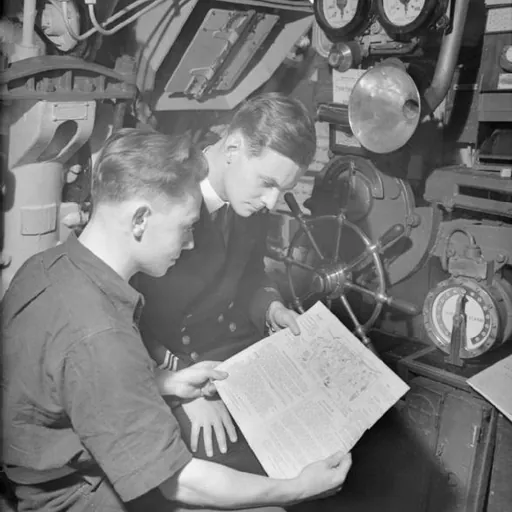
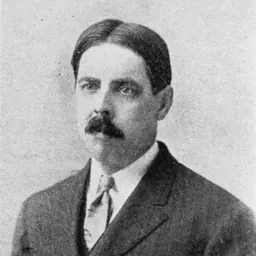
Edward Preston "Teddy" Young, & Bar (17 November 1913 – 28 January 2003), was a British graphic designer, submariner and publisher. In 1935, he joined the then new publishers Penguin Books and was responsible for designing the cover scheme used by Penguin for many years as well as drawing the original penguin logo. During World War II he served in the Royal Naval Volunteer Reserve (RNVR) and became the first British RNVR officer to command a submarine. After the war he returned to the publishing world and eventually became managing director of the Rainbird Group. Having written his wartime biography, One of Our Submarines, in 1952, he later wrote several other books.
Early life Young was born in San Fernando, Trinidad, but his family moved to London while he was a child. He was educated at Highgate School in London. At 18 he left school and joined publishers The Bodley Head, remaining with the firm until 1935 when he moved to join Penguin Books as production manager. One of the first jobs given to Young was to go to London Zoo to make sketches of penguins to be used as the symbol for Penguin Books. Reportedly he returned from this job with the comment "My God, how those birds stink!" but the logo he drew appeared on all Penguin books until 1949. Along with Lane, Young also devised the colour schemes used by the firm on book covers; orange/white/orange for novels, green for crime and detective novels, and pale blue for the Pelican series. The designs were commemorated in 2009 when the Royal Mail included Young's design in a series of stamps celebrating British design classics. Young left Penguin in 1939 to join The Reprint Society but left the society soon after with the outbreak of the war. and underwent initial training at , the main RNVR shore establishment at Hove in Sussex. Volunteers were sought from suitable RNVR officers to join the submarine branch, Young volunteered with two others and after an interview and familiarisation trip on was accepted for service into submarines. Before reporting for submarine officer training at he was required to undertake a period of service on a surface ship, so Young joined on patrol in the North Sea. He was lucky in that both the commanding officer and First Lieutenant of Atherstone had served in submarines and were able to impart a lot of knowledge to Young.
In August 1940, Young reported to HMS Dolphin to find that he was the only one of the three RNVR volunteers to have progressed to training. Young therefore became the first executive branch officer of the RNVR to enter the submarine service. Young passed the course, top of the class, Umpire was a new boat still undergoing commissioning trials on the River Medway. On commissioning, the boat was ordered to join Third Submarine Flotilla at Dunoon. Attached to a north bound convoy, Umpire developed an engine problem and fell slightly behind the convoy. In the dark night of 19/20 July 1941 the boat was not seen by Peter Hendriks, an armed trawler escorting a south bound convoy, and the two ships collided. Umpire sank almost immediately. Young was not on duty at the time and after the collision found himself in a flooding boat resting on the bottom of the North Sea in of water. Having tried to surface the boat using compressed air and having searched for other survivors, Young ended up in the conning tower with the First Lieutenant, an Engine Room Artificer (ERA) and an able seaman. They estimated that as a result of the angle of the boat and the height of the conning tower there was only about above them and that they should attempt to swim to the surface. Closing the hatch below them, they forced open the upper hatch and escaped. The ERA was never seen again and the First Lieutenant drowned after reaching the surface. Young and the seaman were picked up together with several men who had escaped through the engine room hatch. The Commanding Officer, Lt M Wingfield, had already been rescued, having been on the bridge when the collision occurred. All told 2 officers and 20 ratings died with only 2 officers, Young and Wingfield, and 14 ratings surviving.
S-class boats Following the sinking of Umpire Young was posted as Torpedo Officer to , an S-class submarine. During his time on Sealion the boat operated in Arctic waters, being based for some time in Murmansk. On return from Russia, Young was made First Lieutenant of Sealion until she was docked for a refit. In the Mediterranean Saracen was part of Tenth Submarine Flotilla based in Malta. She undertook a number of patrols and Young was awarded the Distinguished Service Cross (DSC) following the sinking of the in December 1942.
First command
Returning to port on Christmas Day 1942, Young received a signal ordering him to return to the United Kingdom to attend the Commanding Officer's Qualifying Course (COQC). Arriving back in England in January 1943, Young passed the COQC (or perisher as it was commonly known)
HMS Storm The boat was then being built by Cammell Laird on the River Mersey. On commissioning Storm joined Third Submarine Flotilla and her first patrol was to northern Norway. This was to be the only patrol in European waters as Young and Storm sailed to the Pacific in late December 1943 to become part of Fourth Submarine Flotilla at Trincomalee, Ceylon (now Sri Lanka). Arriving in the Far East in February 1944, Storm carried out four patrols and one special mission from Sri Lanka. During the first two patrols they sank a Japanese navy minesweeper as well as several merchant ships. After two patrols Storm landed an agent on the Japanese held island of Pulau Weh in northwest Sumatra. Four days later, Storm returned to collect the agent, during which time the Japanese had prepared an ambush and Storm came under concerted gunfire as the two-man special forces team rowed ashore to meet the agent. Young held Storm as close as possible to the shore to allow the two men to return to the boat. Once retrieved Young dived the submarine and made for home. One member of the crew had been wounded during the exchange of gunfire. this stopped a previous source of embarrassment to guests who did not know Young. Young, a Lieutenant RNVR, wore the wavy stripes of the RNVR, while his First Lieutenant, Brian Mills, was a regular Royal Navy Lieutenant and wore the straight stripes of regular officer. Many visitors to Storm did not know Young and made the assumption that Mills, as the regular officer, was the commanding officer of the submarine.
In September 1944, Storm was transferred to the Eighth Submarine Flotilla operating from Fremantle, Australia. Two further patrols were undertaken while based in Australia and on the second of them a short lived record was set for the longest patrol by an S-class boat, when the patrol lasted 37 days and covered . In June, for the patrols from Fremantle a Bar to his DSC was awarded. Young left the navy in November 1945.
Postwar career On being de-mobilized Young briefly rejoined The Reprint Society and then moved to Pan Books before moving to Rupert Hart-Davis Ltd as production director. In 1952, Young wrote his autobiography entitled One of Our Submarines which was published by Rupert Hart-Davis Ltd. Two years later, Penguin Books honoured their former member of staff by making the paperback edition of One of Our Submarines the 1000th Penguin publication.
He wrote two further non-fiction works; Look at Lighthouses (1961), and Look at Submarines (1964), and one work of fiction, The Fifth Passenger (1962), before retirement in 1973, having ended his working career as managing director of the Rainbird Publishing Group.
Don’t just read it —
keep it.
Full-length biographies made to live with: read them, listen on the way to work, watch them tonight.
- E-book
- Audio
- Video
Instant download · yours to keep · every purchase keeps this site free
Important facts
People in Edward Preston Young's life
Named in this biography and alive at the same time



Related people
Same field, nearest in time


Contemporaries
People whose lives overlapped Edward Preston Young's




Frequently asked questions
Who was Edward Preston Young?
English book publisher and submariner (1913–2003)
When was Edward Preston Young born?
Edward Preston Young was born on 17 November 1913 in San Fernando.
When did Edward Preston Young die?
Edward Preston Young died on 28 January 2003 in Littlehampton.
What was Edward Preston Young's occupation?
Edward Preston Young was a graphic designer and submariner.
Sources & further reading
· Wikipedia: Edward Preston Young
· DBpedia: Edward Preston Young
Cite this page
APA: Biography.guide. (2026). Edward Preston Young. https://biography.guide/edward-preston-young/
MLA: "Edward Preston Young." Biography.guide, https://biography.guide/edward-preston-young/.
Chicago: "Edward Preston Young." Biography.guide. https://biography.guide/edward-preston-young/.
Data last updated: 2026-09-20 · Spot an error? Report a correction.
Page generated 2026-09-27 05:09 UTC