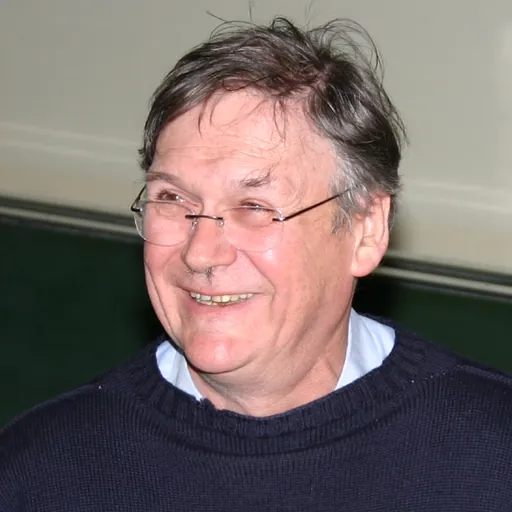
About Tim Hunt
Born 1943. Tim Hunt is a British biochemist, chemist and microbiologist, known for Cell cycle regulation.
death_date = death_place = field = Biochemistry workplaces = education = alma_mater = University of Cambridge (BA, PhD) known_for = Cell cycle regulation awards = spouse = After the death of both his parents, Hunt found his father had worked at Bush House, then the headquarters of BBC World Service radio, most likely in intelligence, although it is not known what he actually did.
Career and research Early career Following his PhD, Hunt returned to New York to work with London, in collaboration with Nechama Kosower, her husband Edward Kosower, and Ellie Ehrenfeld. While there, they discovered that tiny amounts of glutathione inhibited protein synthesis in reticulocytes and that tiny amounts of RNA killed the synthesis altogether. After returning to Cambridge, he again began work with Tony Hunter and Richard Jackson, who had discovered the RNA strand used to start haemoglobin synthesis. After 3–4 years, the team discovered at least two other chemicals acting as inhibitors.
Discovery of cyclins It was at Woods Hole around July 1982, using Arbacia sea urchin eggs as his model organism, that he discovered cyclin proteins. Hunt was observing the eggs undergo cell division after fertilization. The study also included a control group where the eggs had been activated without fertilization by a calcium ionophore. The eggs were incubated with the amino acid methionine in which some of the atoms were radioactive isotopes (radiolabelled), with samples being taken from the eggs at 10 minute intervals. During the egg development, the radioactive methionine was uptaken into the cells and used to make proteins. From the samples, proteins were precipitated and then separated by mass into distinct bands on a resolving gel mat, which were then observed by photographic film that could detect the radioactivity emitted by the proteins. Observing the changes in the bands across the samples, Hunt noticed that one of the proteins rose in abundance before disappearing during the mitosis phase of cell division. It was later discovered that cyclins are continuously synthesised, but are specifically targeted for proteolysis during mitosis. Hunt later demonstrated that cyclins were also present in another sea urchin, Lytechinus pictus, as well as in Spisula clams. That same year, Hunt defined the concept of short linear motifs, parts of protein sequences that mediate interactions with other proteins. In 1993, the book The Cell Cycle: An Introduction, which Hunt co-authored along with Andrew Murray, was published by Oxford University Press. Hunt had his own laboratory at the Clare Hall Laboratories until the end of 2010, and remains an Emeritus Group Leader at the Francis Crick Institute. He is a member of the Advisory Council for the Campaign for Science and Engineering. He has served on the Selection Committee for the Shaw Prize in Life Science and Medicine. In 2010, Hunt joined the Academic Advisory Board of the Austrian think tank Academia Superior, Institute for Future Studies.
Hunt has been a mentor and collaborator to researchers in the scientific community. During his career, he has supervised numerous PhD students, including Hugh Pelham He also believes that science benefits when power is given to young people, himself having been given full autonomy and authority at age 27.
2015 controversy
At the World Conference of Science Journalists in Seoul in June 2015, Hunt gave a impromptu toast at a lunch for female journalists and scientists. As recounted by an EU official, Hunt said:
Parts of the remarks were widely publicised on social media due to their perceived sexist nature, resulting in an intense online backlash, which some described as an act of public shaming. Hunt resigned from his honorary professorship at University College London after the university told him to; he also resigned from several other research positions. Hunt apologised and stated that the remarks were in jest. He said that they had been taken out of context, as the remarks had originally been reported without the words starting with "now seriously". Hunt also stated he "did mean the part about having trouble with girls". Some public figures and scientists, including some who had worked with Hunt, suggested that the backlash against him was disproportionate.
Awards and honours Hunt was elected a member of the European Molecular Biology Organization (EMBO) in 1978, serving as a member of the organisation's Fellowship Committee 1990–1993, its Meeting Committee 2008–2009, and its governing body, the Council, 2004–2009. He was elected a Fellow of the Royal Society (FRS) in 1991, his certificate of election reads:
Hunt was elected a fellow of the UK's Academy of Medical Sciences (FMedSci) in 1998, and a foreign associate of the US National Academy of Sciences in 1999.
In 2001, he was awarded the Nobel Prize in Physiology or Medicine with Leland Hartwell and Paul Nurse for their discoveries regarding cell cycle regulation by cyclin and cyclin-dependent kinases. The three laureates are cited "for their discoveries of key regulators of the cell cycle," while Hunt in particular
In 2003, Hunt was made an honorary Fellow of the Royal Society of Edinburgh (HonFRSE). In 2006, he was awarded the Royal Society's Royal Medal, two of which are presented annually for "the most important contributions to the advancement of natural knowledge", in his case for "discovering a key aspect of cell cycle control, the protein cyclin which is a component of cyclin dependent kinases, demonstrating his ability to grasp the significance of the result outside his immediate sphere of interest".
Hunt was knighted in the 2006 Birthday Honours for his service to science.
Personal life Hunt is married to the immunologist Mary Collins, who was provost of the Okinawa Institute of Science and Technology in Japan, and is Director of the Blizard Institute Queen Mary University of London. The couple have two daughters.
Don’t just read it —
keep it.
Full-length biographies made to live with: read them, listen on the way to work, watch them tonight.
- E-book
- Audio
- Video
Instant download · yours to keep · every purchase keeps this site free
Important facts
Family & relationships
People in Tim Hunt's life
Named in this biography and alive at the same time
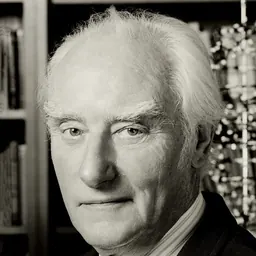






Related people
Same field, nearest in time
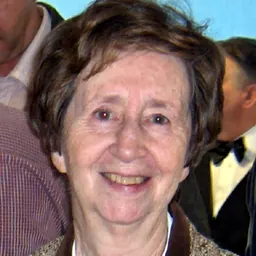
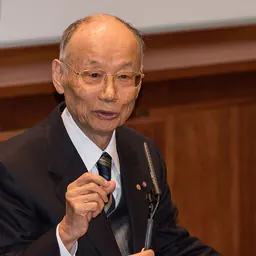

Contemporaries
People whose lives overlapped Tim Hunt's



Frequently asked questions
Who is Tim Hunt?
Biochemist; Nobel laureate
When was Tim Hunt born?
Tim Hunt was born on 19 February 1943 in Neston.
What is Tim Hunt's occupation?
Tim Hunt is a biochemist, chemist and microbiologist.
What is Tim Hunt known for?
Tim Hunt is known for Cell cycle regulation.
What nationality is Tim Hunt?
Tim Hunt is British.
Sources & further reading
Cite this page
APA: Biography.guide. (2026). Tim Hunt. https://biography.guide/tim-hunt-biochemist/
MLA: "Tim Hunt." Biography.guide, https://biography.guide/tim-hunt-biochemist/.
Chicago: "Tim Hunt." Biography.guide. https://biography.guide/tim-hunt-biochemist/.
Data last updated: 2026-09-22 · Spot an error? Report a correction.
Portrait: Wikimedia Commons · author & licence
Page generated 2026-09-27 05:02 UTC