
About Thomas F. Rowland
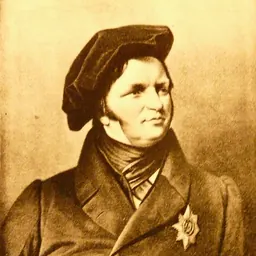
Lived 1831 – 1907 (aged 76). Thomas F. Rowland was an American engineer and shipbuilder.
Thomas Fitch Rowland (March 15, 1831 – December 13, 1907) was an American engineer and shipbuilder. In 1861, he founded the Continental Iron Works in Greenpoint, Brooklyn, which built ironclad warships for the United States Navy during the American Civil War, most notably , which successfully neutralized the threat from the Confederate ironclad CSS Virginia in the Battle of Hampton Roads in 1862.
After the war, Rowland's Continental Works diversified into the construction of gasworks and other industrial fittings, and became a pioneer of welding technology, producing welded, corrugated boiler furnaces and other welded products. During the Spanish–American War and World War I, the company produced munitions. After World War I, it focused increasingly on the manufacture of gas mains and large-diameter water pipes. The plant closed in 1928, with the retirement of Rowland's eldest son from the business.
Rowland was described as an energetic and inventive leader, who designed many of his own company's machine tools, accumulating more than fifty patents in the course of his lifetime. He also had an interest in philanthropy, and is credited among other things with having pioneered the Saturday half-day holiday in New York for employees. In 1884, he endowed the Thomas Fitch Rowland Prize for outstanding engineering papers, which is still awarded annually as of 2020.
Life and career Early life and career Erecting the water pipeline across the Harlem River, ca. 1861, one of the first large contracts undertaken by the Continental Works Thomas Fitch Rowland was born in New Haven, Connecticut, on March 15, 1831, the fourth of five children and only son of George and Ruth Caroline (née Attwater) Rowland. whose house was burned down by the British during the American Revolutionary War.
Rowland received a common school education at Lovel's School and the Collegiate Preparatory School in New Haven. the latter company becoming one of those that were subsequently merged into the New York, New Haven and Hartford Railroad. reportedly as its first apprentice, later serving with the company as a fireman and engineer; Rowland accepted, and over the following two years, three iron-hulled vessels were produced by the partnership. In January 1861, however, Sneden & Co. abruptly failed Shortly after, Sneden ceded his yard to Rowland, who pledged to settle the failed company's affairs. Rowland renamed the yard the Continental Iron Works, Ericsson subcontracted Rowland for construction of the hull, and the new warship—later commissioned as —was launched at the Continental Works in just 101 days. The Continental Iron Works would ultimately build seven monitors for the Navy during the war and doing other wartime work for the government. At one point in 1864, Rowland attempted to sell the Continental Works and go into early retirement, but this did not eventuate, and instead he would remain the company's president for most of his life. He patented a number of machine tools in this period, including one that reportedly saved the labor of 75 men. Rowland would file more than fifty patents over the course of his lifetime. The company was liquidated in 1928, following the retirement of Rowland's son.
Personal details
In 1855, Thomas F. Rowland married Mary Eliza Bradley, daughter of Charles Bradley of New Haven, Connecticut. The Rowlands had four children: a daughter, Caroline Attwater, who died in infancy, and three sons, Thomas Jr., Charles and George, the first two of whom mentioned following their father into the family business.
Rowland was known for his genial disposition, and was said to be "universally esteemed" during his life; he was further described as a "leading and progressive spirit in the life of the Greenpoint community." He was active as a philanthropist, which he extended to his own workforce with no reduction in pay. After the Ascension Episcopal Church in Kent Street, Brooklyn, was completed in 1885, Rowland paid the Church's outstanding debt of $15,000 . On another occasion, when the rector of the Church—whom Rowland had at the time known for only a few months—suffered a prolonged illness, Rowland paid his accumulated medical bills.
Rowland was a vice-president and life member of the American Society of Mechanical Engineers, and was one of only nine honorary members in his time of the American Society of Civil Engineers. To the latter organization he endowed an annual prize for exceptional engineering papers, known as the Thomas Fitch Rowland Prize, which is still awarded today. He was a life member of the Society of Naval Architects and Marine Engineers, the New York Chamber of Commerce, the American Geographical Society, American Gas Light Association, New Haven Colony Historical Society, Fairfield County Historical Society and New England Society, and an honorary member of the Society of Gas Lighting, Union League Club and American Yacht Club. He was also a trustee of the Webb Academy and Home for Shipbuilders, the General Society of Mechanics and Tradesmen and the New York Historical Society.
Rowland struggled with illness in his declining years. His remains were interred in the family plot in Evergreen Cemetery, in his birthplace of New Haven, Connecticut.
Footnotes
Don’t just read it —
keep it.
Full-length biographies made to live with: read them, listen on the way to work, watch them tonight.
- E-book
- Audio
- Video
Instant download · yours to keep · every purchase keeps this site free
Important facts
People in Thomas F. Rowland's life
Named in this biography and alive at the same time
Related people
Same field, nearest in time

Contemporaries
People whose lives overlapped Thomas F. Rowland's



Frequently asked questions
Who was Thomas F. Rowland?
American engineer and shipbuilder
When was Thomas F. Rowland born?
Thomas F. Rowland was born on 15 March 1831 in New Haven.
When did Thomas F. Rowland die?
Thomas F. Rowland died on 13 December 1907 in New York City.
What was Thomas F. Rowland's occupation?
Thomas F. Rowland was an engineer and shipbuilder.
What nationality was Thomas F. Rowland?
Thomas F. Rowland was American.
Sources & further reading
· Wikipedia: Thomas F. Rowland
Cite this page
APA: Biography.guide. (2026). Thomas F. Rowland. https://biography.guide/thomas-f-rowland/
MLA: "Thomas F. Rowland." Biography.guide, https://biography.guide/thomas-f-rowland/.
Chicago: "Thomas F. Rowland." Biography.guide. https://biography.guide/thomas-f-rowland/.
Data last updated: 2026-09-26 · Spot an error? Report a correction.
Page generated 2026-09-27 05:15 UTC