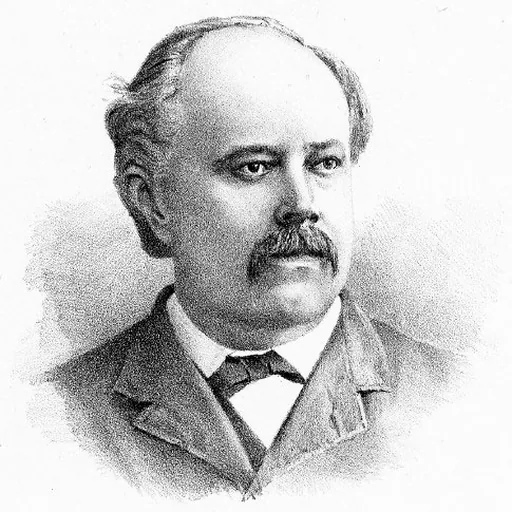
About Thomas Fitch
Lived 1838 – 1923 (aged 85). Thomas Fitch was an American politician, lawyer and editor.
Thomas Fitch (January 27, 1838 – November 12, 1923) He practiced law, mostly in Nevada, Utah, and Arizona, moving frequently during his life among these states. He also briefly practiced law in Minnesota and New York. According to one obituary he was one of "the three great orators who kept California loyal to the Union during the Civil War".
He wrote for the San Francisco Gazette and became editor of the Times. He read law at the firm of Shafter, Heydenfeld & Gould in San Francisco.
In 1862, he moved to the California foothills and El Dorado County, where he wrote for the Placerville Republican. He was elected to the California State Assembly as the representative for the 15th District in 1862 and 1863.
Association with Mark Twain
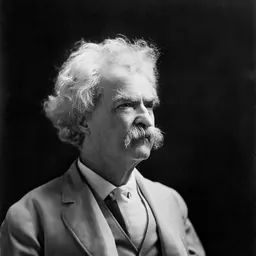
In 1863 he went to Nevada where he was named editor of the Virginia Daily Union. On August 1, 1863, Samuel Clemens (who also wrote under the nom de plume of "Mark Twain") was writing for the Virginia City newspaper, the Territorial Enterprise, and reported that Fitch had challenged Joseph T. Goodman, the editor of the competing newspaper, the Enterprise, to a duel. Goodman wrote an insulting article about Fitch, and Fitch impulsively challenged Goodman to a duel. Goodman had not written the article, but stood behind it and accepted the challenge. Before the duel commenced, Goodman learned that Fitch was unfamiliar with guns and at the first shot, deliberately wounded Fitch below the knee. Goodman instantly ran to Fitch's side and apologized, and insisted on taking care of Fitch until he healed. The two men became friends.
Clemens reported the duel differently: "They went out to fight this morning, with navy revolvers, at fifteen paces. The police interfered and prevented the duel." Fitch, his wife, sister-in-law, and mother-in-law occupied a suite of rooms across the hall from Clemens and Dan DeQuille in the Dagget Building in Virginia City. Fitch started his own eight-page weekly literary journal, The Weekly Occidental, in which Clemens was very interested. Fitch planned to publish a novel in serial form, with successive weekly chapters contributed by Fitch, his wife Anna, J. T. Goodman, Dan De Quille, Rollin M. Daggett and Clemens. The Occidental was published from October 29, 1864, until April 15, 1865, but ceased publication before Twain could contribute.
Clemens credited Fitch with giving him his "first really profitable lesson" in writing. In 1866, Clemens presented his lecture on the Sandwich Islands to a crowd in Washoe City. Clemens commented that, "When I first began to lecture, and in my earlier writings, my sole idea was to make comic capital out of everything I saw and heard." Fitch told him, "Clemens, your lecture was magnificent. It was eloquent, moving, sincere. Never in my entire life have I listened to such a magnificent piece of descriptive narration. But you committed one unpardonable sin—the unpardonable sin. It is a sin you must never commit again. You closed a most eloquent description, by which you had keyed your audience up to a pitch of the intensest interest, with a piece of atrocious anti-climax which nullified all the really fine effect you had produced."
Admitted to bar Thomas Fitch in 1865Fitch kept up his law studies and in 1864 was admitted to the bar by the Nevada Supreme Court.
His opposition to the bill may have cost him votes at home, and he was not reelected in 1870 even though he represented the dominant Republican party. In 1870, his wife published her first novel, Bound Down: Or Life And Its Possibilities. Tom and his wife published Better days: or, A millionaire of to-morrow in 1891, and she wrote two more books in 1891 and 1893.
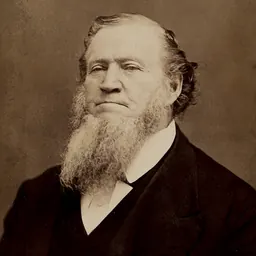
Defends Brigham Young and church leaders Fitch defended Brigham Young and served as general counsel to the LDS Church beginning in 1871. On May 1, 1871, he went to Salt Lake City in connection with mining litigation, and while there was retained by Brigham Young as an attorney and general counsel to the Church. He was in charge of all the criminal and civil litigation in which Brigham Young and other Church leaders were involved.
On October 2, 1871, Brigham Young, Daniel H. Wells and others were served with an arrest warrant by U. S. Marshal at Young's residence in Salt Lake City. He was charged with lewd and lascivious cohabitation with his plural wives but allowed to remain in his home guarded by a marshal. The next day Apostle George Q. Cannon was also arrested on similar charges. On October 9, 1871, Brigham Young appeared before Chief Justice Thomas McKean in the case of People versus Brigham Young, Sr.. Fitch represented the church leaders and arranged for Young's bail. Fitch moved to quash the indictment.
On October 12, Judge McKean issued his decision on Fitch's motion to quash the indictment in which he positioned the case as a trial of the entire church.
But let the counsel on both sides, and the court also, keep constantly in mind the uncommon character of this case. The supreme court of California has well said: " Courts are bound to take notice of the political and social condition of the country which they judicially rule." It is therefore proper to say, that while the case at bar is called, "The People versus Brigham Young" its other and real title is, "Federal Authority versus Polygamic Theocracy."..A system is on trial in the person of Brigham Young. On the second day of the convention, he harshly criticized federal Judge McKean, who had been appointed by President Grant in 1870 as Chief Justice of Utah Territorial Supreme Court. McKean had removed virtually all locally elected officials from their roles and supplanted their authority with federal officials he appointed. McKean believed that he had a divinely appointed mission in Utah, "to the carrying out of which he was evidently prepared to subordinate all other considerations." He said this included "whenever and wherever I may find the local or federal laws obstructing or interfering therewith, by God's blessing I shall trample them under my feet." Spicer and Fitch would later meet again in 1881 in Tombstone, Arizona as a result of the Gunfight at the O.K. Corral. He was defended by Wells Spicer and Fitch was probably acquainted with Spicer's work as an attorney. In 1874 Fitch returned to San Francisco and made his home there until 1877.
In 1877 he relocated to Prescott, Arizona, where he practiced law until 1884 and served as an adviser to Governor John C. Frémont. In 1878 he and several other members of the bar founded the Prescott Dramatic Association, an amateur theater troupe. He cast Harry Du Souchet in a role while Du Souchet was still a telegraph operator and before he became famous in New York City.
In 1879 he was elected a member of the 10th Arizona Territorial Legislature representing Yavapai County and was chosen as Chairman of the House Judiciary Committee. He served alongside Johnny Behan from Mohave County. In October 1881 Fitch and Hunsaker were hired by the Earps when they were indicted for murder. Behan was by this time the Cochise County Sheriff and a witness for the prosecution during the Earp's preliminary hearing that determined whether the Earps and Doc Holliday would face murder charges as a result of the Gunfight at the O.K. Corral.
Defends Earps and Doc Holliday
On October 27, 1881, just one day after the Gunfight at the O.K. Corral that left Billy Clanton and Tom and Frank McLaury dead and Morgan and Virgil Earp wounded, Ike Clanton filed murder charges. A preliminary hearing was convened by Judge Wells Spicer on October 31. The Earps chose "the Silver-Tongued Orator of the Pacific Slope" as their lead attorney. Doc Holliday was defended by United States Court Commissioner Thomas J. Drum.
Preliminary hearing The preliminary hearing turned into a month-long dramatic court-room confrontation, the longest in Arizona history.
Prosecution blame Earps The prosecution presented considerable evidence in an attempt to bind the Earps and Holliday over for trial. On the second day of the hearings, William Allen testified for the prosecution that "the firing commenced by the Earp party. I think it was Doc Holliday who fired first." Johnny Behan testified that he tried to prevent the confrontation. I "told them...I was down there for the purpose of disarming the Clantons and McLaurys. They wouldn't heed me, paid no attention. And I said, 'Gentleman, I am Sheriff of this County, and I am not going to allow any trouble if I can help it.' They brushed past me." He said Cowboys had put up their hands or thrown open their coats to show they were not armed, and that Doc Holliday had fired first. He testified that the first five shots had come from the Earps. He clearly blamed the Earps and Doc Holliday for instigating the shootout.
Fitch had seen Judge Wells Spicer as an attorney defend John D. Lee in the notorious 1857 Mountain Meadows Massacre, and it was likely that he had developed a deep appreciation for the judge. The two men had a great deal in common. Both had practiced criminal law, had written for newspapers, and both were Republicans. Tombstone's chief prosecutor was Republican Lyttleton Price, who was aided by Ben Goodrich and, three days into the hearing, by co-counsel Will McLaury, brother to the dead Cowboys Frank and Tom McLaury. Will McLaury left his Texas law practice and his children with a caretaker to help prosecute the Earps and Doc Holliday. He summed up his attitude towards the Earps in a letter to a law partner: "I think I can hang them." Another influential witness for the defense was Deputy District Attorney Winfield Scott Williams. In earlier testimony, Behan denied telling Virgil on the night after the gunfight that Virgil had acted properly. Williams testified that Sheriff Behan had inaccurately reported that conversation during which, according to Williams, Behan told Virgil that one of the McLaury brothers drew his gun first, and "You did perfectly right." Behan denied that he said anything resembling this. Fitch's ability to impeach the testimony of the County Sheriff and key witness probably influenced Judge Spicer, who had been subject to perjured testimony in the John D. Lee case that resulted in his client's execution. During Ike Clanton's testimony under cross-examination by Fitch, he said "I don't remember" 14 times. This and other contradictions impugned Clanton's testimony. He described Frank McLaury's insistence that he would not give up his weapons unless the marshal and his deputies also gave up their arms as a "proposition both monstrous and startling!"
Spicer said that Virgil in "calling upon Wyatt Earp, and J. H. Holliday to assist him... committed an injudicious and censurable act, and although in this he acted incautiously and without due circumspection," in the end "the Earps acted wisely, discretely and prudentially, to secure their own self preservation." "He needed the assistance and support of staunch and true friends, upon whose courage, coolness and fidelity he could depend..." He settled in New York City in December 1892 for a period before he returned full-time to Arizona in 1893. He briefly moved to Utah in 1894 when the territory was granted statehood and announced his candidacy for United States senator but failed to receive the nomination.
Later in his life he credited his oratorical skills to the influence of Col. E. D. Baker and Thomas Starr King and to the time he spent with Mark Twain and Joaquin Miller. He also said he was influenced by the friendship of Leland Stanford, Collis P. Huntington, Mark Hopkins and Charles Crocker. He spoke in Phoenix in 1906 in support of the territory's desire for dual statehood with New Mexico. He lived at different times in San Diego and in Honolulu. While in Hawaii, he represented sake manufacturers who were attempting to have their product classified as a beer instead of a liquor for customs purposes. In 1909, he moved to Los Angeles where he became a writer for the Los Angeles Times, a position he held through 1916.
Don’t just read it —
keep it.
Full-length biographies made to live with: read them, listen on the way to work, watch them tonight.
- E-book
- Audio
- Video
Instant download · yours to keep · every purchase keeps this site free
Important facts
People in Thomas Fitch's life
Named in this biography and alive at the same time





Related people
Same field, nearest in time





Contemporaries
People whose lives overlapped Thomas Fitch's


Frequently asked questions
Who was Thomas Fitch?
American politician (1838–1923)
When was Thomas Fitch born?
Thomas Fitch was born on 27 January 1838 in New York City.
When did Thomas Fitch die?
Thomas Fitch died on 12 November 1923 in Union City.
What was Thomas Fitch's occupation?
Thomas Fitch was a politician, lawyer and editor.
What nationality was Thomas Fitch?
Thomas Fitch was American.
Sources & further reading
· DBpedia: Thomas Fitch (politician)
Cite this page
APA: Biography.guide. (2026). Thomas Fitch. https://biography.guide/thomas-fitch/
MLA: "Thomas Fitch." Biography.guide, https://biography.guide/thomas-fitch/.
Chicago: "Thomas Fitch." Biography.guide. https://biography.guide/thomas-fitch/.
Data last updated: 2026-09-23 · Spot an error? Report a correction.
Portrait: Wikimedia Commons · author & licence
Page generated 2026-09-27 05:05 UTC