
About Teófilo Braga
Lived 1843 – 1924 (aged 80). Teófilo Braga was a Portuguese anthropologist, politician, playwright, philosopher, university teacher and poet.
Joaquim Teófilo Fernandes Braga (24 February 184328 January 1924) was the president of Portugal, serving in 1915. A Portuguese writer, playwright, politician he became the leader of the Republican Provisional Government after the overthrow of King Manuel II, having become president after the resignation of President Manuel de Arriaga.
Biography Teófilo Braga was born in the Azores, in São José, Ponta Delgada. His father, Joaquim Manuel Fernandes Braga, was probably a descendant of one of King João V's illegitimate children, most likely António of Braganza who was a Doctor in Theology, knight of the Order of Christ and known as one of the Children of Palhavã. His mother was Maria José da Câmara Albuquerque, from the island of Santa Maria, another descendant of Portuguese nobility because she could probably be traced back to Urraca Afonso, who was one of King Afonso III's illegitimate children, as the genealogist Ferreira Serpa has shown. Teófilo was the 13th descendant of Diogo Gonçalves de Travassos, father of D. Pedro, who married Violente Velho Cabral, sister of the Commander of Almourol, Gonçalo Velho, and descendant of Cristovão Falcão, a poet and Count of Avranches. His mother had seven children (Teófilo being the youngest), of which three died during infancy, the others being Luís, João Fernandes and Maria José. Teófilo's father became a widower when Teófilo was only three years old (his mother died at the age of 31). Originally, his father was an artillery lieutenant and commander in Mosteiros, and quit the army after the Concession of Evoramonte, and being without means, he established a nautical school and mathematics in Ponta Delgada, eventually finding a job at the local secondary school. fathering two daughters with her (Maria da Glória and Maria do Espírito Santo).
The child took refuge in literature, especially in the public library in Ponta Delgada or at the home of the Viscount of Praia, where his father (for a time) was a private tutor to the Viscount's daughters. It was in the Ribeira Grande newspaper A Estrela Oriental (The Oriental Star), edited by former pharmacist Francisco Maria Supico (a native of Lousã), that his first naive poem A Canção do Guerreiro ("The Song of the Warrior"), in a patriotic tone, dedicated to his brother João Fernandes Braga was published. He followed these with O Meteoro and O Santelmo. At the age of 15 in 1859, in an edition paid for by the Viscount of Praia, he published a book of verse entitled Folhas Verdes ("Green Leaves") and edited by the newspaper A Ilha (The Island); it was a timid imitation of Folhas Caídas (Fallen Leaves) by noted author Almeida Garrett.
He revealed a tenacious and combative nature and was known to have been disciplined during his time at his secondary school in Ponta Delgada (where his father was teacher) for disparaging remarks made to his teacher. At the end of secondary school Teófilo hoped for future prospects, even informing his father of his intention to leave São Miguel and travel to America for a professional career (likely as a typographer or merchant). But his father suggested expanding his studies at the University of Coimbra, mindful of his child's lack of abilities in his preferred fields. Therefore, Teófilo Braga, as a student, arrived in Coimbra in April 1861, with hopes of achieving a doctorate in Theology or Law; after a year, in which he repeated his prerequisite entrance qualifications, he joined the Faculty of Law at the university. His first lodging would be at the home of Filipe de Quental (1824–1892), professor of Medicine and paternal uncle of the author Antero de Quental.
University
Life as a student was spartan and austere, and he did not adopt a Bohemian lifestyle on campus, preferring to concentrate on his studies. A contemporary, the writer Ramalho Ortigão, had this to say of the young Teófilo: "Simple, sober, hard, with habits of austerity bordering on spartan, he knows how to reduce his requirements as he lacks resources, living in his isolation like Robinson on his island, Teófilo Braga has a unique passion, a passion of a prelate of science. He does not publish a volume per week because there is no machine in Portugal that can accompany the rapidness of his pen. He writes with grace, disinterested, in the satisfaction of his supreme pleasure, pleasure of spilling ideas. This incredible force and at the same time his unique weakness; I've never met another. At his most acerbic nature, he has a passion of his ideas...in the 19th century, with his systematic activity and with his impatience guided by the profoundly pacifist philosophy of Auguste Comte, Teófilo Braga is the most perfect archetype of the uncredited worker and useful citizen. In the middle of Portuguese society...[we are] consoled by the power of contemplation, and a figure such as Teófilo Braga is a rare curiosity that we call...a human"
While at Coimbra he became involved with literary controversy and activism; Teófilo joined his contemporaries, who included the writer Antero de Quental, in what became known as Questão Coimbrã (English: Coimbra Question), a loose affiliation of artists with non-traditionalist philosophies and ideals about 1865. He remained on the periphery of this group's activities, though, while writing many of his recognized early works: O Pirilampo, O Fósforo and Tira-Teimas. A few of his professors in the Faculty of Law recognized his application, and arranged tasks that helped his studies, including the organization and classification of monastic documents. But his new projects did not affect his participation with the student activists against the autocratic Rector Basílio Alberto de Sousa Pinto and many of the traditionalists at Coimbra. He reserved his best efforts for his own projects; during this time he convinced editor Gomes Monteiro, of Casa Moré (a publishing house in Oporto), to publish his poem Visão dos Tempos (in 1864). It was a work that borrowed directly for its base the themes from Victor Hugo's La Légende des siècles, and captured in verse all the essential classicism of Judaism and Christianity. The work received many positive reviews. At the time the indisputable authority of Portuguese literature was António Feliciano de Castilho and his Lisbon admirers, who could establish or ruin the reputation of young authors. Castilho, and his protégé Manuel Pinheiro Chagas were captivated by the classic prose of Visão (English: Vision) and congratulated in public Braga's work.
But this was not repeated in his follow-up book of poetry Tempestades Sonoras, which were preceded by a philosophical prologue that was both obscure and indecipherable. Generally, Castilho's conservative Lisbon admirers criticized severely many of the personalities with dissident tendencies, due to considerations both artistic and political. At the time of the publication of Tempestades, Antero de Quental had just completed his Odes Modernas (English: Modern Odes), a shockingly militant work that challenged the conservative constitutional monarchy in Portugal, its class society and the religious hierarchy. Castilho and his prelates decided to begin a philosophical battle, without quarter, against the two iconoclasts, "that they considered exponents of a School at Coimbra of depraved tastes and highly harmful." It was not just an attack on aesthetic differences between political ideologies, Castilho also endorsed his protégé (Chagas) for a professorship in the department of Modern Literature of the Faculty of Letters, and used his letter to champion him for the position, in which both Teófilo and his friend Antero Quental were interested. The Republicans believed that "to create a Republic required a liberation of individuals of their older ideas...[that] without a doubt, it was [their] spiritual subjugation" In Portugal of the time, about 50,000 individuals (in a population of less than six million) had declared themselves as non-Catholics. For Republicans, they believed that the population was captive to a Roman Catholic church that (during 1864) had condemned liberalism and all modern ideas. For the historian António Reis, Teófflo Braga's doctrinaire style was important in consolidating the Republican cause. His visceral Jacobinismo, allowed him to synthesize the theses of Republican Federalists; the themes of administrative decentralization, imperial mandates and limits which would allow the management of the Portuguese republican model of public education, on the combat of clerical ultramontanism, national sovereignty, and development of democratic ideals that would include universal suffrage. All these ideas would be elaborated in the newspapers A Vanguarda, O Século and O Rebate. The militancy of these works would serve as guides for many republicans of his time. Between 1879 and 1881 he would write many of his more political ideas, including Soluções Positivas da Política Portuguesa (English: Positivist Solutions to Portuguese Politics), 1879, História das Ideias Republicanas em Portugal (English: A History of Republican Ideas in Portugal), 1880, and Dissolução do Sistema Monárquico-Representativo (English: Dissolution of the Monarchical-Representative System), 1881. These propaganda pieces did not mean an end to his other works; in addition to participating in numerous comedies, festivals, clubs and republican associations, he was one of the personalities, in partnership with Ramalho Ortigão, to coordinate the festivities to mark the third centenary of the death of Luís Vaz de Camões, the epic Portuguese writer,(10 June 1880). He would later become a partner in the Academia Real das Ciências (English: Royal Academy of Sciences), Lisbon, and the Academia Real de História (English: Royal Academy of History), Madrid, where he would be honoured in subsequent years.
Politics Braga became active in Portuguese politics in 1878, when he campaigned for deputy as an independent federalist republican. Over the years, he had many jobs in the Portuguese Republican Party. He participated in the political barricades during the 31 January 1891 revolt in Porto, added to the list of members of the Republican Party and worked in partnership with Francisco Homem Cristo. The membership of the Republican Party in Lisbon never anticipated the success of the Republican revolt in the north. Teófilo and Homen Cristo attempted to win the sympathy of the army, but were largely unsuccessful, due partly to the romantic militaristic ideals of many of the soldiers. After the failure of the conspiracy, with many of those retreating or sent to a military tribunal in Leixões, the two criticized Lisbon Republicans for their lack of assistance for the rebels in Oporto. Teófilo occupied himself with arguing with the objectors and taking on an important role in the propaganda of the Republican Party. By 1896 he was a member of the Grupo Republicano de Estudos Sociais (English: Republican Social Studies Group).
The political situation in Portugal had degraded after the 1890 British Ultimatum. Further, between the 19th Century and 20th Century, the system of power that rotated between the parties was slowly dismantled; the divisions introduced by João Franco and José Maria de Alpoim resulted in the creation of splinter groups in addition to the two historical constitutional parties (respectively, the Partido Regenerador Liberal alongside the Partido Regenerador and the Dissidência Progressista from the Partido Progressista), which would alter the rules of political coexistence. A dictatorship created by João Franco after May 1907 (endorsed by King Carlos) was an episode of cumulative crises provoked by Hintze Ribeiro, leader of the Partido Regenerador, and José Luciano de Castro, responsible for the Partido Progressista. Teófilo Braga accompanied many of these events, as well as Francoist Spain, the regicide and enthronement of King D. Manuel II, of which the journalist João Chagas wrote: ...[Manuel II assumed the military regalia] when by now it was not needed. The republican cause had grown in importance, helped by the Republican Party, freemasons, the Carbonária Portuguesa and by numerous groups of doctrinarian idealists influenced by the cause.
On 1 January 1910, he became an effective member of the Political Directorate of the party, joining Basílio Teles, Eusébio Leão, José Cupertino Ribeiro, and José Relvas. On 28 August 1910, he was elected deputy for Lisbon. The revolution began on the morning of 4 October 1910 and lasted until the next day. Teófilo Braga was acclaimed President of Provisional Government of the Portuguese Republic. But the old Republican Party would not survive the creation of the Republic; factions quickly developed between groups within the party to form new organizations: Afonso Costa's faction would form the Partido Democrático (the most populist, Jacobin and urban party), António José de Almeida founded the Partido Evolucionista (a contemporary faction that included the rural bouregoeis) and Brito Camacho created the União Republicana (which was an intellectual group with many of its members from Lisbon). The first conflict involved the electoral act: Afonso Costa's "democrats" wanted Bernardino Machado to be the first President of the Republic, but António José de Almeida and Manuel de Brito Camacho factions were able to elect Manuel de Arriaga for that title. Teófilo Braga, who was always more closely affiliated with the membership of the "Democrats" and owing to small problems with Arriaga, endorsed Bernardino Machado.
He would return to government in May 1915; he became the President of the Republic after the abrupt resignation of Manuel de Arriaga. Arriaga had supported Pimenta de Castro to run the government, and the General had established a dictatorship, which was eventually defeated. In disgrace the pacifist first President vacated the job, and the assembly elected Braga to the position.
Later life Braga was an extremely austere man; after becoming a widower, he was a recluse and occupied much of his time in his library. Even as President, he would walk, umbrella or cane in hand, everywhere, and generally, his Presidency itself was not an exercise in ostentatious living. Over time, as a man-of-letters, Teófilo Braga was recognized by historians as an erudite author. His final home, was on the second-floor of 70 Rua de Santa Gertrudes à Estrela, in Lisbon, and his neighbor usually accompanied him for breakfast or lunch. He wore over-used clothing, many of these clothes he repaired personally, including white linens which were his departed wife's possessions (and reminded him of their earlier life together). He was a solitary figure, and had lost many of his closest relations (his mother died early during his life, his father died in the Azores Islands, he lost his children in their infancies and his beloved wife died before he did), as well as his sight.
In his last will, he expressed his desire to be interred in a civil service, without ceremony. He died at 80 years of age, on 28 January 1924, and was buried in the Jerónimos Monastery in Belém, Lisbon.
Published works As for his literary career, one can find books by Braga concerning the history of literature, on ethnography (mainly his search for popular stories and traditional songs), poetry, fiction, and philosophy. Braga's body of published work is also connected to historical investigation; while balancing philosophy, linguistics and culture he wrote História da Poesia Popular Portuguesa (English: The History of Popular Portuguese Poetry), História do Teatro Português (English: History of the Portuguese Theatre) and História das Ideias Republicanas em Portugal (English: The History of Republican Ideals in Portugal). One of his most contentious, from a scientific point-of-view, was História do Romantismo em Portugal (English: The History of Romanticism in Portugal), in 1880, although his four-volume História da Universidade de Coimbra (English: History of the University of Coimbra) is still considered important.
Poetry Visão dos Tempos (1864) Tempestades Sonoras (1864) Torrentes (1869) Miragens Seculares (1884) Poesia do Direito (1865) "A noiva do corvo"
Fiction Contos Fantásticos (1865) Viriato (1904)
Essays As Teorias Literárias – Relance sobre o Estado Actual da Literatura Portuguesa (1865) História da Poesia Moderna em Portugal (1869) História da Literatura Portuguese (Introdução) (1870) História do Teatro Português (1870–1871) – 4 volumes Teoria da História da Literatura Portuguesa (1872) Manual da História da Literatura Portuguesa (1875) Bocage, sua Vida e Época (1877) Parnaso Português Moderno (1877) Traços gerais da Filosofia Positiva (1877) História do Romantismo em Portugal (1880) Sistema de Sociologia (1884) Camões e o Sentimento Nacional (1891) As Lendas Christãs (1892) História da Universidade de Coimbra (1891–1902) – 4 volumes História da Literatura Portuguesa (1909–1918) – 4 volumes
Anthologies and research Antologias: Cancioneiro Popular (1867) Contos Tradicionais do Povo Português (1883)
Don’t just read it —
keep it.
Full-length biographies made to live with: read them, listen on the way to work, watch them tonight.
- E-book
- Audio
- Video
Instant download · yours to keep · every purchase keeps this site free
Important facts
People in Teófilo Braga's life
Named in this biography and alive at the same time



Related people
Same field, nearest in time

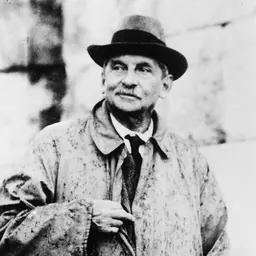

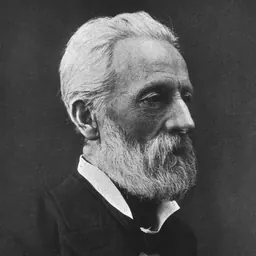


Contemporaries
People whose lives overlapped Teófilo Braga's

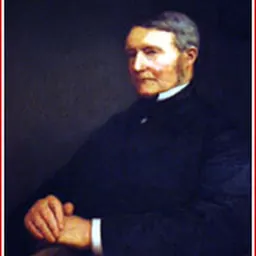
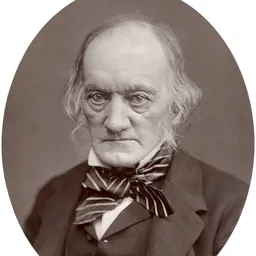
Frequently asked questions
Who was Teófilo Braga?
Portuguese politician (1843–1924)
When was Teófilo Braga born?
Teófilo Braga was born on 24 February 1843 in Ponta Delgada.
When did Teófilo Braga die?
Teófilo Braga died on 28 January 1924 in Lisbon.
What was Teófilo Braga's occupation?
Teófilo Braga was an anthropologist, politician, playwright, philosopher, university teacher and poet.
What nationality was Teófilo Braga?
Teófilo Braga was Portuguese.
Sources & further reading
Cite this page
APA: Biography.guide. (2026). Teófilo Braga. https://biography.guide/teofilo-braga/
MLA: "Teófilo Braga." Biography.guide, https://biography.guide/teofilo-braga/.
Chicago: "Teófilo Braga." Biography.guide. https://biography.guide/teofilo-braga/.
Data last updated: 2026-09-20 · Spot an error? Report a correction.
Page generated 2026-09-27 05:18 UTC