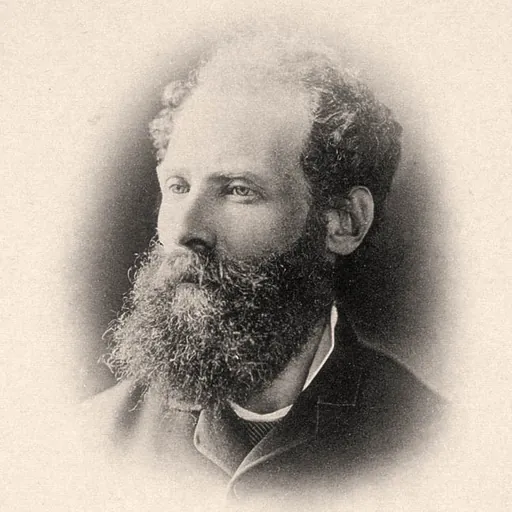
About Antero de Quental
Lived 1842 – 1891 (aged 49). Antero de Quental was a poet, writer, philosopher and translator.
Antero Tarquínio de Quental (; old spelling Anthero; 18 April 184211 September 1891) was a Portuguese poet, philosopher, and writer. Quental is regarded as one of the greatest poets of his generation and is recognized as one of the most influential Portuguese language artists of all time. His name is often mentioned alongside Luís Vaz de Camões, Manuel Maria Barbosa du Bocage, and Fernando Pessoa.
Throughout his life, Quental oscillated between pessimism and depression; afflicted with what might have been bipolar disorder, at the time of his last trip to Lisbon, he was in a state of steady depression, compounded by spinal disease. On September 11 1891, he committed suicide by firing two shots into his mouth while seated on a bench in a garden park.
Biography
Early life and childhood Antero de Quental was born in Ponta Delgada on the island of São Miguel in the Azores. His family was among the oldest families of the provincial captaincy system. Antero's mother was Ana Guilhermina da Maia (16 July 181128 November 1876), a devout relative of Fr. Bartolomeu de Quental, founder of the Congregation of the Oratory in Portugal.
Quental began to write poetry at an early age, chiefly, though not entirely, devoting himself to the sonnet. As a child, he took French lessons under António Feliciano de Castilho, a leading figure of the Portuguese Romantic movement, who resided in Ponta Delgada. Despite their relationship, Quental would later criticize Castilho and other Romantic poets, sparking a divisive conflict. Quental was seven when he was enrolled at Liçeu Açoriano, a private school where he received English lessons from Mr. Rendall, a renowned prospector on the island. In August 1852, Quental moved with his mother to Lisbon, where he studied at Colégio do Pórtico, whose headmaster was his old tutor Castilho. When the institution closed, Quental returned to Ponta Delgada in 1853. On writing to his old headmaster, he said:
Throughout the latter part of his life, Quental dedicated his studies to poetry, politics, and philosophy. By 1855, at the age of 16, he had returned to Lisbon, then went to Coimbra where he graduated from the Colégio de São Bento in 1857.
Coimbra years In the fall of 1856, he enrolled at the University of Coimbra, where he studied law and adopted socialist ideas.
He soon distinguished himself for his oral and written talents, as well as for his turbulent and eccentric nature. While in Coimbra, he founded the Sociedade do Raio, which aimed at promoting literature to the masses, and made blasphemous challenges to religion.
In 1873, Quental inherited a sizable amount of money, which allowed him to live in reasonable comfort. Owing to tuberculosis the following year, he rested but returned to re-edit his Odes Modernas. He moved to Oporto, Portugal in 1879, and in 1886 published arguably his best poetic work , Sonetos Completos, which included many passages considered autobiographical and symbolic .
In 1880, he adopted the two daughters of his friend, Germano Meireles, who had died in 1877. During a trip to Paris, Quental became seriously ill, and in September 1881, under counsel from his doctor, Quental began residing in Vila do Conde, where he remained until May 1891 (with a few intervals in the Azores and Lisbon). He regarded his time in Vila do Conde as the best of his life. To Carolina Michaelis de Vasconcelos, a friend, he wrote of his need to end his poetry and begin a philosophical phase in his writing, to develop and synthesize his philosophy. |source=
According to the Encyclopædia Britannica Eleventh Edition:
His friend Oliveira Martins edited the Sonnets (Oporto, 1886), supplying an introductory essay. An interesting collection of studies on the poet by the leading Portuguese writers appeared in a volume entitled Anthero de Quental. In Memoriam (Oporto, 1896). The sonnets have been translated into many languages; into English by Edgar Prestage (Anthero de Quental, Sixty-four Sonnets, London, 1894), together with a striking autobiographical letter addressed by Quental to his German translator, Dr. Storck.
Don’t just read it —
keep it.
Full-length biographies made to live with: read them, listen on the way to work, watch them tonight.
- E-book
- Audio
- Video
Instant download · yours to keep · every purchase keeps this site free
Important facts
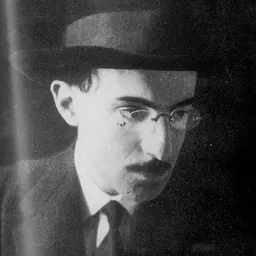
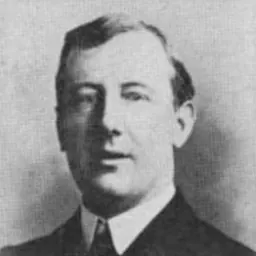
People in Antero de Quental's life
Named in this biography and alive at the same time

Related people
Same field, nearest in time
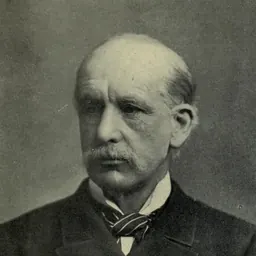
Contemporaries
People whose lives overlapped Antero de Quental's

Frequently asked questions
Who was Antero de Quental?
Portuguese poet (1842–1891)
When was Antero de Quental born?
Antero de Quental was born on 18 April 1842 in Ponta Delgada.
When did Antero de Quental die?
Antero de Quental died on 11 September 1891 in Ponta Delgada.
What was Antero de Quental's occupation?
Antero de Quental was a poet, writer, philosopher and translator.
What nationality was Antero de Quental?
Antero de Quental's recorded nationality: Kingdom of Portugal.
Sources & further reading
· Wikipedia: Antero de Quental
Cite this page
APA: Biography.guide. (2026). Antero de Quental. https://biography.guide/antero-de-quental/
MLA: "Antero de Quental." Biography.guide, https://biography.guide/antero-de-quental/.
Chicago: "Antero de Quental." Biography.guide. https://biography.guide/antero-de-quental/.
Data last updated: 2026-09-23 · Spot an error? Report a correction.
Portrait: Wikimedia Commons · author & licence
Page generated 2026-09-27 05:07 UTC