
About August Heinrich Hoffmann von Fallersleben
Lived 1798 – 1874 (aged 75). August Heinrich Hoffmann von Fallersleben was a German poet, librarian, writer, revolutionary, musicologist and ethnomusicologist.
August Heinrich Hoffmann von Fallersleben ( , after his hometown; 2 April 179819 January 1874) was a German poet associated with the Young Germany movement. He is best known for writing "", whose third stanza is now the national anthem of Germany, and a number of popular children's songs.
Biography Carte de visite of Hoffmann, card no. "1324" by an unidentified photographer with crown over the letter "P", about 1860
Hoffmann was born in Fallersleben in Lower Saxony, then in the duchy of Brunswick-Lüneburg.
The son of a merchant and mayor of his native city, he was educated at the classical schools of Helmstedt and Braunschweig, and afterwards at the universities of Göttingen and Bonn. His original intention was to study theology, but he soon devoted himself entirely to literature. In 1823 he was appointed custodian of the university library at Breslau, a post which he held till 1838. He was also made extraordinary professor of the German language and literature at that university in 1830, and ordinary professor in 1835. Hoffmann was deprived of his chair in 1842 in consequence of his Unpolitische Lieder (1840–1841, "Unpolitical Songs"), which gave much offence to the authorities in Prussia.
During his exile, he traveled in Germany, Switzerland and Italy, and lived for two or three years in Mecklenburg, of which he became a naturalized citizen. After the revolution of 1848 he was enabled to return to Prussia, where he was restored to his rights, and received the salary attached to a promised office not yet vacant. He married in 1849, and during the next ten years lived first in Bingerbrück, afterwards in Neuwied, and then in Weimar, where together with Oskar Schade (1826–1906) he edited the Weimarische Jahrbuch (1854–1857).
Works Hoffmann von Fallersleben was one of the most popular poets of his time. In politics he ardently sympathized with progressive tendencies, and he was among the earliest and most effective of the political poets who paved the way for the revolution of 1848. As a poet, however, he acquired distinction chiefly by the ease, simplicity and grace with which he gave expression to the passions and aspirations of daily life. Although he had not been academically trained in music, he composed melodies for many of his songs, and a considerable number of them are sung by all classes in every part of Germany. The text of the song expresses the pan-German sentiments common to revolutionary republicans of the period, which were considered inflammatory and treasonous in the German-speaking principalities. The phrase über alles at that time did not refer to militant ideas of conquest of foreign countries, but to the need for loyalty to a united Germany above regional loyalties.
The best of Hoffmann von Fallersleben's poetical writings is his Gedichte ("Poems", 1827), but there is great merit also in his other works: Alemannische Lieder ("Alemannic Songs", 1826), Soldatenleben ("Soldier's Life", 1852), Rheinleben ("Rhine Life", 1865), and in his Fünfzig neue Kinderlieder ("Fifty New Children's Songs"), and Alte und neue Kinder ("Old and New Children's Songs").
Hoffmann von Fallersleben's Unpolitische Lieder ("Apolitical songs"), Deutsche Lieder aus der Schweiz ("German Songs from Switzerland") and Streiflichter ("Highlights") are interesting mainly in relation to the movements of the age in which they were written. As a student of ancient Teutonic literature, Hoffmann von Fallersleben ranks among the most persevering and cultivated of German scholars. Some of his findings are embodied in his Horae Belgicae ("Belgian hours"), Fundgruben für Geschichte deutscher Sprache und Literatur ("Sources for the History of German Language and Literature"), Altdeutsche Blätter ("Old German Papers"), and Spenden zur deutschen Literaturgeschichte und Findlinge ("Contributions to German literary history and finds").
His editions of historic works include: Reineke Vos, Monumenta Elnonensia and Theophilus.
Die deutsche Philologie im Grundriss ("Fundamentals of German Philology", 1836) was at the time of its publication a valuable contribution to philological research, and historians of German literature still attach importance to his Geschichte des deutschen Kirchenliedes bis auf Luther ("History of the German Church Song up to Luther", 1832; 3rd ed.: 1861); Unsere volkstümlichen Lieder ("Our Folk Songs", 3rd ed.: 1869) and Die deutschen Gesellschaftslieder des 16. und 17. Jahrh. ("German Society Songs of the 16th and 17th Centuries", 2nd ed.: 1860).
In 1868–1870, Hoffmann published an autobiography in six volumes, Mein Leben: Aufzeichnungen und Erinnerungen ("My Life: Notes and Memories"; abbreviated ed. in 2 vols.: 1894). His Gesammelte Werke ("Collected Works") in 8 volumes were edited by H. Gerstenberg (1891–1894); his Ausgewählte Werke ("Selected Works") in 4 volumes by H. Benzmann (1905). See also Briefe von Hoffmann von Fallersleben und Moritz Haupt an Ferdinand Wolf ("Letters of Hoffmann von Fallersleben and Moritz Haupt to Ferdinand Wolf", 1874); J. M. Wagner, Hoffmann von Fallersleben, 1818–1868 (1869–1870), and R. von Gottschall, Porträts und Studien ("Portraits and Studies", vol. 5, 1876).
Don’t just read it —
keep it.
Full-length biographies made to live with: read them, listen on the way to work, watch them tonight.
- E-book
- Audio
- Video
Instant download · yours to keep · every purchase keeps this site free
Important facts
People in August Heinrich Hoffmann von Fallersleben's life
Named in this biography and alive at the same time
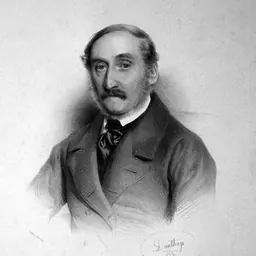
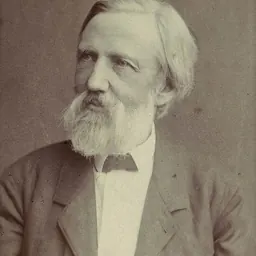

Related people
Same field, nearest in time

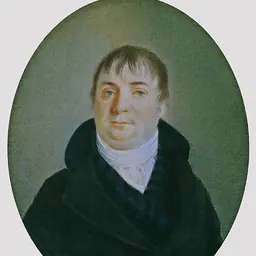
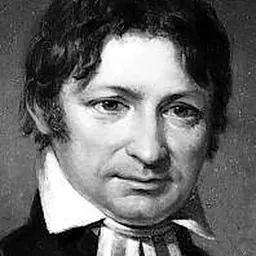
Contemporaries
People whose lives overlapped August Heinrich Hoffmann von Fallersleben's





Frequently asked questions
Who was August Heinrich Hoffmann von Fallersleben?
German scholar and poet (1798–1874)
When was August Heinrich Hoffmann von Fallersleben born?
August Heinrich Hoffmann von Fallersleben was born on 2 April 1798 in Fallersleben.
When did August Heinrich Hoffmann von Fallersleben die?
August Heinrich Hoffmann von Fallersleben died on 19 January 1874 in Princely Abbey of Corvey.
What was August Heinrich Hoffmann von Fallersleben's occupation?
August Heinrich Hoffmann von Fallersleben was a poet, librarian, writer, revolutionary, musicologist and ethnomusicologist.
What nationality was August Heinrich Hoffmann von Fallersleben?
August Heinrich Hoffmann von Fallersleben was German.
Sources & further reading
· Wikipedia: August Heinrich Hoffmann von Fallersleben
· DBpedia: August Heinrich Hoffmann von Fallersleben
Cite this page
APA: Biography.guide. (2026). August Heinrich Hoffmann von Fallersleben. https://biography.guide/august-heinrich-hoffmann-von-fallersleben/
MLA: "August Heinrich Hoffmann von Fallersleben." Biography.guide, https://biography.guide/august-heinrich-hoffmann-von-fallersleben/.
Chicago: "August Heinrich Hoffmann von Fallersleben." Biography.guide. https://biography.guide/august-heinrich-hoffmann-von-fallersleben/.
Data last updated: 2026-09-25 · Spot an error? Report a correction.
Page generated 2026-09-27 05:11 UTC