
About Ramalho Ortigão
Lived 1836 – 1915 (aged 78). Ramalho Ortigão was a Portuguese translator, journalist, writer and poet.
Sculpture of Ramalho Ortigão in the Cordoaria Garden, Porto. José Duarte Ramalho Ortigão (24 November 1836 – 27 September 1915) was a Portuguese writer of the late 19th century and early 20th century.
Biography Ortigão spent his early years with his maternal grandmother in Porto. He studied law in the University of Coimbra but he did not complete his studies. After returning to his home town, he taught French at a college run by his father. Among his students was Eça de Queiroz.
In 1862 he dedicated himself to journalism and became a literary critic at the Diário do Porto and contributed to several literary magazines.
At this period Romanticism was the dominant trend in Portuguese literature, led by several major writers including Camilo Castelo Branco and António Augusto Soares de Passos, who influenced Ortigão. In the 1870s, a group of students from Coimbra began to promote new ideas in a reaction against romanticism. This group, eventually called the 70s Generation, was to have a major influence on Portuguese literature. As a supporter of romanticism, Ortigão became involved in a struggle against them and even fought a duel with Antero de Quental. In spite of this early opposition he afterwards became friendly with some members of the group. It was at this period that he wrote The Mystery of the Sintra Road and created the satirical journal As Farpas, both in collaboration with Eça de Queiroz. When Queiroz became a diplomat, initially in Cuba, Ortigão continued As Farpas alone.
Ortigão also worked as a translator. In 1874 he produced a Portuguese translation of the English satirical novel Ginx's Baby by Edward Jenkins.
Ramalho Ortigão died in Lisbon on 27 September 1915.
Works Literatura de Hoje (1866). Em Paris (1868). Contos Côr de Rosa (1869). O Mistério da Estrada de Sintra (1870). Biographia de Emilia Adelaide Pimentel (1871). As Farpas (with Eça de Queirós, 1871–72). As Farpas (1871–1882). Banhos de Caldas e Águas Minerais (1875). As Praias de Portugal (1876). Notas de Viagem (1878). A Instrucção Secundária na Câmara dos Senhores Deputados (1883). A Holanda (1883). John Bull (1887). O Culto da Arte em Portugal (1896). Últimas Farpas (1914).
Posthumous As Farpas Esquecidas (1946–47).
Translations Hygiene da Alma, by Ernst, Baron von Feuchtersleben (1873). Ginx's Baby, o Engeitado: seu Nascimento e Mais Desastres, by Edward Jenkins (1874). O Marquez de Villemer, by George Sand (1905).
Don’t just read it —
keep it.
Full-length biographies made to live with: read them, listen on the way to work, watch them tonight.
- E-book
- Audio
- Video
Instant download · yours to keep · every purchase keeps this site free
Important facts
People in Ramalho Ortigão's life
Named in this biography and alive at the same time


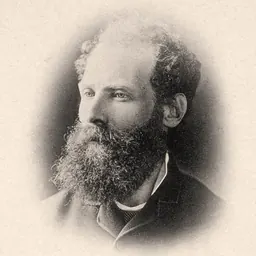
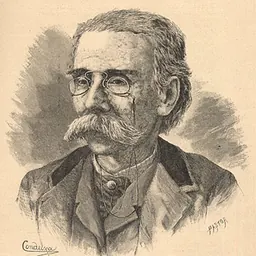
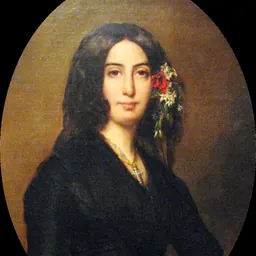

Related people
Same field, nearest in time
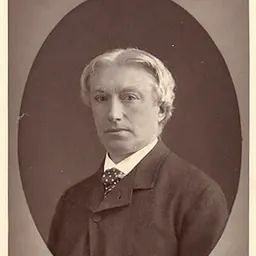
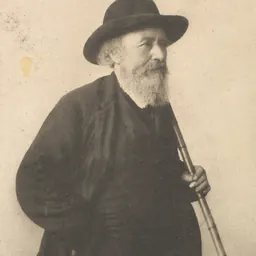

Contemporaries
People whose lives overlapped Ramalho Ortigão's


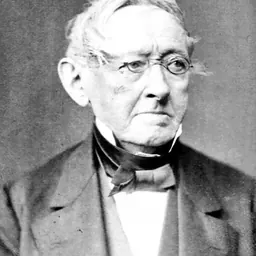


Frequently asked questions
Who was Ramalho Ortigão?
Portuguese writer (1836–1915)
When was Ramalho Ortigão born?
Ramalho Ortigão was born on 24 October 1836 in Porto.
When did Ramalho Ortigão die?
Ramalho Ortigão died on 27 September 1915 in Lisbon.
What was Ramalho Ortigão's occupation?
Ramalho Ortigão was a translator, journalist, writer and poet.
What nationality was Ramalho Ortigão?
Ramalho Ortigão was Portuguese.
Sources & further reading
Cite this page
APA: Biography.guide. (2026). Ramalho Ortigão. https://biography.guide/ramalho-ortigao/
MLA: "Ramalho Ortigão." Biography.guide, https://biography.guide/ramalho-ortigao/.
Chicago: "Ramalho Ortigão." Biography.guide. https://biography.guide/ramalho-ortigao/.
Data last updated: 2026-09-25 · Spot an error? Report a correction.
Page generated 2026-09-27 05:12 UTC