
Tatyana Velikanova
Soviet Russian mathematician and human rights activist
About Tatyana Velikanova
Lived 1932 – 2002 (aged 70). Tatyana Velikanova was a Russian mathematician and human rights defender.
Tatyana Mikhailovna Velikanova (, 3 February 1932 in Moscow – 19 September 2002 in Moscow) was a mathematician and Soviet dissident. A veteran of the human rights movement in the Soviet Union, she was an editor of A Chronicle of Current Events for most of that underground periodical's existence (1968–1983), bravely exposing her involvement with the anonymously edited and distributed bulletin at a press conference in May 1974.
She was also a founding member in 1969 of the Initiative Group on Human Rights in the USSR, the first human rights organization in the USSR since 1918. Arrested in November 1979, Velikanova was sentenced in August 1980 to four years in a prison camp and five years of internal exile. Turning down the offer of an amnesty from Mikhail Gorbachev in December 1987 as one of the last of two women convicted under Article 70 (the other was Elena Sannikova), Velikanova voluntarily served her sentence of exile to the end.
Biography Born on 3 February 1932, Velikanova graduated from the Faculty of Mechanics and Mathematics of Moscow State University in 1954. A mathematician by training, she began work as a teacher in a school in the Urals. Then, from 1957 onwards, she was employed as a programmer in Moscow. Velikanova's experience at the trial where her testimony was distorted and used against Babitsky, led her to decide she would never again participate in such judicial proceedings. Unusually for the dissident movement at the time, the organization tried to appeal to the international community. Speaking on behalf of the victims of political repression in the Soviet Union the Group wrote to the UN Commission on Human Rights. (The appeal was almost instantly translated and republished in the West.
In 1970, Velikanova began contributing to the samizdat periodical A Chronicle of Current Events. The unofficial bi-monthly gathered reports from all over the USSR of violations by the Soviet authorities of civil rights and judicial procedure, and recorded the response to those violations. It soon became the principal uncensored Russian-language source of information about political repressions during Leonid Brezhnev's time as Party leader. Velikanova eventually became one of its main organizers and editors.
As the years passed similar journals came into existence in other Soviet republics, The Ukraine Herald and the Chronicle of the Catholic Church in Lithuania. Their information continued to flow to Moscow, however, for translation into Russian and inclusion in the Chronicle of Current Events.
Chronicle resumes publication (1974–1979)
In 1974, the KGB initiated a major crackdown on the bulletin, arresting several of its editors and distributors, threatening to make more arrests, regardless of authorship, for every published issue of the Chronicle.
In order to deflect pressure from other participants, and to stress that the Chronicle was in their view a legal publication, three of those involved decided to forsake anonymity. On 7 May, Tatyana Velikanova, Sergei Kovalev and Tatyana Khodorovich assumed public responsibility at a press conference in Moscow for the bulletin's future distribution. They then released three delayed issues, one for December 1972 and two covering 1973, and a statement that "we regard it as our duty to facilitate as wide a circulation for [the Chronicle] as possible." After her arrest, several prominent dissidents, among them Larisa Bogoraz, Elena Bonner, Sofiya Kalistratova and Lev Kopelev, formed a "Committee for the Defense of Velikanova". The Committee collected and disseminated information on her case in samizdat. A petition in defense of Velikanova was signed by almost five hundred people. Others who independently petitioned for her were Andrei Sakharov, the philosopher Grigory Pomerants, and the writer Vladimir Voinovich. stating: "by participating in this trial, I would be collaborating in an unlawful act. I respect the law, and therefore, I refuse to take part in this trial."
When the verdict was handed down, Velikanova commented: "The farce is over. So that's that."
In December 1987 Gorbachev offered an amnesty to the last two women prisoners still serving a sentence under Article 70 (Anti-Soviet Agitation and Propaganda). Velikanova turned it down, demanding that she be rehabilitated and absolved of any crimes. Unfortunately, Granite Productions (CEO Simon Welfare, series director Gwyneth Hughes), the company which made the film, destroyed the tapes of this interview. Naturally, the recording ran for many minutes, and was much longer than the short excerpt which showed the three chatting round Alexander Lavut's kitchen table.
Kovalyov subsequently became a familiar figure on Russian TV as the country's first Human Rights Ombudsman and a member of successive convocations of parliament (Supreme Soviet, State Duma). Velikanova and Lavut lived the rest of their lives, known only to a few, and died in comparative obscurity. After her return to Moscow late in 1988, she took up work in the School 57, teaching math and Russian language and literature. She died on 19 September 2002.
Don’t just read it —
keep it.
Full-length biographies made to live with: read them, listen on the way to work, watch them tonight.
- E-book
- Audio
- Video
Instant download · yours to keep · every purchase keeps this site free
Important facts
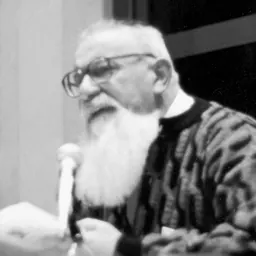
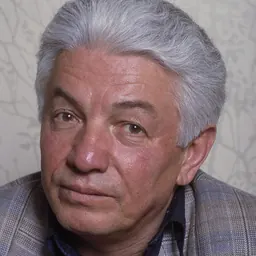
People in Tatyana Velikanova's life
Named in this biography and alive at the same time


Related people
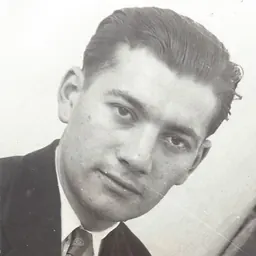
Same field, nearest in time

Contemporaries
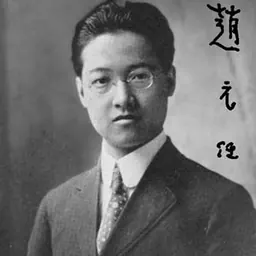
People whose lives overlapped Tatyana Velikanova's


Frequently asked questions
Who was Tatyana Velikanova?
Soviet Russian mathematician and human rights activist (1932–2002)
When was Tatyana Velikanova born?
Tatyana Velikanova was born on 3 February 1932.
When did Tatyana Velikanova die?
Tatyana Velikanova died on 19 September 2002 in Moscow.
What was Tatyana Velikanova's occupation?
Tatyana Velikanova was a mathematician and human rights defender.
What nationality was Tatyana Velikanova?
Tatyana Velikanova was Russian.
Sources & further reading
· Wikipedia: Tatyana Velikanova
Cite this page
APA: Biography.guide. (2026). Tatyana Velikanova. https://biography.guide/tatyana-velikanova/
MLA: "Tatyana Velikanova." Biography.guide, https://biography.guide/tatyana-velikanova/.
Chicago: "Tatyana Velikanova." Biography.guide. https://biography.guide/tatyana-velikanova/.
Data last updated: 2026-09-22 · Spot an error? Report a correction.
Page generated 2026-09-27 05:21 UTC