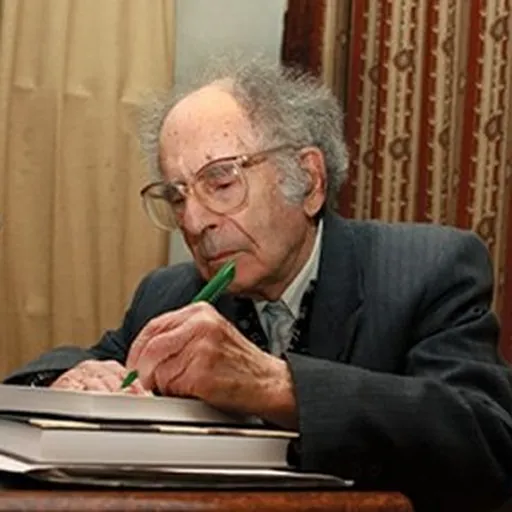
Grigory Pomerants
Russian philosopher, cultural theorist, and Soviet dissident
About Grigory Pomerants
Lived 1918 – 2013 (aged 94). Grigory Pomerants was a Russian philosopher, writer and philosopher of culture.
Grigory Solomonovich Pomerants (also: Grigorii or Grigori, , 13 March 1918, Vilnius – 16 February 2013, Moscow ) was a Russian philosopher and cultural theorist. He is the author of numerous philosophical works that circulated in samizdat and made an impact on the liberal intelligentsia in the 1960s and 1970s.
Early life Grigory Pomerants was born in 1918 to a Polish Jewish family in Vilnius, Lithuania. His family moved to Moscow in 1925. Pomerants graduated in Russian language and literature from the (IFLI, MIFLI). His thesis on Fyodor Dostoyevsky was condemned as "anti-Marxist" and as a result he was barred from admission to post-graduate studies in 1939. He went on to lecture at the Tula Pedagogical Institute in 1940.
In 1946, he was expelled from the Communist Party for "anti-Party statements". Three years later he was arrested and sentenced to five years' imprisonment for anti-Soviet agitation. After Joseph Stalin's death in 1953, he was released due to a general amnesty. He did not rejoin the Party, which prohibited him from teaching at tertiary level. He was also denied Moscow residence. It caused a sensation and became one of the early pieces of samizdat literature. In 1968, he co-signed a petition in support of the participants of the 1968 Red Square demonstration against the introduction of Soviet troops into Czechoslovakia. He also put his signature to Larisa Bogoraz and Pavel Litvinov's "Appeal to the World Public Opinion" in protest of Trial of the Four. As a result, he was deprived of any opportunity to defend his thesis on Zen Buddhism at the Moscow Institute of Oriental Studies.
In addition to official articles, which focused on the spiritual traditions of India and China, Pomerants began to write essays on historical and social topics. While his works were soon stopped from being printed in the Soviet Union, they were widely published in samizdat. They were also reprinted in the western émigré magazines Kontinent, Sintaksis and Strana i Mir, and a collection of essays under the title Neopublikovannoe (Unpublished Works) was published in 1972 in Frankfurt.
Pomerants' political and social articles as well as his public conduct attracted the attention of the KGB. On November 14, 1984, Pomerants was officially warned in connection with his publications abroad. On May 26, 1985, KGB agents searched his flat and confiscated his literary archive.
Pomerants was among the first Russian disciples of cultural and literary theorist Mikhail Bakhtin.
For many years, Pomerants was involved in polemics with Alexander Solzhenitsyn. Pomerants strongly criticized what he saw as Solzhenitsyn's dogmatic Christian nationalism and positioned himself closer to the liberal, internationalist wing of the intelligentsia. He countered Solzhenitsyn's notion of "evil" as an unavoidably global, well-established phenomenon, associated with Communism, by citing Eastern traditions which reject the notion of an inherently permanent, ontological evil.
Pomerants himself stated that he preferred to be called a "thinker" (myslitel''') rather than a "philosopher", since this term does not imply the academic discipline of philosophy, which he felt was merely neighboring his own work (po sosedstvu).
One of the most quoted pieces in Russian by Pomerants reflected his views on the nature of social debate:
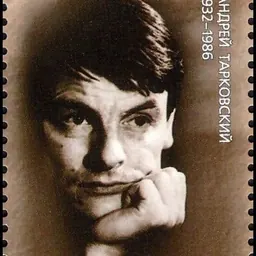
Other Pomerants' lectures and a rejected thesis on Zen Buddhism were studied by filmmaker Andrei Tarkovsky and composer Eduard Artemyev during their work on Stalker. Pomerants also appears in the 2008 documentary Meeting Andrei Tarkovsky.
In 2009, The Bjørnson Prize of the Norwegian Academy of Literature and Freedom of Expression was awarded to Pomerants and Mirkina "for their extensive contribution to strengthening the freedom of expression in Russia."
Pomerants was married to Russian poet Zinaida Mirkina. He died, aged 94, in Moscow, Russia.
Major works Books Померанц, Григорий. Открытость бездне [Openness to the Abyss]. М.: Советский писатель, 1990 г., Померанц, Григорий. Выход из транса [Exit from Trance]. Юрист., 1995 г., Миркина, Зинаида; Померанц, Григорий. Великие религии мира [The Major World Religions] М.: Рипол., 1995 г., Померанц, Григорий. Записки гадкого утенка [Notes of an Ugly Duckling], М.: Московский рабочий, (1995) 2003, Pomerants, Grigory. The spiritual movement from the West. An Essay and Two Talks'', Caux: Caux Books, 2004, Articles
Don’t just read it —
keep it.
Full-length biographies made to live with: read them, listen on the way to work, watch them tonight.
- E-book
- Audio
- Video
Instant download · yours to keep · every purchase keeps this site free
Important facts
People in Grigory Pomerants's life
Named in this biography and alive at the same time





Related people
Same field, nearest in time


Contemporaries
People whose lives overlapped Grigory Pomerants's

Frequently asked questions
Who was Grigory Pomerants?
Russian philosopher, cultural theorist, and Soviet dissident (1918–2013)
When was Grigory Pomerants born?
Grigory Pomerants was born on 13 March 1918 in Vilnius.
When did Grigory Pomerants die?
Grigory Pomerants died on 16 February 2013 in Moscow.
What was Grigory Pomerants's occupation?
Grigory Pomerants was a philosopher, writer and philosopher of culture.
What nationality was Grigory Pomerants?
Grigory Pomerants was Russian.
Sources & further reading
· Wikipedia: Grigory Pomerants
Cite this page
APA: Biography.guide. (2026). Grigory Pomerants. https://biography.guide/grigory-pomerants/
MLA: "Grigory Pomerants." Biography.guide, https://biography.guide/grigory-pomerants/.
Chicago: "Grigory Pomerants." Biography.guide. https://biography.guide/grigory-pomerants/.
Data last updated: 2026-09-22 · Spot an error? Report a correction.
Portrait: Wikimedia Commons · author & licence
Page generated 2026-09-27 05:03 UTC