
About Shih Ming-teh
Lived 1941 – 2024 (aged 83). Shih Ming-teh was a Chinese and Taiwanese human rights defender, politician and social activist.
Shih Ming-teh (; 15 January 1941 – 15 January 2024) was a Taiwanese democracy and human-rights activist, political prisoner, politician and writer. A leading figure in the Tangwai movement against Kuomintang (KMT) authoritarian rule, he was one of the principal organizers of the 1979 Human Rights Day demonstration that led to the Kaohsiung Incident. He spent more than 25 years in prison during Taiwan's martial-law era, receiving life sentences in two political cases, and was recognized by Amnesty International as a prisoner of conscience.
After his final release in 1990, Shih served three terms in the Legislative Yuan and chaired the Democratic Progressive Party (DPP) from 1993 to 1996. He advocated what he called “grand reconciliation” between Taiwan's political parties and social groups, and argued that Taiwan was already a sovereign and independent state under the name Republic of China. He left the DPP after its victory in the 2000 Taiwanese presidential election. In 2006 he returned to national prominence as leader of the Million Voices Against Corruption, President Chen Must Go campaign, which sought the resignation of President Chen Shui-bian amid corruption allegations.
Early life Shih was born on 15 January 1941 on Dayong Road in the Yancheng area of Kaohsiung, when Taiwan was under Japanese rule. His father, Shih Kuo-tsui, was a practitioner of Chinese medicine, and his mother was Shih Chen Ying. The family was Catholic, and Shih was baptized at Holy Rosary Cathedral with the Christian name John. His family called him by the Japanese name Aki-Nori during childhood.
During the Pacific War, the family temporarily evacuated from Kaohsiung to the countryside to escape Allied bombing before returning after the war. Six-year-old Shih witnessed violence around Kaohsiung railway station during the February 28 Incident in 1947. His father was also arrested during the unrest but was later released. In 1951, during the White Terror, his father was again arrested after organizing morning exercise with family members and neighbors. The chronology says that after months in detention he returned home seriously weakened and remained bedridden until his death in 1953.
Shih went into hiding after the incident. Supporters assisted him in changing his appearance, and his attempted escape attracted international attention. He remained at large for 26 days before being arrested in Taipei on 8 January 1980.
He temporarily resumed eating after negotiations with government representatives but restarted his protest in March 1986, contending that promises to release political prisoners had not been fulfilled. While imprisoned, Shih also pressed opposition activists abroad to organize a political party. The Democratic Progressive Party was founded in Taiwan in September 1986 despite the continuing ban on new parties.
In December 1992 Shih was elected to the second Legislative Yuan from Tainan City. He was reelected in 1995 and again in 1998, the latter time representing Taipei, and served until January 2002.
In 1993 Shih and other legislators publicly destroyed copies of provisions associated with the sedition laws under which political dissidents had been prosecuted, marking the repeal of laws used during the authoritarian era. He also became increasingly prominent within the DPP.
Shih argued that Taiwan was already a sovereign and independent country and that a future DPP government therefore would not need to issue a separate declaration of independence. During a 1995 visit to Washington he advocated international recognition and United Nations membership for Taiwan while warning of the danger of military conflict with the People's Republic of China.
Domestically, Shih promoted the idea of “social grand reconciliation” and a “political grand coalition”, arguing that Taiwan's transition to democracy required cooperation across party and ethnic divisions. In December 1995 DPP and New Party legislators began cooperating on selected legislative issues. Following the legislative election, the two parties jointly supported Shih for president of the Legislative Yuan. In February 1996 he lost to KMT incumbent Liu Sung-pan by one vote, 82–81.
During the Third Taiwan Strait Crisis, Shih traveled by fishing boat toward waters affected by People's Republic of China missile exercises in March 1996 as a protest against military intimidation. After the DPP lost Taiwan's first direct presidential election later that month, he resigned as party chairman.
After leaving the DPP, Shih increasingly presented himself as an advocate of cross-party reconciliation and constitutional reform. He met Chinese democracy activist Wei Jingsheng during Wei's 2001 visit to Taiwan and held a series of public dialogues with him on democracy, human rights and cross-strait relations. Shih later ran as an independent candidate for the legislature in 2001 and 2004 and for mayor of Kaohsiung in 2002, losing each race.
In 2003 Shih spent time in the United States as a visiting scholar at George Mason University. The following year he promoted what he called the “EU-ization of One China”, an attempt to develop a cross-strait framework modeled loosely on supranational European institutions, and founded an organization advocating a parliamentary system of government in Taiwan.
On 15 September Shih led a march around the Presidential Office and through central Taipei. Police estimated that about 320,000 people participated, while organizers claimed a much larger turnout. The demonstrations remained largely peaceful but did not secure Chen's resignation. A further protest took place during National Day events on 10 October. The main sit-in wound down in December 2006, when Shih entered what he called “self-confinement” at the campaign headquarters. He ended the seclusion in April 2007.
Later activities and political views In 2010 Shih publicly criticized provisions of the Economic Cooperation Framework Agreement (ECFA), warning that its termination mechanism could allow Beijing to use economic pressure for political purposes. He published Common Sense: What Every Taiwanese Should Know in 2011, reiterating his view that the Republic of China on Taiwan already constituted a sovereign and independent state. In 2013 he published an essay supporting equal rights for gay people, and during his attempted 2015 presidential campaign he supported legal recognition of same-sex marriage.
In 2012 Shih began promoting a proposed “Taiwan Shrine of Remembrance and Tribute”, intended to commemorate people whose contributions he believed represented Taiwan's civic values. The following year he organized a Legislative Yuan memorial for five men executed after the 1970 Taiyuan Incident.
Shih announced an independent bid for the 2016 presidential election, campaigning on reconciliation, coalition government and a parliamentary system. He withdrew in September 2015 after failing to collect the required number of valid supporting signatures.
In his later years Shih continued to write about cross-strait relations, political reconciliation and the history of the White Terror. In 2023 he advocated turning Kinmen and Matsu into a peace zone and published a book arguing for their demilitarization as a gesture toward Beijing. Former Malaysian Deputy Prime Minister Wan Azizah Wan Ismail also expressed condolences to Shih's family following his death.
On the evening of Shih's death, Taipei 101 was illuminated with messages commemorating him, including "Mourning Mr. Shih Ming-te," "Thank you," and "A lifetime dedicated to Taiwan."
Don’t just read it —
keep it.
Full-length biographies made to live with: read them, listen on the way to work, watch them tonight.
- E-book
- Audio
- Video
Instant download · yours to keep · every purchase keeps this site free
Important facts
Family & relationships
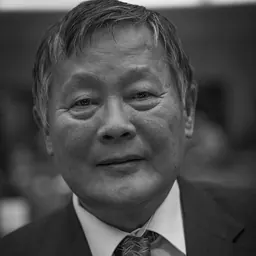
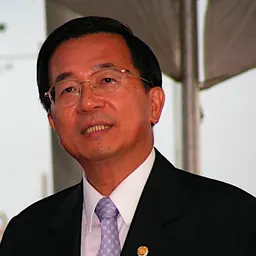
People in Shih Ming-teh's life
Named in this biography and alive at the same time





Related people
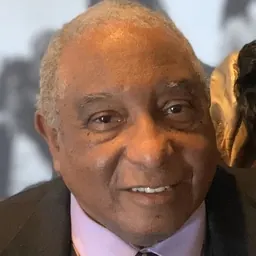
Same field, nearest in time





Contemporaries
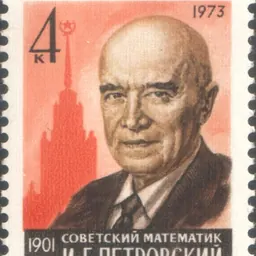
People whose lives overlapped Shih Ming-teh's





Frequently asked questions
Who was Shih Ming-teh?
Taiwanese politician (1941–2024)
When was Shih Ming-teh born?
Shih Ming-teh was born on 15 January 1941 in Takao City.
When did Shih Ming-teh die?
Shih Ming-teh died on 15 January 2024 in Taipei.
What was Shih Ming-teh's occupation?
Shih Ming-teh was a human rights defender, politician and social activist.
What nationality was Shih Ming-teh?
Shih Ming-teh was Chinese and Taiwanese.
Sources & further reading
Cite this page
APA: Biography.guide. (2026). Shih Ming-teh. https://biography.guide/shih-ming-teh/
MLA: "Shih Ming-teh." Biography.guide, https://biography.guide/shih-ming-teh/.
Chicago: "Shih Ming-teh." Biography.guide. https://biography.guide/shih-ming-teh/.
Data last updated: 2026-09-25 · Spot an error? Report a correction.
Page generated 2026-09-27 05:13 UTC