
About Bernard Lafayette
Lived 1940 – 2026 (aged 85). Bernard Lafayette was an American human rights defender, known for Activism and Civil Rights Movement.
Background Lafayette was born on July 29, 1940, in Tampa, Florida, where he was also raised. His parents were Willie Verdell (Forrester) and Bernard Lafayette Sr. Lafayette spent much of his childhood in Tampa. His family grew up poor, so Bernard started working odd jobs to gain more income by the age of 11.
Despite being Black in the south, Lafayette said he initially attended an integrated elementary school, and eventually began to go to schools that were still segregated. While he was at the integrated school he said that "even though it wasn't segregated, I could still see the contrast between the two worlds."
Early adult life and career As a young man at the age of 20, Lafayette moved to Nashville, Tennessee, and enrolled in the American Baptist Theological Seminary, where one of his roommates was the future civil rights activist and congressman John Lewis. During the course of his freshman year, Lafayette took classes in nonviolence at the Highlander Folk School run by Myles Horton, and attended many meetings promoting nonviolence. He learned more about the philosophy of nonviolence as lived by Mohandas Gandhi, while taking seminars from activist James Lawson, a well-known nonviolent representative of the Fellowship of Reconciliation.
Lafayette began to use the nonviolent techniques as he became more exposed to the strong racial injustice of the South. In 1959, he, along with his friends Diane Nash, James Bevel, and John Lewis, all members of the Nashville Student Movement, led sit-ins, such as the 1960 Lunch Counter Sit-In, at restaurants and businesses that practiced segregation. As an advocate of nonviolence, in 1960 Lafayette assisted in the formation of the Student Nonviolent Coordinating Committee (SNCC).
Freedom Rides In 1961, the Congress of Racial Equality (CORE) initiated a movement to enforce federal integration laws on interstate bus routes. This movement, known as the Freedom Rides, had African-American and white volunteers ride together on bus routes through the segregated South. Lafayette wanted to participate, but his parents forbade him. After the Freedom Riders were violently attacked in the city of Anniston, Alabama, the Nashville Student Movement, of which Lafayette was a member, vowed to take over the journey. At the time, some civil rights leaders worried that the Freedom Rides were too provocative and would damage the movement. Despite many doubts, these Nashville students were determined to finish the job. In May 1961, in the city of Montgomery, Alabama, Lafayette and the other riders were "greeted" at the bus terminal by an angry white mob, members of Ku Klux Klan chapters, and were viciously attacked. The Freedom Riders were brutally beaten. Their attackers carried every makeshift weapon imaginable: baseball bats, wooden boards, bricks, chains, tire irons, pipes, and even garden tools.
During the Montgomery attack, Lafayette stood firm; his fellow riders William Barbee and John Lewis were beaten until they fell unconscious. Lafayette, Fred Leonard and Allen Cason narrowly escaped being killed by jumping over a wall and running to the post office. Everyone inside was carrying on individual business, just like nothing was happening outside.
Lafayette with other Riders was arrested in Jackson, Mississippi, and jailed at Parchman State Prison Farm during June 1961. During Lafayette's participation in civil rights activities, he was beaten and arrested 27 times.
Selma In the summer of 1962, Lafayette accepted a position with the Student Nonviolent Coordinating Committee (SNCC) to conduct organizing work in Selma, Alabama, alongside his then wife Colia Liddell Lafayette. He would also serve as director of SNCC's Alabama Voter Registration Campaign. Upon arriving in the city in February 1963, He met the representatives of the Dallas County Voters League who impressed him. While in Selma, Lafayette would spend months organizing and training local residents in nonviolent protest and civic engagement. While badly injured, he was not deterred from continuing his work. Lafayette subsequently returned to school, earning a Master of Education degree at the Harvard Graduate School of Education in 1972, followed by a Doctor of Education from Harvard two years later.
He was recognized as a major authority on strategies for nonviolent social change and nonviolent direct action in the world. In 1973, Lafayette was named first director of the Peace Education Program at Gustavus Adolphus College, Saint Peter, Minnesota. The Gustavus program enabled Lafayette to infuse the entire curriculum of the college with peace education. Lafayette served this Lutheran liberal arts college for nearly three years. He was also the dean of the graduate school at Alabama State University. He was a Senior Fellow at the University of Rhode Island, where he helped to found the Center for Nonviolence and Peace Studies, promoting nonviolence education using a curriculum based on the principles and methods of Martin Luther King Jr. He was a Distinguished Scholar-in-Residence at the Candler School of Theology, at Emory University in Atlanta, Georgia. He served as scholar-in-residence at the Caroline Marshall Draughon Center for the Arts & Humanities in the College of Liberal Arts at Auburn University.
Lafayette was honored as a Doctor of Humane Letters from Mount Holyoke College, in May 2012. In 2014, The University of Rhode Island honored Lafayette with an honorary doctorate in recognition of his lifetime nonviolence leadership for civil and human rights. In 2015, he received an honorary degree and was the principal speaker at the 2015 graduation of St. Michael's College in Colchester, Vermont. In 2019 he was awarded the Coretta Scott King Legacy Award by Antioch College's Coretta Scott King Center for Cultural and Intellectual Freedom.
Together with David Jehnsen, Lafayette authored the Kingian Nonviolence Conflict Reconciliation.
Following Selma, Lafayette went on to write several books about his experiences in the civil rights movement and books covering his views and thoughts on nonviolence. These books include The Leaders Manual: A Structured Guide and Introduction to Kingian Nonviolence, The Briefing Booklet: An Orientation to the Kingian Nonviolence Conflict Reconciliation Program, and In Peace and Freedom: My Journey in Selma.
In 2019, Lafayette was honored with the Coretta Scott King legacy award. On March 8, 2026, Lafayette posthumously received the Martin & Coretta King International Lifetime Peace & Justice Award at the 2026 Martin & Coretta King Unity Breakfast in Selma, Alabama.
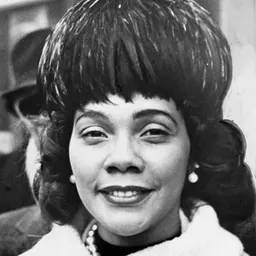
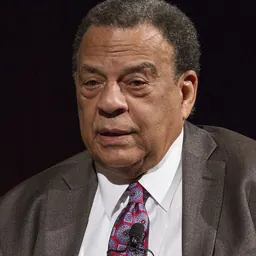
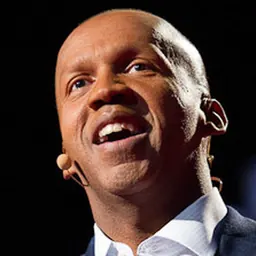
Personal life and death Lafayette married Kate Bulls Lafayette in 1969. He raised two children with his previous wife Colia Liddell Lafayette: Bernard Lafayette III and James Lafayette Sr. According to his children, Lafayette was a loving father, who never yelled at, was stern with, or even expressed anger towards his wife or his kids. The family had a very tight-knit relationship, and spent tons of time together. James became an ordained preacher (influenced by his father, who was a religious man), and Lafayette III attended American Baptist College. His visitation was held at People's Funeral Home in Tuskegee on March 21, 2026. His funeral service was held on March 22, 2026, at The Tuskegee University Chapel, with Ambassador and former Martin Luther King Jr. advisor Andrew Young, surviving Martin Luther King Jr. children Martin Luther King III and Bernice King and Executive Director of the Equal Justice Initiative in Montgomery Bryan Stevenson being among those who spoke, followed by a burial at Greenwood Cemetery in Tuskegee.
Books Bernard LaFayette Jr. and Kathryn Lee Johnson. In Peace and Freedom: My Journey in Selma. Lexington, Kentucky: University Press of Kentucky, 2016.
Don’t just read it —
keep it.
Full-length biographies made to live with: read them, listen on the way to work, watch them tonight.
- E-book
- Audio
- Video
Instant download · yours to keep · every purchase keeps this site free
Important facts
People in Bernard Lafayette's life
Named in this biography and alive at the same time





Related people
Same field, nearest in time


Contemporaries
People whose lives overlapped Bernard Lafayette's


Frequently asked questions
Who was Bernard Lafayette?
American civil rights activist (1940–2026)
When was Bernard Lafayette born?
Bernard Lafayette was born on 29 July 1940 in Tampa, Florida.
When did Bernard Lafayette die?
Bernard Lafayette died on 5 March 2026 in Tuskegee.
What was Bernard Lafayette's occupation?
Bernard Lafayette was a human rights defender.
What was Bernard Lafayette known for?
Bernard Lafayette was known for Activism and Civil Rights Movement.
What nationality was Bernard Lafayette?
Bernard Lafayette was American.
Sources & further reading
· Wikipedia: Bernard Lafayette
Cite this page
APA: Biography.guide. (2026). Bernard Lafayette. https://biography.guide/bernard-lafayette/
MLA: "Bernard Lafayette." Biography.guide, https://biography.guide/bernard-lafayette/.
Chicago: "Bernard Lafayette." Biography.guide. https://biography.guide/bernard-lafayette/.
Data last updated: 2026-09-25 · Spot an error? Report a correction.
Page generated 2026-09-27 05:10 UTC