
About Martin Luther
Lived 1895 – 1945 (aged 49). Martin Luther was a German politician and diplomat.
Martin Franz Julius Luther (, 16 December 1895 – 13 May 1945) was a German diplomat. A member of the Nazi Party, he was a protégé of Foreign Minister Joachim von Ribbentrop, first as an advisor in the Ribbentrop Bureau (Dienststelle Ribbentrop), and later as a diplomat in the Foreign Office (Auswärtiges Amt). He participated in the 20 January 1942 Wannsee Conference, at which the genocidal Final Solution to the Jewish Question was planned. It was the 1946 discovery of his copy of the minutes of that conference that first brought to light the existence of the conference and its purpose. After plotting to replace Ribbentrop, Luther was arrested in February 1943 and sent to a concentration camp. He died of natural causes very shortly after the end of the Second World War in Europe.
Early life Luther attended a Gymnasium until August 1914 when he left school without obtaining his Abitur to enlist in the Imperial German Army. He participated in the First World War as a member of a railway unit, attained the rank of Leutnant of reserves in 1917 and was awarded the Iron Cross, second class. Discharged from the army at the end of the war, he went into business and used his skill at logistics to found a hauling and furniture moving business. His first venture went bankrupt in the poor economic climate of the Weimar Republic but he started another furniture moving and interior decorating business. He eventually became very successful, living in the affluent Zehlendorf neighborhood of Berlin. He owned an apartment building and was sufficiently financially secure to turn his attention to politics.
Luther joined the Nazi Party (membership number 1,010,333) and its paramilitary branch, the SA, on 1 March 1932. He was active in helping to raise funds for the Party in his capacity as the head of the local National Socialist People's Welfare, the Party's charity organization. In the course of his work, he made the acquaintance of the wealthy wine merchant and Adolf Hitler's foreign policy advisor Joachim von Ribbentrop and his wife. He was commissioned to redecorate their villa and expand their private stables. He also was of assistance to Ribbentrop in getting him a low Party number. When Ribbentrop was sent to London as ambassador in 1936, he hired Luther to move his furniture from Berlin and do the interior decorating of the new German Embassy at Carlton House Terrace. In addition, in 1942 he was promoted to the rank of SA-Brigadeführer. Thus, Luther was at the height of his power when he attended the Wannsee Conference on 20 January 1942 as the official representative of the Foreign Ministry. He was the only undersecretary invited, with most other ministry representatives being full state secretaries. This was due to the conference organizer, SS-Obergruppenführer Reinhard Heydrich, who much preferred dealing with the ambitious and cooperative Luther, rather than the aristocratic Foreign Office traditionalist, State Secretary Ernst von Weizsäcker. In preparation for the meeting, Luther had his staff compose a memorandum on 8 December 1941 to set out "our wishes and desires". That document committed the ministry to working with other countries to introduce antisemitic restrictions modeled on the Nuremberg Laws, and then to transport their Jews to the east. Following the conference, Luther's department was involved with preparing and securing agreement at the diplomatic level for the deportation of Jews from the countries allied with Germany, such as Bulgaria, Croatia, Hungary, Romania and Slovakia, as well as from the areas occupied by Germany.
Downfall, arrest and death During this period, Luther also continued to work as an interior decorator for Ribbentrop's wife, helping her with the design of her various houses as well as her clothes. He resented this, stating that she treated him like one of her household servants. For her part, she found him tiring and boorish. More importantly, Ribbentrop was becoming increasingly dissatisfied with him, particularly for not advancing the Foreign Office's interests in the bureaucratic struggle over foreign policy with Reichsführer-SS Heinrich Himmler. In addition, new allegations surfaced of Luther being entangled with financial irregularities involving the personnel office. Ribbentrop had also received complaints that Luther was blackmailing two individuals by threatening them with the Gestapo, and this triggered yet another investigation into Luther's behavior.
In early 1943, threatened on several fronts, Luther plotted to supplant Ribbentrop by attempting to discredit him. Though reports vary, he most likely sought assistance in this from SS-Brigadeführer Walter Schellenberg, head of the SS foreign intelligence service, who himself had ambitions of replacing Ribbentrop. Luther wrote an extensive memorandum, in which he went into detail about what he believed to be Ribbentrop's mental weaknesses, portraying him as mentally ill and unfit for his position. He forwarded it to Schellenberg to gain the support of the SS. However, when the memo was brought to Himmler, he viewed it as the worst type of disloyalty, and had the incriminating document delivered directly to Ribbentrop. Luther was arrested by the Gestapo on 10 February 1943 and his Abteilung D was dissolved. Hitler wanted to have him hanged, but Himmler instead persuaded him to have Luther sent to the Sachsenhausen concentration camp in March. There he was put to work cultivating the camp herb garden. After two suicide attempts, he was freed over two years later when the camp was liberated by the Red Army in April 1945, but was hospitalized and died shortly afterward of heart failure. However, Luther was among those who already knew that policy with regard to the "Jewish question" had changed. In October 1941, he was made aware by his subordinate, Rademacher, that 8,000 Serbian Jewish men were not being deported but instead had been shot. Also, beginning in October 1941, the SS had been sending periodic situation reports to the Foreign Office concerning the operations of the Einsatzgruppen in the Soviet Union. The reports documented the extent and systematic nature of the mass killing of Jews that already was taking place. Luther saw these reports and was personally involved in preparing a summary of one of the lengthy reports. The Wannsee minutes also document that at the conference Luther noted that difficulties would arise in some countries, such as the Scandinavian states, if the plan were to be put in place there, and that it would therefore be advisable to defer actions in those countries. However, he saw no such great difficulties arising for actions in southeast and western Europe, thereby giving the Foreign Office's concurrence with implementing the Final Solution in those areas.
Portrayals in media Luther is played by in the German television drama-documentary Die Wannseekonferenz (1984). Luther played an integral part in Robert Harris' 1992 alternate history novel, Fatherland. In the 1994 HBO film adaptation, Luther was renamed Franz Luther and was played by John Woodvine. In the 2001 HBO film Conspiracy, Luther is played by Kevin McNally. Luther is briefly portrayed in Daniel Silva's 2003 book The Confessor, which is part of Silva's Gabriel Allon series. In the 2022 German film Die Wannseekonferenz, he was played by the Austrian actor Simon Schwarz. Luther is portrayed by Paul Schröder in the 2026 Swedish film The Swedish Connection.
Don’t just read it —
keep it.
Full-length biographies made to live with: read them, listen on the way to work, watch them tonight.
- E-book
- Audio
- Video
Instant download · yours to keep · every purchase keeps this site free
Important facts
People in Martin Luther's life
Named in this biography and alive at the same time


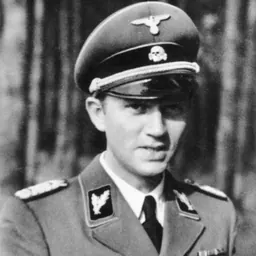

Related people
Same field, nearest in time





Contemporaries
People whose lives overlapped Martin Luther's
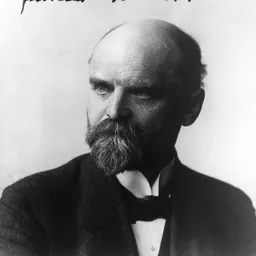
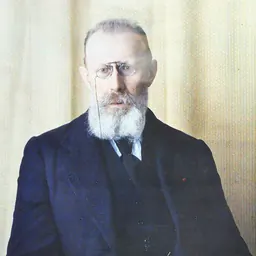
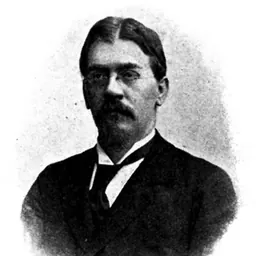

Frequently asked questions
Who was Martin Luther?
German diplomat (1895-1945)
When was Martin Luther born?
Martin Luther was born on 16 December 1895 in Berlin.
When did Martin Luther die?
Martin Luther died on 13 May 1945 in Berlin.
What was Martin Luther's occupation?
Martin Luther was a politician and diplomat.
What nationality was Martin Luther?
Martin Luther was German.
Sources & further reading
· DBpedia: Martin Luther (diplomat)
Cite this page
APA: Biography.guide. (2026). Martin Luther. https://biography.guide/martin-luther-politician/
MLA: "Martin Luther." Biography.guide, https://biography.guide/martin-luther-politician/.
Chicago: "Martin Luther." Biography.guide. https://biography.guide/martin-luther-politician/.
Data last updated: 2026-09-20 · Spot an error? Report a correction.
Page generated 2026-09-27 05:23 UTC