
About Ding Zilin
Born 1936. Ding Zilin is a Chinese human rights defender, university teacher and writer, known for 1989 Tiananmen Square protests and massacre.
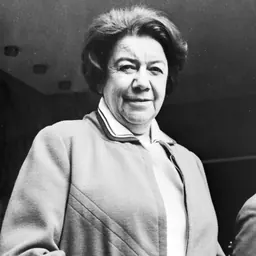
Ding Zilin (; born December 20, 1936, or January 1, 1939 ) is a retired professor of philosophy and the leader of the political activist group Tiananmen Mothers. Ding is the mother of Jiang Jielian, one of the first student protestors killed during the 1989 Tiananmen Square protests and ensuing crackdown.
Biography Ding, born in Shanghai on December 20, 1936, was professor of philosophy at Renmin University of China in Beijing. Her husband, Jiang Peikun , was head of the Aesthetics Institute at the university.
Ding's seventeen-year-old son, Jiang Jielian, was one of the first to be killed when the People's Liberation Army crushed the Tiananmen Square protests. He left the family home in defiance of the curfew. Accounts vary of what happened next. Eyewitnesses had told her that her son was shot and was left to bleed to death on the night of June 3, 1989. Ding says he was shot through the heart by riot police on the way to Tiananmen Square. She formed a network of some 150 other families who had lost sons and daughters during the 1989 Tiananmen massacre, Again in 1995, she and her husband were arrested in Wuxi on August 18 and incarcerated until September 30, allegedly on "economic matters", and were denied visitors. She was allegedly told by a senior official that a review of the June 4, 1989, crackdown was "out of the question". She was ordered to leave Beijing for a forced vacation during the 2008 Summer Olympics. Following the announcement that Liu Xiaobo had won the 2010 Nobel Peace Prize, and his dedication of his prize to those who died in 1989, dissident groups reported on October 18 she and her husband may have been taken into custody by police, and have not been seen or heard from for four days; their phones have been cut off.
Activism Since her son's death in the Tiananmen Square protests of 1989, Ding Zilin has been fighting for justice for the victims. Her activism has drawn international attention and association with recognizable human rights groups such as Amnesty International, Human Rights Watch and HRIC (Human Rights in China). New York based human rights watchdog HRIC has been labelled by the Chinese government as a hostile organization. Because of Ding Zilin's efforts, Amnesty International has a political campaign to put pressure on the Chinese government to acknowledge and apologize for the deaths of so many citizens. Amnesty applauded the Chinese government in June 2007 for allowing Ding Zilin, her husband and two other dead citizens' kin to light candles west of Tiananmen Square. Despite the minimal recognition from the government, Amnesty urges Chinese authorities to allow open debate and more public memorials in order to help improve Chinas human rights record and the image of Beijing on the international stage.
Organization Tiananmen Mothers is an activist group of people who lost family members on June fourth. Spearheaded by Ding Zilin they have collected over one hundred names of individuals who openly state that they lost a loved one on that day. Over the past twenty years in public letters published by multiple sources including Human Rights in China, The China Post, The New York Times, Time and Amnesty International, the Tiananmen Mothers continue to publish a list of demands:
The right to mourn peacefully and in public The right to accept humanitarian aid from organizations and individuals inside and outside China No more persecution of June Fourth victims, including those injured in the massacre and the families of the dead The release of all people still suffering in prison for their role in the 1989 protests A full, public accounting for the June Fourth Massacre, ending the impunity for the perpetrators of this crime
Civil disobedience Despite her multiple arrests and constant surveillance, civil disobedience is Ding Zilin's daily choice, she never stops using her voice to speak out in non-violent ways against the violations of human rights committed by the Chinese government. On April 5, 2004, Time magazine said that Ding Zilin is "the symbolic leader for many people in China who want the government to account for its actions that night. She is a small woman with a strong voice. Her bereavement makes her powerful". Author of Beijing Coma, Ma Jian also discusses her civil disobedience in a June 4, 2008, New York Times article. He describes how she will once again defy authorities and lay a memorial off Chang'an Avenue. He suggests "behind the bravado, the party is as fearful as a deer in the headlights," of displays of support that show that despite government efforts to erase history many refuse to forget. Ding Zilin uses her son's story to spread the message of human rights in China and feels it should be a central political issue. She was disappointed when US Secretary of State Hillary Clinton said that close Sino-American Relations should not be overshadowed by human rights. Human rights groups like HRIC, Amnesty International and Human Rights Watch describe in their philosophies to be critical of governments gaining international power with bad human rights records.
Ding Zilin has dedicated the remainder of her life after her son's death to being a human rights activist. She has most recently spoken out in support of Nobel Peace Prize winner Liu Xiaobo.
Internet video
Don’t just read it —
keep it.
Full-length biographies made to live with: read them, listen on the way to work, watch them tonight.
- E-book
- Audio
- Video
Instant download · yours to keep · every purchase keeps this site free
Important facts
Family & relationships
People in Ding Zilin's life
Named in this biography and alive at the same time

Related people
Same field, nearest in time



Contemporaries
People whose lives overlapped Ding Zilin's





Frequently asked questions
Who is Ding Zilin?
Chinese dissenter
When was Ding Zilin born?
Ding Zilin was born on 20 December 1936 in Shanghai.
What is Ding Zilin's occupation?
Ding Zilin is a human rights defender, university teacher and writer.
What is Ding Zilin known for?
Ding Zilin is known for 1989 Tiananmen Square protests and massacre.
What nationality is Ding Zilin?
Ding Zilin is Chinese.
Sources & further reading
Cite this page
APA: Biography.guide. (2026). Ding Zilin. https://biography.guide/ding-zilin/
MLA: "Ding Zilin." Biography.guide, https://biography.guide/ding-zilin/.
Chicago: "Ding Zilin." Biography.guide. https://biography.guide/ding-zilin/.
Data last updated: 2026-09-22 · Spot an error? Report a correction.
Page generated 2026-09-27 05:24 UTC