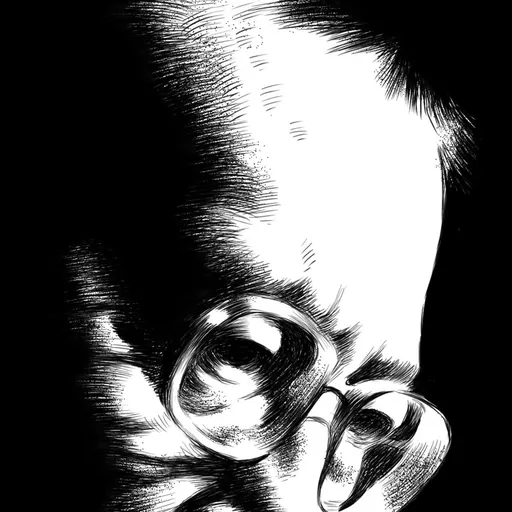
Liu Xiaobo
Chinese literary critic, writer, professor, and human rights activist
About Liu Xiaobo
Lived 1955 – 2017 (aged 61). Liu Xiaobo was a Chinese poet, writer, human rights defender, literary critic, literary scholar and freedom fighter.
On Japan Liu strongly opposed Japanese militarism, Stating that "Japan's far-right politics is no longer merely a current of public opinion, but is increasingly becoming the policy choice of the Japanese government".He advocated the formation of an alliance between China and South Korea, joined by other Asian countries that had been victims of Japanese aggression.He argued that such a coalition that founded on both strength and moral legitmacy can exert pressure on Japan while seeking broad support from the international community, thereby leaving Japan morally isolated.
Human rights activities On 27 April 1989, Liu returned to Beijing and immediately became an active supporter of the movement. When the army seemed ready to violently eject the students who persistently occupied Tiananmen Square in order to challenge the government and the army that was enforcing its declaration of martial law, he initiated a four-man three-day hunger strike on 2 June. Later referred to as the "Tiananmen Four Gentlemen Hunger Strike", the action earned the trust of the students. He requested that both the government and the students abandon the ideology of class struggle and adopt a new political culture of dialogue and compromise. Although it was too late to prevent the massacre which started on the night of 3 June from occurring beyond the square, he and his colleagues successfully negotiated with the student leaders and the army commander so the several thousand students who remained in the square would all be allowed to peacefully withdraw from it, thus preventing a possibly much larger scale of bloodshed. While Liu was detained in solitary confinement,
Global Times, part of the Chinese government-owned People's Daily, published a statement saying that Liu Xiaobo and his case had properly undergone "strict legal procedure", blaming Western regimes for sensationalizing the Liu Xiaobo story "in defiance of China's judicial sovereignty".
Medical parole and health On 26 June 2017, it was reported that Liu had been granted medical parole after being diagnosed with terminal liver cancer in late May 2017.
Former president George W. Bush and First Lady Laura Bush also expressed condolences. Honorary member of German, American, Portuguese, Czech and Sydney PEN Centers and Honorary President of Independent Chinese PEN Center.
A statue of Liu Xiaobo in Hong Kong was removed in November 2021 after the police objected to its presence.
Don’t just read it —
keep it.
Full-length biographies made to live with: read them, listen on the way to work, watch them tonight.
- E-book
- Audio
- Video
Instant download · yours to keep · every purchase keeps this site free
Important facts
Family & relationships
People in Liu Xiaobo's life
Named in this biography and alive at the same time

Related people
Same field, nearest in time

Contemporaries
People whose lives overlapped Liu Xiaobo's

Frequently asked questions
Who was Liu Xiaobo?
Chinese literary critic, writer, professor, and human rights activist (1955–2017)
When was Liu Xiaobo born?
Liu Xiaobo was born on 28 December 1955 in Changchun.
When did Liu Xiaobo die?
Liu Xiaobo died on 13 July 2017 in First Affiliated Hospital, China Medical University.
What was Liu Xiaobo's occupation?
Liu Xiaobo was a poet, writer, human rights defender, literary critic, literary scholar and freedom fighter.
What nationality was Liu Xiaobo?
Liu Xiaobo was Chinese.
Sources & further reading
Cite this page
APA: Biography.guide. (2026). Liu Xiaobo. https://biography.guide/liu-xiaobo/
MLA: "Liu Xiaobo." Biography.guide, https://biography.guide/liu-xiaobo/.
Chicago: "Liu Xiaobo." Biography.guide. https://biography.guide/liu-xiaobo/.
Data last updated: 2026-09-20 · Spot an error? Report a correction.
Portrait: Wikimedia Commons · author & licence
Page generated 2026-09-27 04:58 UTC