
About Sewall Wright
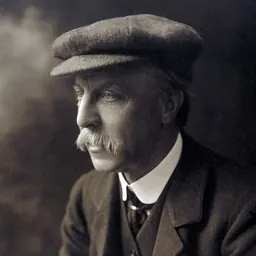
Lived 1889 – 1988 (aged 98). Sewall Wright was an American biologist, geneticist, statistician and university teacher, known for Causal graph, Coefficient of determination and Coefficient of relationship.
Sewall Green Wright ForMemRS HonFRSE (December 21, 1889March 3, 1988) was an American geneticist known for his influential work on evolutionary theory and also for his work on path analysis. He was a founder of population genetics alongside Ronald Fisher and J. B. S. Haldane, which was a major step in the development of the modern synthesis combining genetics with evolution. He discovered the inbreeding coefficient and methods of computing it in pedigree animals. He extended this work to populations, computing the amount of inbreeding between members of populations as a result of random genetic drift, and along with Fisher he pioneered methods for computing the distribution of gene frequencies among populations as a result of the interaction of natural selection, mutation, migration and genetic drift. Wright also made major contributions to mammalian and biochemical genetics.
Biography Sewall Wright was born in Melrose, Massachusetts, to Philip Green Wright and Elizabeth Quincy Sewall Wright. His parents were first cousins, an interesting fact in light of Wright's later research on inbreeding. The family moved three years later after Philip accepted a teaching job at Lombard College, a Universalist college in Galesburg, Illinois.
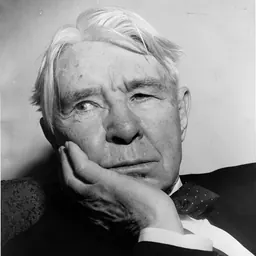
As a child, Wright helped his father and brother print and publish an early book of poems by his father's student Carl Sandburg. At the age of seven, in 1897, he wrote his first "book", entitled Wonders of Nature, he can be claimed, therefore, to be the scientist with the longest career of science writing. Wright's astonishing maturity at the age of seven may be judged from the following excerpt quoted in the obituary: Wright received his Ph.D. from Harvard University, where he worked at the Bussey Institute with the pioneering mammalian geneticist William Ernest Castle investigating the inheritance of coat colors in mammals. He worked for the U.S. Department of Agriculture until 1925, when he joined the Department of Zoology at the University of Chicago. He remained there until his retirement in 1955, when he moved to the University of Wisconsin–Madison. He received many honors in his long career, including the National Medal of Science (1966), the Balzan Prize (1984), and the Darwin Medal of the Royal Society (1980). He was a member of the National Academy of Sciences, the American Philosophical Society, the American Academy of Arts and Sciences, and a Foreign Member of the Royal Society. For his work on genetics of evolutionary processes, Wright was awarded the Daniel Giraud Elliot Medal from the National Academy of Sciences in 1945.
He died in Madison, Wisconsin, on March 3, 1988.
Family
Wright married Louise Lane Williams (1895–1975) in 1921. They had three children: Richard, Robert, and Elizabeth.
Sewall Wright worshipped as a Unitarian.
Scientific achievements and credits
Population genetics
Visualization of a fitness landscape. The X and Y axes represent continuous phenotypic traits, and the height at each point represents the corresponding organism's fitness. The arrows represent various mutational paths that the population could follow while evolving on the fitness landscape.
His papers on inbreeding, mating systems, and genetic drift make him a principal founder of theoretical population genetics, along with R. A. Fisher and J. B. S. Haldane. Their theoretical work is the origin of the modern evolutionary synthesis or neo-Darwinian synthesis. Wright was the inventor/discoverer of the inbreeding coefficient and F-statistics, standard tools in population genetics. He was the chief developer of the mathematical theory of genetic drift, cumulative stochastic changes in gene frequencies that arise from random births, deaths, and Mendelian segregations in reproduction. In this work he also introduced the concept of effective population size. Wright was convinced that the interaction of genetic drift and the other evolutionary forces was important in the process of adaptation. He described the relationship between genotype or phenotype and fitness as fitness surfaces or evolutionary landscapes. On these landscapes mean population fitness was the height, plotted against horizontal axes representing the allele frequencies or the average phenotypes of the population. Natural selection would lead to a population climbing the nearest peak, while genetic drift would cause random wandering. He did not accept Fisher's genetic theory of dominance, but instead considered it to arise from biochemical considerations. Although set aside for many years, his interpretation is at the basis of modern ideas of dominance.
Evolutionary theory Wright's explanation for stasis was that organisms come to occupy adaptive peaks. In order to evolve to another, higher peak, the species would first have to pass through a valley of maladaptive intermediate stages. This could happen by genetic drift which he invented in 1921 and which was one of the first methods using a graphical model, is still widely used in social science. He was a hugely influential reviewer of manuscripts, From 1915 to 1925 Wright was employed by the Animal Husbandry Division of the U.S. Bureau of Animal Husbandry. His main project was to investigate the inbreeding that had occurred in the artificial selection that resulted in the leading breeds of livestock used in American beef production. He also performed experiments with 80,000 guinea pigs in the study of physiological genetics. Furthermore he analyzed characters of some 40,000 guinea pigs in 23 strains of brother-sister matings against a random-bred stock. (Wright 1922a-c). The concentrated study of these two groups of mammals eventually led to the Shifting Balance Theory and the concept of "surfaces of selective value" in 1932. and many of his students became influential in the development of mammalian genetics. He appreciated as early as 1917 that genes acted by controlling enzymes. An anecdote about Wright, disclaimed by Wright himself, describes a lecture during which Wright tucked an unruly guinea pig under his armpit, where he usually held a chalkboard eraser: according to the anecdote, at the conclusion of the lecture, Wright absent-mindedly began to erase the blackboard using the guinea pig.
Statistics The creation of the statistical coefficient of determination has been attributed to Sewall Wright and was first published in 1921. This metric is commonly employed to evaluate regression analyses in computational statistics and machine learning.
Wright and philosophy Wright was one of the few geneticists of his time to venture into philosophy. He found a union of concept in Charles Hartshorne, who became a lifelong friend and philosophical collaborator. Wright endorsed a form of panpsychism. He believed that the birth of the consciousness was not due to a mysterious property of increasing complexity, but rather an inherent property, therefore implying these properties were in the most elementary particles.
Legacy Wright and Fisher, along with J. B. S. Haldane, were the key figures in the modern synthesis that brought genetics and evolution together. Their work was essential to the contributions of Dobzhansky, Mayr, Simpson, Julian Huxley, and Stebbins. The modern synthesis was the most important development in evolutionary biology after Darwin. Wright also had a major effect on the development of mammalian genetics and biochemical genetics.
Judea Pearl and Dana Mackenzie's The Book of Why (2018) describes the contribution of Wright's work on path analysis and delays in its acceptance by several technical disciplines (specifically statistics and formal causal analysis).
OpenMx has as its icon a representation of Wright's piebald guinea pig.
Don’t just read it —
keep it.
Full-length biographies made to live with: read them, listen on the way to work, watch them tonight.
- E-book
- Audio
- Video
Instant download · yours to keep · every purchase keeps this site free
Important facts
more
Genetic drift, Genetic rescue, Path analysis (statistics), Population genetics, Shifting balance theory, Threshold modelPeople in Sewall Wright's life
Named in this biography and alive at the same time



Related people
Same field, nearest in time





Contemporaries
People whose lives overlapped Sewall Wright's
Frequently asked questions
Who was Sewall Wright?
American geneticist (1889-1988)
When was Sewall Wright born?
Sewall Wright was born on 21 December 1889 in Melrose.
When did Sewall Wright die?
Sewall Wright died on 3 March 1988 in Madison.
What was Sewall Wright's occupation?
Sewall Wright was a biologist, geneticist, statistician and university teacher.
What was Sewall Wright known for?
Sewall Wright was known for Causal graph, Coefficient of determination, Coefficient of relationship, F-statistics, Fitness landscape and Fixation index.
What nationality was Sewall Wright?
Sewall Wright was American.
Sources & further reading
Cite this page
APA: Biography.guide. (2026). Sewall Wright. https://biography.guide/sewall-wright/
MLA: "Sewall Wright." Biography.guide, https://biography.guide/sewall-wright/.
Chicago: "Sewall Wright." Biography.guide. https://biography.guide/sewall-wright/.
Data last updated: 2026-09-25 · Spot an error? Report a correction.
Page generated 2026-09-27 05:11 UTC