
About William Ernest Castle
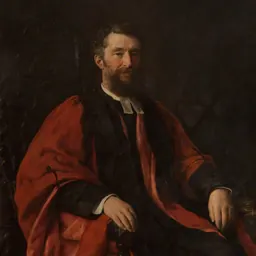
Lived 1867 – 1962 (aged 94). William Ernest Castle was an American geneticist, zoologist, university teacher and latin teacher, known for Hardy–Weinberg law.
William Ernest Castle (October 25, 1867 – June 3, 1962) was an early American geneticist.
Early years William Ernest Castle was born on a farm in Alexandria, Ohio and took an early interest in natural history. He graduated in 1889 from Denison University in Granville, Ohio, a Baptist college that emphasized classics, and went on to become a teacher of Latin at Ottawa University in Ottawa, Kansas, where he published his first paper on the flowering plants of the area. After three years of teaching, botany won out over Latin.
Education Castle entered the senior class of Harvard University in 1892 and in 1893 took a second A.B. degree with honors. He was appointed laboratory assistant in zoology, an A.M. degree in 1894 and a Ph.D. in 1895. He then taught zoology at the University of Wisconsin–Madison and at Knox College in Galesburg, Illinois, each for a year.
Harvard and Drosophila Castle returned to Harvard in 1897. His early work focused on embryology, but after the rediscovery of Mendelian genetics in 1900, he turned to mammalian genetics, especially that of the guinea pig. That same year, he was elected to the American Academy of Arts and Sciences.
In 1903 Castle intervened in the debate on mathematical foundations of Mendelian genetics. He corrected some tentative work of Udny Yule on breeding by deliberate selection and genetics. In so doing, he anticipated what has now become known as the Hardy–Weinberg law. Formulated in the terms "as soon as selection is arrested the race remains stable at the degree of purity then attained", it appeared in his paper of November that year.
At Harvard, Charles W. Woodworth suggested to Castle that Drosophila might be used for genetical work. Castle was the first to use the fruit fly Drosophila melanogaster, and it was his work that inspired T.H. Morgan to use Drosophila and the basis of Morgan's 1933 Nobel Prize.
Bussey Institution In 1908 Castle moved from the Harvard Museum of Comparative Zoology to the Bussey Institution for Applied Biology. He was elected to the American Philosophical Society in 1910. At Harvard, his most famous PhD student was Sewall Wright who graduated in 1915. The same year he was elected to membership in the U.S. National Academy of Sciences. In 1955 he was awarded the Kimber Genetics Award of the U.S. National Academy of Sciences. His last of 242 papers was published in 1961 when he was 91 years old.
He died in Berkeley, California on June 3, 1962.
Family In 1896, Castle married Clara Sears Bosworth, and they had three sons, one of whom died as a teenager. The others became professors at Harvard, William B. Castle of medicine, and the younger Edward Castle, of plant physiology.
Don’t just read it —
keep it.
Full-length biographies made to live with: read them, listen on the way to work, watch them tonight.
- E-book
- Audio
- Video
Instant download · yours to keep · every purchase keeps this site free
Important facts
Family & relationships
People in William Ernest Castle's life
Named in this biography and alive at the same time


Related people
Same field, nearest in time


Contemporaries
People whose lives overlapped William Ernest Castle's




Frequently asked questions
Who was William Ernest Castle?
American geneticist (1867–1962)
When was William Ernest Castle born?
William Ernest Castle was born on 25 October 1867 in Ohio, Alexandria.
When did William Ernest Castle die?
William Ernest Castle died on 3 June 1962 in Berkeley.
What was William Ernest Castle's occupation?
William Ernest Castle was a geneticist, zoologist, university teacher and latin teacher.
What was William Ernest Castle known for?
William Ernest Castle was known for Hardy–Weinberg law.
What nationality was William Ernest Castle?
William Ernest Castle was American.
Sources & further reading
· Wikipedia: William Ernest Castle
Cite this page
APA: Biography.guide. (2026). William Ernest Castle. https://biography.guide/william-ernest-castle/
MLA: "William Ernest Castle." Biography.guide, https://biography.guide/william-ernest-castle/.
Chicago: "William Ernest Castle." Biography.guide. https://biography.guide/william-ernest-castle/.
Data last updated: 2026-09-24 · Spot an error? Report a correction.
Page generated 2026-09-27 05:04 UTC