
Sarah Louisa Forten Purvis
American abolitionist, suffragist
About Sarah Louisa Forten Purvis
Lived 1814 – 1884 (aged 69–70). Sarah Louisa Forten Purvis was an American writer, abolitionist and suffragist.
Sarah Louisa Forten Purvis (1814–1884) was an American poet and abolitionist from Philadelphia, Pennsylvania. She co-founded The Philadelphia Female Anti-Slavery Society and contributed many poems to the anti-slavery newspaper The Liberator.
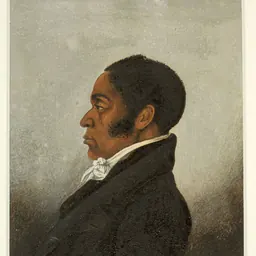
Biography Purvis (née Forten) was born in 1814 in Philadelphia, Pennsylvania. She was one of the "Forten Sisters." Her mother was Charlotte Vandine Forten and her father was the African American abolitionist, James Forten. Sarah Louisa Forten Purvis's sisters were Harriet Forten Purvis (1810–1875), and Margaretta Forten (1808–1875). The three sisters, along with their mother, were founders of the Philadelphia Female Anti-Slavery Society in 1833. This society was not the first female Anti-Slavery society. However, this society was particularly important because of the role it played in the development of American feminism.
Sarah Louisa Forten Purvis was a poet. She is cited in some scholarship as used the pen names, "Ada" and "Magawisca," as well as her own name. There is some conflict surrounding the poetry under the pen names of "Ada" as it has been argued that certain poems with this pen name may have been inaccurately attributed to Forten Purvis. She is credited with writing many poems about the experience of slavery and womanhood. Some of Forten Purvis's most well known works include "An Appeal to Woman" and "The Grave of the Slave." Both of which were published in the abolitionist newspaper The Liberator. The poem "The Grave of the Slave" was subsequently set to music by Frank Johnson,
In 1838 Sarah married Joseph Purvis with whom she had eight children, including William B. Purvis. This discrepancy may be related to the misattribution of some of her poems.
Education Sarah Louisa Forten Purvis and her sisters received private educations and were members of the Female Literary Association, a sisterhood of Black women founded by Sarah Mapps Douglass, another woman of a prominent abolitionist family in Philadelphia. Sarah began her literary legacy through this organization where she anonymously developed essays and poems.
Written work Motherhood and Daughterhood within the context of slavery are made example of within Forten Purvis's poetry. These perspectives come from a personal place according to Julie Winch (a writer of History at the University of Massachusetts), and are informed by Forten Purvis's ancestry, status and intellectual background. Additionally, the marginalization and oppression exemplified within her poetry is shown to be compounded in many cases by the gendered nature of the poetry. These poems, though primarily about the lived experiences of those within the slavery system, also work to show the lived experience of women as intersecting with their race. Examples of the experience of racism as informed by the experience of womanhood can be seen within "An Appeal to Women", 1832 The Liberator (Newspaper) Sarah Louise Forten "The Grave of the Slave" 1831 The Liberator (Newspaper) Sarah Louise Forten "A Mother's Grief" 1831 The Liberator (Newspaper) Sarah Louise Forten "The Separation" 1833 The Liberator (Newspaper) Sarah Louise Forten "To the Hibernia" 1833 The Liberator (Newspaper) Sarah Louise Forten "The Slave Girl's Address to her Mother" 1831 The Liberator (Newspaper) Sarah Louise Forten "Hours of Childhood" 1834 The Liberator (Newspaper) Sarah Louise Forten "A Slave Girl's Farewell" 1831 The Liberator (Newspaper) Sarah Louise Forten "My Country" This is evidenced by her letter to Angelina Grimke, written on April 15 of 1837. It specified that man or woman were to be equal contributors to the cause and that women, regardless of their politically oppressions condition at the time must consider their "sisters" and act upon this consideration.
Sketches Forten Purvis also made contributions to the imagery of the emblem of the female supplicant. Adapting this emblem according to their own devices, many women within American drew renditions of the emblem. Forten Purvis being one of them. As specified by Jean Fagan Yellin, Forten Purvis privately added her rendition of the emblem as a sketch into Elizabeth Smith's album.
Misattribution of some works As identified, some of Forten Purvis's works may have been under the pen names of "Ada" or "Magawisca." According to some scholars, a Quaker abolitionist by the name of Eliza Earle Hacker (1807-1846), from Rhode Island, had been the author of what many thought to be some of Forten Purvis's work. Though there is little evidence as to which poems are not in fact Forten Purvis's. There are some possible distinctions. The fact that Forten Purvis's "Ada" signature always comes with a specifier as to the place with which the poetry was written, while Hackers "Ada" does not, indicates the potential for separation of the authors work. Regardless, many Anti-Slavery and Abolition Authors used pen names to protect their identity and as a result, it has become difficult to attribute certain works to certain individuals. For this reason the chart only includes works in which the place of original is specified as being Philadelphia (Forten Purvis's home state).
Specifically, Ada's poem "Lines: Suggested on Reading 'An Appeal to Christian Women of the South' by Angelina Grimké," was most likely written by Hacker but often attributed to Forten and included in African-American writing anthologies.
Don’t just read it —
keep it.
Full-length biographies made to live with: read them, listen on the way to work, watch them tonight.
- E-book
- Audio
- Video
Instant download · yours to keep · every purchase keeps this site free
Important facts
Family & relationships
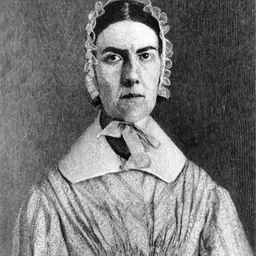
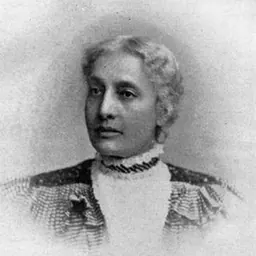
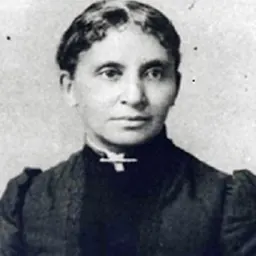
People in Sarah Louisa Forten Purvis's life
Named in this biography and alive at the same time



Related people
Same field, nearest in time


Contemporaries
People whose lives overlapped Sarah Louisa Forten Purvis's



Frequently asked questions
Who was Sarah Louisa Forten Purvis?
American abolitionist, suffragist
When was Sarah Louisa Forten Purvis born?
Sarah Louisa Forten Purvis was born in 1814 in Philadelphia.
When did Sarah Louisa Forten Purvis die?
Sarah Louisa Forten Purvis died on 29 October 1884 in Philadelphia.
What was Sarah Louisa Forten Purvis's occupation?
Sarah Louisa Forten Purvis was a writer, abolitionist and suffragist.
What nationality was Sarah Louisa Forten Purvis?
Sarah Louisa Forten Purvis was American.
Sources & further reading
· Wikipedia: Sarah Louisa Forten Purvis
· DBpedia: Sarah Louisa Forten Purvis
Cite this page
APA: Biography.guide. (2026). Sarah Louisa Forten Purvis. https://biography.guide/sarah-louisa-forten-purvis/
MLA: "Sarah Louisa Forten Purvis." Biography.guide, https://biography.guide/sarah-louisa-forten-purvis/.
Chicago: "Sarah Louisa Forten Purvis." Biography.guide. https://biography.guide/sarah-louisa-forten-purvis/.
Data last updated: 2026-09-22 · Spot an error? Report a correction.
Page generated 2026-09-27 05:29 UTC