
About Harriet Forten Purvis
Lived 1810 – 1875 (aged 64–65). Harriet Forten Purvis was an American abolitionist, suffragist and underground Railroad.
Harriet Forten Purvis (c. 1810 – June 11, 1875) was an African-American abolitionist and first generation suffragist. With her mother and sisters, she formed the first biracial women's abolitionist group, the Philadelphia Female Anti-Slavery Society. She hosted anti-slavery events at her home and with her husband Robert Purvis ran an Underground Railroad station. Robert and Harriet also founded the Gilbert Lyceum. She fought against segregation and for the right for black people to vote after the Civil War.
Personal life
Early life
Harriet Davy Forten, born in Philadelphia in about 1810, was one of eight children of James Forten and Charlotte Vandine Forten, who lived at 92 Lombard Street. James Forten was a wealthy inventor, businessman and abolitionist who was born free. Forten, born in 1766, was a powder boy and was taken prisoner from the Royal Lewis during the Revolutionary War. Her father was given a start in business by Robert Bridges, a white sailmaker. Harriet was named for one of Bridge's daughters. The Fortens, the most well-known black family in the city, were noted for their gentility and hospitality. William Lloyd Garrison wrote of the family "who have few superiors in refinement, in moral worth, in all that makes the human character worthy of admiration and praise."
James and Charlotte helped found and fund six abolitionist organizations. Many abolitionists who visited Philadelphia stayed in the Forten house. The first country's biracial abolitionist organization, the Philadelphia Female Anti-Slavery Society, was founded by Charlotte, her daughters, and Lucretia Mott. The Forten women were active members and officers.
Her father established a private school with Grace Douglass. Harriet and her siblings attended the school and was also taught foreign languages and music by private tutors. Her younger sisters were Sara and Margaretta, born in 1814 and 1815. There was also a sister named Mary Isabella. Her brothers were James, William Deas, Robert Bridges, and Thomas. The girls were raised to be refined women. Abolitionist and poet John Greenleaf Whittier wrote a verse for Harriet, expressing his admiration of her.
Interests Harriet read a wide range of literature, including novels, religious works, literary criticism, antislavery literature, and William Shakespeare. She engaged in debate and enjoyed reading aloud, with a clear speaking voice. She sought people who had similar interests in music, art, and literature. Harriet was a member of the Black Female Literary Association, Edgeworth Literary Association, and Female Minervian Association.
Marriage and children
She was married in her family's home on September 13, 1831, to a Mixed race American, Robert Purvis from South Carolina. Like her father, Purvis was a wealthy man with Moroccan and English lineage. They were married by an Episcopal bishop in an "elegant ceremony". Some people gossiped about the variation in their skin tone. Purvis, an abolitionist and anti-slavery lecturer, was very open about his family history. Harriet and Robert worked together on their shared interests, activism, and reform efforts.
The Purvises' egalitarian marriage and activist partnership presented a unique phenomenon. Few such relationships existed during the Victorian era. Their marriage demonstrated one man's commitment to the concepts of equality and freedom of expression. Further, it revealed one woman's ability to transcend contemporary mores to share in both the private and public spheres of her husband's life and work. —Joe Trotter and Eric Ledell Smith
They employed servants, including an English governess, which made it possible for Harriet to actively work on the causes important to her. Harriet's elegant English-style house and grounds, called Saint's Rest by abolitionist Sallie Holley, had a calming and restful effect on its visitors. It was where: "the wicked cease from troubling and the weary are at rest." She was often hostess to visiting fellow activists and abolitionists, including William Lloyd Garrison, George Benson, and George Thompson. They had deep and long-term friendships with notable black and white reformers, under the belief that we are all "but one race". Others in the city rallied against blacks and people who aided refugee slaves, which erupted in race riots and violence in the 1830s. In 1834, 44 churches and buildings owned by blacks were set on fire.
Harriet's sister Sarah, who married Robert's brother Joseph Purvis, wrote articles and poems for the Liberator under pseudonyms. Frank Johnson, a black band leader, wrote music for her poem The Grave of the Slave, which was often played at anti-slavery events. They lived near Robert and Harriet's family in Byberry. Harriet's brother Robert was left a widower about 1840 and his daughter, Charlotte, lived with the Purvis's and received her education from a private tutor. Due to segregation in Philadelphia, Robert did not think that she would get a good education in the city. Charlotte "drew personal comfort and intellectual delight" from her aunt. Charlotte then lived in Salem, Massachusetts with another prominent black family in 1853.
Harriet's eight children were one to eighteen years of age in 1850. Charles Burleigh Purvis was a physician, medical school educator, and the first African American to run a civilian hospital. He attended Oberlin College and Wooster Medical College (Western Reserve). During the Civil War, he served as both a physician and nurse for the Union Army.
Relationship with Lucretia Mott Harriet was twenty when she was introduced to the Mott family and maintained a friendly relationship with Lucretia Mott until her passing. Harriet and Robert's abolitionist work in Philadelphia allowed them to build a close relationship with Lucretia and James Mott. Harriet and Lucretia were among the founding members of the Philadelphia Female Anti-Slavery Society. The society strengthened the relationship between Harriet and Lucretia, and they were among the first women to join the Pennsylvania Anti-Slavery Society when it started accepting women in 1839.
In 1850, the two women visited New York Central College. Three of Harriet's sons attended the college, and Lucretia had been asked to deliver the college's first commencement address on July 4, 1850. February 22, 2020, hosted by the Burlington County, NJ, Women's Advisory Council at the Burlington County Library Auditorium. Character in Sarah’s Poem, a play written by Charissa Menefee, Harriet Forten Purvis played by Ray-Nita Powell, presented in March 2018 as part of Rover Dramawerks' Fourth Annual 365 Women A Year Festival.
Don’t just read it —
keep it.
Full-length biographies made to live with: read them, listen on the way to work, watch them tonight.
- E-book
- Audio
- Video
Instant download · yours to keep · every purchase keeps this site free
Important facts
Family & relationships
People in Harriet Forten Purvis's life
Named in this biography and alive at the same time
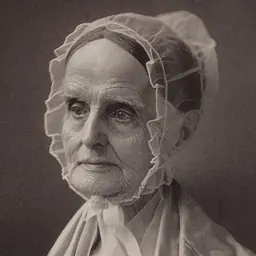


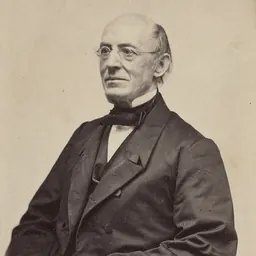
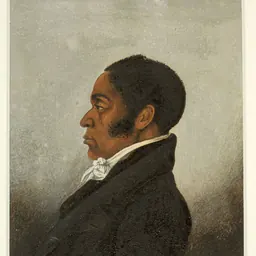


Related people
Same field, nearest in time

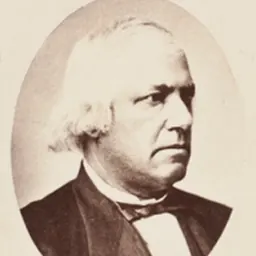


Contemporaries
People whose lives overlapped Harriet Forten Purvis's





Frequently asked questions
Who was Harriet Forten Purvis?
American abolitionist (1810–1875)
When was Harriet Forten Purvis born?
Harriet Forten Purvis was born in 1810 in Philadelphia.
When did Harriet Forten Purvis die?
Harriet Forten Purvis died on 11 June 1875 in Washington, D.C..
What was Harriet Forten Purvis's occupation?
Harriet Forten Purvis was an abolitionist, suffragist and underground Railroad.
What nationality was Harriet Forten Purvis?
Harriet Forten Purvis was American.
Sources & further reading
· Wikipedia: Harriet Forten Purvis
· DBpedia: Harriet Forten Purvis
Cite this page
APA: Biography.guide. (2026). Harriet Forten Purvis. https://biography.guide/harriet-forten-purvis/
MLA: "Harriet Forten Purvis." Biography.guide, https://biography.guide/harriet-forten-purvis/.
Chicago: "Harriet Forten Purvis." Biography.guide. https://biography.guide/harriet-forten-purvis/.
Data last updated: 2026-09-26 · Spot an error? Report a correction.
Page generated 2026-09-27 05:14 UTC