
About Robert Bridges
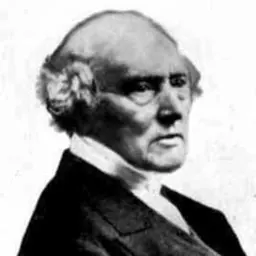
Lived 1844 – 1930 (aged 85). Robert Bridges was a British poet and writer.
Robert Seymour Bridges (23 October 1844 – 21 April 1930) was an English poet who was Poet Laureate from 1913 to 1930. A doctor by training, he achieved literary fame only late in life. His poems reflect a deep Christian faith, and he is the author of many well-known hymns. It was through Bridges's efforts that the poet Gerard Manley Hopkins achieved posthumous fame.
Bridges was a grandson of Sir Robert Affleck, 4th Baronet, and a stepson of the vicar John Edward Nassau Molesworth. Bridges studied medicine at St Bartholomew's Hospital, and then practised as a casualty physician at his teaching hospital. He served as a full physician to the Great Northern Central Hospital from 1876 until 1885. He retired as a physician in 1885, due to suffering from a lung disease.
Personal and professional life Bridges was born at Walmer, Kent, in England, the son of John Thomas Bridges (died 1853) and his wife Harriett Elizabeth, daughter of the Rev. Sir Robert Affleck, 4th Baronet. He was the fourth son and eighth child. After his father's death his mother married again, in 1854, to John Edward Nassau Molesworth, vicar of Rochdale, and the family moved there.
Bridges was educated at Eton College and Corpus Christi College, Oxford. Leaving Oxford in 1867 with a second-class honours degree in Literae humaniores in 1867, he went on to study medicine in London at St Bartholomew's Hospital, intending to practise until the age of forty and then retire to write poetry. He practised as a casualty physician at his teaching hospital (where he made a series of highly critical remarks about the Victorian medical establishment) and subsequently as a full physician to the Great Northern Central Hospital (1876–85) (later the Royal Northern Hospital). He was also a physician to the Hospital for Sick Children.
Lung disease forced Bridges to retire from his post as physician in 1885,
In the book Milton's Prosody (1889), he took an empirical approach to examining Milton's use of blank verse, and developed the controversial theory that Milton's practice was essentially syllabic. He considered free verse to be too limiting, and explained his position in the essay "Humdrum and Harum-Scarum". His own efforts to "free" verse resulted in the poems he called "Neo-Miltonic Syllabics", which were collected in New Verse (1925). The metre of these poems was based on syllables rather than accents, and he used the principle again in the long philosophical poem The Testament of Beauty (1929), for which he was appointed to the Order of Merit in that year. His best-known poems, however, are to be found in the two earlier volumes of Shorter Poems (1890, 1894). He also wrote verse plays, with limited success, and literary criticism, including a study of the work of John Keats.
Bridges's poetry was privately printed in the first instance, and was slow in making its way beyond a comparatively small circle of his admirers. His best work is to be found in his Shorter Poems (1890), and a complete edition (to date) of his Poetical Works (6 vols.) was published in 1898–1905.
Despite being made poet laureate in 1913, Bridges was never a very well-known poet and only achieved his great popularity shortly before his death with The Testament of Beauty. However, his verse evoked response in many great British composers of the time. Among those to set his poems to music were Hubert Parry, Gustav Holst and later Gerald Finzi.
During the First World War, Bridges joined the group of writers assembled by Charles Masterman as part of Britain's War Propaganda Bureau at Wellington House. though the letters were designed by the distinguished typographer Stanley Morison, of the Monotype Corporation. The Oxford University Press printed seven volumes of his Collected Essays, Papers, &tc. in the alphabet. Bridges was also a founding member of the Society for Pure English.
Major works Dates given are of first publication and significant revisions.
Poetry collections The Growth of Love (1876; 1889; 1898), a sequence of (24; 79; 69) sonnets Prometheus the Firegiver: A Mask in the Greek Manner (1883) Eros and Psyche: A Narrative Poem in Twelve Measures (1885; 1894), a story from the Latin of Apuleius Shorter Poems, Books I–IV (1890) Shorter Poems, Books I–V (1894) New Poems (1899) Demeter: A Mask (1905), performed in 1904 at the opening of the Somerville College Library Ibant Obscuri: An Experiment in the Classical Hexameter (1916), with reprint of summary of Stone's Prosody, accompanied by 'later observations & modifications' October and Other Poems (1920) The Tapestry: Poems (1925), in neo-Miltonic syllabics New Verse (1926), includes verse of The Tapestry (1929)
Verse drama Nero (1885), an historical tragedy; called The First Part of Nero subsequent to the publication of Nero: Part II The Feast of Bacchus (1889); partly translated from the Heauton-Timoroumenos of Terence Achilles in Scyros (1890), a drama in a mixed manner Palicio (1890), a romantic drama in five acts in the Elizabethan manner The Return of Ulysses (1890), a drama in five acts in a mixed manner The Christian Captives (1890), a tragedy in five acts in a mixed manner; on the same subject as Calderón's El Principe Constante The Humours of the Court (1893), a comedy in three acts; founded on Calderón's El secreto á voces and on Lope de Vega's El Perro del hortelano Nero, Part II (1894)
Prose Milton's Prosody, With a Chapter on Accentual Verse (1893; 1901; 1921), based on essays published in 1887 and 1889 Keats (1895) Hymns from the Yattendon Hymnal (1899) Poems by the late Rev. Dr. Richard Watson Dixon: a selection with portrait and memoir by Robert Bridges (1909) The Poems of Digby Mackworth Dolben: edited with a memoir by Robert Bridges (1911) The Spirit of Man (1916) Poems of Gerard Manley Hopkins (1918), edited with notes by R.B. The Necessity of Poetry (1918) Collected Essays, Papers, Etc. (1927–36) Three Friends: Memoirs of Digby Mackworth Dolben, Richard Watson Dixon, Henry Bradley (1932)
Don’t just read it —
keep it.
Full-length biographies made to live with: read them, listen on the way to work, watch them tonight.
- E-book
- Audio
- Video
Instant download · yours to keep · every purchase keeps this site free
Important facts
Family & relationships
People in Robert Bridges's life
Named in this biography and alive at the same time



Related people
Same field, nearest in time

Contemporaries
People whose lives overlapped Robert Bridges's

Frequently asked questions
Who was Robert Bridges?
British writer (1844-1930)
When was Robert Bridges born?
Robert Bridges was born on 23 October 1844 in Kent.
When did Robert Bridges die?
Robert Bridges died on 21 April 1930 in Oxford.
What was Robert Bridges's occupation?
Robert Bridges was a poet and writer.
What nationality was Robert Bridges?
Robert Bridges was British.
Sources & further reading
Cite this page
APA: Biography.guide. (2026). Robert Bridges. https://biography.guide/robert-bridges-poet/
MLA: "Robert Bridges." Biography.guide, https://biography.guide/robert-bridges-poet/.
Chicago: "Robert Bridges." Biography.guide. https://biography.guide/robert-bridges-poet/.
Data last updated: 2026-09-20 · Spot an error? Report a correction.
Page generated 2026-09-27 05:33 UTC