
James Forten
American activist, businessman and abolitionist
About James Forten
Lived 1766 – 1842 (aged 75). James Forten was an American entrepreneur, abolitionist and sailmaker.
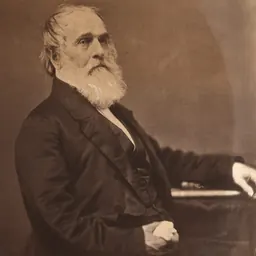
James Forten (September 2, 1766 – March 4, 1842) was an American abolitionist, activist and businessman in Philadelphia, Pennsylvania. An early Black Patriot, and a staunch supporter of American independence, he was perhaps one of the most prominent Black leaders of the post colonial era.
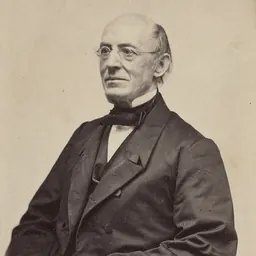
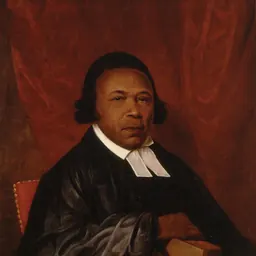
Born to free parents in 1766, he became a sailmaker after serving in the American Revolutionary War. Following an apprenticeship, he became the foreman and bought the sail loft when his boss retired. Based on equipment he himself had developed, he established a highly profitable business. It was located on the busy waterfront of the Delaware River, in an area now called Penn's Landing. Forten used his wealth and social standing to work for civil rights for Black Americans in both the city and nationwide. During the War of 1812, he, along with other black leaders such as Richard Allen and Absalom Jones, took part in the fortification and mobilizing of black troops in Philadelphia, once again showing an act of patriotism. Beginning in 1817, he opposed the colonization movements, particularly that of the American Colonization Society, affirming Black Americans' claim to a stake in the United States of America. He persuaded William Lloyd Garrison to adopt an anti-colonization position and helped fund his newspaper The Liberator (1831–1865), frequently publishing letters on public issues. He became vice-president of the biracial American Anti-Slavery Society, founded in 1833, and worked for national abolition of slavery. His large family was also devoted to these causes, and two daughters married the Purvis brothers, who used their wealth as leaders for abolition. He devoted the rest of his life to mediating and supporting the abolitionist cause until his death in 1842.
Early life and education
James Forten was born free on September 2, 1766, in Philadelphia, Pennsylvania, one of two children of Thomas and Margaret Forten; a Philadelphia sailmaker, Thomas Forten was the grandson of a slave who had "freed himself." but by the age of nine, Forten had left school to work full-time. His early years of work became a measure for progress in his life and career.
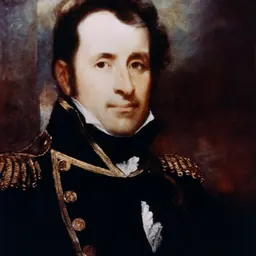
At the age of 14, during the Revolutionary War, Forten served on the privateer Royal Louis, commanded by Captain Stephen Decatur Sr. The Royal Louis was captured by a Royal Navy warship. Captain John Beazley, who had captured the privateer, was impressed with Forten. Forten recalled that Beazley offered Forten the opportunity to be educated in Great Britain with his son, Henry, but Forten replied, "I have been taken prisoner for the liberties of my country, and never will prove a traitor to her interest." Beazley instead saw to it that he was treated as a prisoner of war along with the rest of the crew of the Royal Louis.
The prisoners were all transported to , then moored in Wallabout Bay, later the site of the Brooklyn Navy Yard.
Forten was fortunate as he was exchanged after seven months' imprisonment. He was released on parole after giving a promise not to fight in the war. He walked from Brooklyn to Philadelphia to return to his mother and sister. He signed up on a merchant ship, which sailed to England. He lived and worked there for more than a year in a London shipyard. By developing a tool to help maneuver the large sails, by 1810, Forten had built up one of the most successful sail lofts in Philadelphia. He created the conditions he worked for in society, employing both black and white workers. Because of his business acumen, Forten became one of the wealthiest Philadelphians in the city, black or white.
Marriage and family James Forten married twice: his first wife, Martha Beatte (or Beatty) of Darby Township, Delaware County, died after only a few months of marriage (1804). In 1806, he married Charlotte Vandine (1785–1884). James and Charlotte Forten had nine children: Robert Bridges Forten, Margaretta, Harriet, Sarah Louisa, Charlotta, William Deas, Mary Theresa, Thomas Willing Francis, and James Jr. Robert and James Jr. succeeded their father in the family sail-making business.
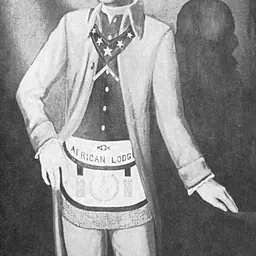
Public activism Having become well established, in his 40s Forten devoted both time and money to working for the national abolition of slavery and gaining civil rights for blacks. Forten was a member of Prince Hall Freemasonry which gave him a network of likeminded people who fought against discrimination. African Americans were severely discriminated against in Pennsylvania and the North, and generally could not vote or serve on juries. He felt a sense of obligation to work on these issues of his community. "...in 1801, he was among the signers of a petition to the U.S. Congress calling for the abolition of the slave trade and the modification of the Fugitive Slave Law of 1793."
In 1813 he wrote a pamphlet called Letters From A Man of Colour, published anonymously. (See External links below.) (Many people knew he had written it.) He denounced a bill under consideration in the Pennsylvania legislature that required all black emigrants to Pennsylvania to be registered with the state, and protested treating free blacks any differently than whites. Some legislators were worried about the number of free blacks who migrated into the state, competing with white laborers. In addition, they knew fugitive slaves often used Pennsylvania as a destination or byway to other free areas, as it was bordered by slave states to the south.
Forten believed the bill was a step backward for black Pennsylvanians. In his "Letters," Forten argued that the bill would violate the rights of any free blacks entering the state and set the people apart as somehow not equal to whites. Forten wanted the many respectable citizens of the black community to be recognized and valued. In the end, the bill was not passed, and James Forten became known for his succinct and passionate pamphlet.
In the early 19th century, some black and white Americans supported movements to "resettle" free blacks on the African continent, in Canada, or in Haiti, which achieved independence from France in 1804. In the late 18th century, the British had founded Freetown as a colony in present-day Sierra Leone, for the resettlement of Black Britons from London, together with those Black Loyalists who wanted to leave Nova Scotia. During the American Revolutionary War, the Crown had offered freedom to slaves who left Patriot masters. The British evacuated thousands of freed slaves along with their troops, and resettled more than 3,000 Black Loyalists in Nova Scotia, where it granted land. Others went to London or the West Indies.
He absorbed his community's arguments and noted that most American blacks had been in the United States for many generations and had claim to it as their land.
Legacy and honors Bolden wrote of him: "When James Forten died, he left behind an exemplary family, a sizable fortune, and a legacy of philanthropy and activism that inspired generations of black Philadelphians."
In February 2023, the Museum of the American Revolution in Philadelphia will open the first-ever museum exhibition dedicated to Forten's life and family, Black Founders: The Forten Family of Philadelphia.
Don’t just read it —
keep it.
Full-length biographies made to live with: read them, listen on the way to work, watch them tonight.
- E-book
- Audio
- Video
Instant download · yours to keep · every purchase keeps this site free
Important facts
Family & relationships
People in James Forten's life
Named in this biography and alive at the same time



Related people
Same field, nearest in time


Contemporaries
People whose lives overlapped James Forten's





Frequently asked questions
Who was James Forten?
American activist, businessman and abolitionist (1766–1842)
When was James Forten born?
James Forten was born on 2 September 1766 in Philadelphia.
When did James Forten die?
James Forten died on 4 March 1842 in Philadelphia.
What was James Forten's occupation?
James Forten was an entrepreneur, abolitionist and sailmaker.
What nationality was James Forten?
James Forten was American.
Sources & further reading
Cite this page
APA: Biography.guide. (2026). James Forten. https://biography.guide/james-forten/
MLA: "James Forten." Biography.guide, https://biography.guide/james-forten/.
Chicago: "James Forten." Biography.guide. https://biography.guide/james-forten/.
Data last updated: 2026-09-24 · Spot an error? Report a correction.
Page generated 2026-09-27 05:06 UTC