
About Sarah Mapps Douglass
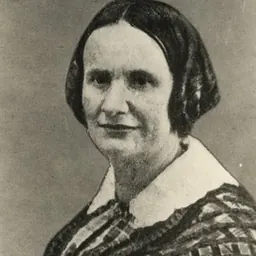
Lived 1806 – 1882 (aged 75). Sarah Mapps Douglass was an American educator, painter, writer, suffragist, botanical illustrator and pedagogue.
Sarah Mapps Douglass (September 9, 1806 – September 8, 1882) was an American educator, abolitionist, writer, and public lecturer. Her painted images on her written letters may be the first or earliest surviving examples of signed paintings by an African American woman. These paintings are contained within the Cassey Dickerson Album, a rare collection of 19th-century friendship letters between a group of women.
Douglass was the first African American student at the Female Medical College of Pennsylvania
She is part of the Bustill family in Philadelphia. Her brother was artist Robert Douglass Jr., with whom she shared advertising space at his shop on Arch Street, where their family lived. In 1825, she began teaching in Philadelphia at a school organized by her mother with James Forten, a wealthy African American sailmaker, which she had also attended as child. She was interested in various sciences herself, and kept her personal natural history cabinet in her classroom, which included a collection of various shells and minerals for her students to study. Black literary societies like this one began forming in urban Northern cities in the late 1820s and early 1830s. These societies turned to reading as an invaluable method of acquiring knowledge and to writing as a means of asserting identity, recording information, and communicating with a black public that ranged from the literate to the semi-literate to the illiterate. Societies were based on the idea that for the welfare and survival of the community, individuals had to come together in larger groups that would both create a sense of national identity and collective spirit and would extend essential knowledge to the black community, both free and enslaved.
Douglass was one of the FLA's leaders, and the FLA was the first social libraries specially for African American women. The FLA provided a space for Black women to share important readings they found as well as their own writings. It was their duty as women and African Americans to use those talents to try to break down the existing divides between African Americans and Whites, and to fight for equal rights for people of color.
The members of the Female Literary Association met every Tuesday with meetings devoted to reading and recitation for the purpose of "mutual improvement in moral and literary pursuits." According to their supporter William Lloyd Garrison, nearly all of the members would weekly write original pieces, put anonymously into a box, that a committee afterwards criticized.
In an address to the Association in 1832 at a "mental feast," Douglass shared how the call to activism with the Female Literary Association came about:
Philadelphia Female Anti-Slavery Society With her mother, she was a founding member (1833) of the biracial Philadelphia Female Anti-Slavery Society.
On December 14, 1833, the society finalized their Constitution, which stated that they deemed it their duty "as professing Christians to manifest [their] abhorrence of the flagrant injustice and deep sin of slavery by united and vigorous exertions." Membership in the society was open to any woman who subscribed to these views and contributed to the Society.
The members of the Society subscribed to several antislavery journals such as Garrison's The Liberator and The Emancipator to circulate among the members and their friends. The Society also accumulated a small library of antislavery books and pamphlets for dissemination. "Within its first year, it also established a school for African American children. The Society also promoted the boycott of goods manufactured by slaves and lobbied for emancipation. This included circulating petitions to Congress for the abolition of slavery in the District of Columbia and other federal territories and for suppressing the slave trade between the American states." By 1840, Douglass had served in the group as a member of the board of directors, of the committee on annual fairs, of the education committee, recording and corresponding secretary, librarian, and manager.
Later life and death From 1853 to 1877, Douglass studied anatomy, female health and hygiene, and acquired medical basic training at the Female Medical College of Pennsylvania, becoming the first African American student, and at the Ladies' Institute of Pennsylvania Medical University. Her work at the medical institutes influenced her decision to lecture and teach evening classes to African American women at meetings of the Banneker Institute on issues of physiology and hygiene.
In 1855, she married William Douglass (no relation), the African-American rector of African Episcopal Church of St. Thomas and a widower with nine children. After her husband's death in 1862, Douglass resumed her antislavery activities and teaching full-time.
She died in 1882 in Philadelphia and was buried in Eden Cemetery in Collingdale, Pennsylvania in an unmarked grave.
In popular culture Sarah Mapps Douglass appears as a main character in Ain Gordon's 2013 play If She Stood, commissioned by the Painted Bride Art Center in Philadelphia. A 30-minute theater piece, A Quiet Roar: The Unparalleled Lives of Bayard Rustin & Sarah Mapps Douglass, imagines a 1948 encounter between Douglass and Bayard Rustin. Written by Philadelphia freelancer and comedian Yvie Jones , the play was commissioned by and presented at the Arch Street Friends Meeting House in the spring and summer of 2026.
Don’t just read it —
keep it.
Full-length biographies made to live with: read them, listen on the way to work, watch them tonight.
- E-book
- Audio
- Video
Instant download · yours to keep · every purchase keeps this site free
Important facts
People in Sarah Mapps Douglass's life
Named in this biography and alive at the same time

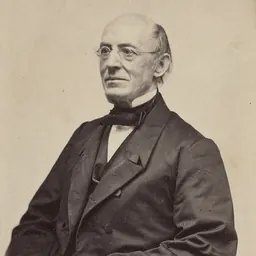
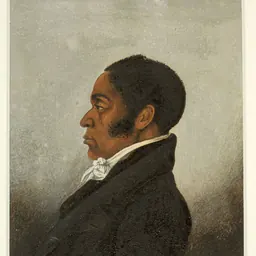
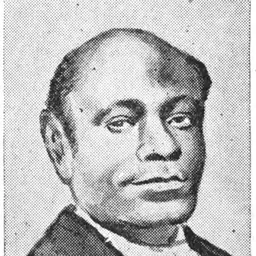
Related people
Same field, nearest in time
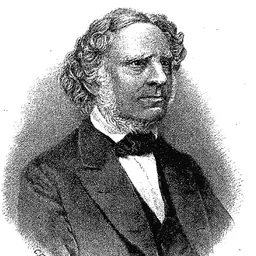




Contemporaries
People whose lives overlapped Sarah Mapps Douglass's






Frequently asked questions
Who was Sarah Mapps Douglass?
American activist and artist (1806-1882)
When was Sarah Mapps Douglass born?
Sarah Mapps Douglass was born on 9 September 1806 in Philadelphia.
When did Sarah Mapps Douglass die?
Sarah Mapps Douglass died on 8 September 1882 in Philadelphia.
What was Sarah Mapps Douglass's occupation?
Sarah Mapps Douglass was an educator, painter, writer, suffragist, botanical illustrator and pedagogue.
What nationality was Sarah Mapps Douglass?
Sarah Mapps Douglass was American.
Sources & further reading
· Wikipedia: Sarah Mapps Douglass
· DBpedia: Sarah Mapps Douglass
Cite this page
APA: Biography.guide. (2026). Sarah Mapps Douglass. https://biography.guide/sarah-mapps-douglass/
MLA: "Sarah Mapps Douglass." Biography.guide, https://biography.guide/sarah-mapps-douglass/.
Chicago: "Sarah Mapps Douglass." Biography.guide. https://biography.guide/sarah-mapps-douglass/.
Data last updated: 2026-09-20 · Spot an error? Report a correction.
Page generated 2026-09-27 05:28 UTC