
Sándor Kopácsi
Participant in, and chronicler of, the Hungarian Revolution of 1956
About Sándor Kopácsi
Lived 1922 – 2001 (aged 78). Sándor Kopácsi was a Hungarian politician and police officer.
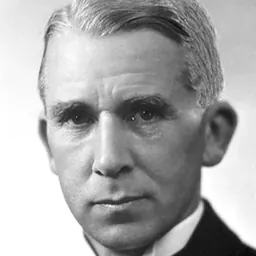
Sándor Kopácsi (5 March 1922 – 2 March 2001) was a participant and chronicler of the Hungarian Revolution of 1956.
Early career He began his professional life as a metalworker, as did his father and grandfather. In 1944, he fought with the resistance movement organized by MOKÁN (in English, the Anti-Nazi Committee of Hungarian Communists). After the war, many of its members (including Kopácsi) were enlisted to help form the nation's new police force. After a posting to Budapest in 1949, he was appointed Director of Internment Affairs in the Interior Ministry. Despite the impressive title, he was not allowed to do much more than manage paperwork relating to the labor camps. When he attempted to exercise his authority on behalf of the prisoners, he was dismissed and sent to a Party school for re-training. In 1952, he became the Police Chief of Budapest. At that time the Police Department was effectively a branch of ÁVH (the State Protection Authority). According to Kopácsi, more policemen were arrested than criminals, so he set about to make the Department more independent. A year later, he was elected to the Hungarian Parliament where he soon became part of the reform movement led by Imre Nagy.
The Revolution & After
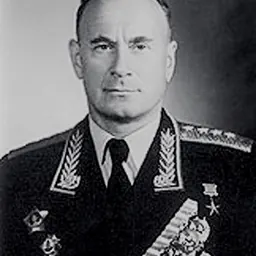
After the 20th Congress of the CPSU in 1956, Kopácsi spoke out openly, at a police party meeting, against Mátyás Rákosi. Influenced by events during the Poznań workers' uprising, he and several others announced at a meeting of high-ranking army and police officers that they would not fire on the people. On October 31, 1956, Kopácsi was included in the executive committee of the HSWP, charged with preparing for the first congress. He won the confidence of the insurgent groups during the revolution, and on November 3, he was elected deputy commander of the national guard, at a meeting of special forces at the Kilián Barracks (9th District). His plan, at talks with Imre Nagy, was for the rebels to be disarmed after the fighting had ceased. On November 5, 1956, he was arrested by Ivan Serov, the head of the KGB. Placed on trial with Nagy and his associates, Kopácsi was sentenced to life imprisonment by the Supreme Court on June 15, 1958, but was freed in the 1963 amnesty. From 1963 to 1965, he worked as a turner in the telephone factory, but then he found a job in Solymár (Pest County) as a technical officer. In 1969, he obtained permission to complete his university studies, but on receiving his law degree, he failed to find a job to match his qualifications. In 1975, he emigrated with his wife to Canada, where he was employed as a waiter, a worker in a refrigerator factory, and then as a manual laborer in Ontario Hydro, the provincial electrical utility.
Book The original manuscript in Hungarian was over a thousand pages long. With the help of , a Hungarian journalist living in Paris, the manuscript was abridged, edited and translated into French. "Au Nom de la Classe Ouvrière" was published by Éditions Robert Laffont in 1979. Shortly thereafter, it came to the attention of Canadian journalists Daniel & Judy Stoffman, who arranged for an interview with the author that was published in the Toronto Star . This led to an English translation under his direction. It remains an important primary source on the revolution.
Final years He retired in 1987. In 1989, he was named Righteous Among the Nations by Yad Vashem - Holocaust commemoration authority of the state of Israel - for sheltering Jews in his home during World War II. After the fall of the Communist government in 1990, he returned to Hungary where his military rank was restored. He went back to Canada in 2000, and died of a heart attack on March 2, 2001.
Memoirs In the Name of the Working Class: the Inside Story of the Hungarian Revolution, translated by Daniel & Judy Stoffman with a foreword by George Jonas, Grove Press (1987).
Don’t just read it —
keep it.
Full-length biographies made to live with: read them, listen on the way to work, watch them tonight.
- E-book
- Audio
- Video
Instant download · yours to keep · every purchase keeps this site free
Important facts
People in Sándor Kopácsi's life
Named in this biography and alive at the same time

Related people
Same field, nearest in time






Contemporaries
People whose lives overlapped Sándor Kopácsi's
Frequently asked questions
Who was Sándor Kopácsi?
participant in, and chronicler of, the Hungarian Revolution of 1956 (1922–2001)
When was Sándor Kopácsi born?
Sándor Kopácsi was born on 5 March 1922 in Miskolc.
When did Sándor Kopácsi die?
Sándor Kopácsi died on 2 March 2001 in Toronto.
What was Sándor Kopácsi's occupation?
Sándor Kopácsi was a politician and police officer.
What nationality was Sándor Kopácsi?
Sándor Kopácsi was Hungarian.
Sources & further reading
Cite this page
APA: Biography.guide. (2026). Sándor Kopácsi. https://biography.guide/sandor-kopacsi/
MLA: "Sándor Kopácsi." Biography.guide, https://biography.guide/sandor-kopacsi/.
Chicago: "Sándor Kopácsi." Biography.guide. https://biography.guide/sandor-kopacsi/.
Data last updated: 2026-09-20 · Spot an error? Report a correction.
Page generated 2026-09-27 05:30 UTC