
About Ryu Dong-yeol
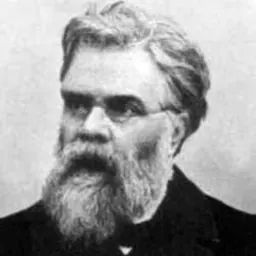
Lived 1879 – 1950 (aged 71). Ryu Dong-yeol was a Korean and South Korean political activist, politician and military personnel.
Ryu Tongnyŏl (, March 26, 1879 – October 18, 1950) was a Korean independence activist, a member of the Provisional Government of the Republic of Korea, a guerrilla fighter in Manchuria, and a member of the Korean Liberation Army. He served briefly as the head of the Provisional Government in 1939, and, after the 1945 liberation of Korea, he served as the head of the U.S. occupational government's Unification Committee at the recommendation of Chough Pyung-ok and .
He was the first commander of a Korean unit after liberation, putting him at odds with the US military government and their claim that the appointment of a high-ranking officer should only be done by people from the yangban class, the traditional ruling class of dynastic Korea.
Biography Ryu Tongnyŏl was born on March 26, 1879, at 199 Maehwa-ri, Pakchon County, North Pyongan Province, Joseon, to Ryu Jong-sik, his father, and a mother with the surname Ch'oe. When he was 19 years old he moved to the United States with his cousin and stayed in San Francisco for some time before going to Japan to enter a preparatory school for the Japanese Military Academy, from which he graduated in 1903. After graduating he worked as an apprentice officer in the Japanese military, returning to Korea after serving as an assistant inspector at the Japanese Imperial Guard Division.
Ryu Tongnyŏl then formed a secret association called Hyochunghoe, with No Baek-rin and Yi Dong-hwi, as an officer in the Korean Empire army, and planned the assassination of a minister of a pro-Japanese group. In 1904, he fought the Russo-Japanese War as an officer in charge of dispatching Korean Empire troops engaged in Japanese military service against Russian troops near Suncheon, South Pyongan province. After the end of the Russo-Japanese War, he was dispatched to the Japanese Sixth Army in Gyeongseong, and then returned to the Korean Empire Army. He transferred to the military service bureau in 1905 (Gwangmu 8). He was promoted to chamryeong (參領, colonel) and was appointed as the second manager of the Royal Protesters' Cavalry Division and Chief of Staff Bureau. In 1906 (Gwangmu 9) he met Ahn Chang-ho, who had returned from the United States, and participated as one of the founding fathers of Sinminhoe in April 1907.
Even after leaving the army as a colonel in August 1909, he was involved in the Seou Association, the Shinminhoe, and the Northwest Association, as well as in the National Debt Repayment Movement. After serving as the cavalry leader of the former Korean army, he actively participated in the Patriotic Enlightenment Movement and published an article against Japanese imperialism in 1909. On October 26 of that year, when Ahn Jung-geun killed Hirobumi Ito, he was designated as one of the people behind the plot and was arrested. As Japan became more oppressive due to these activities, he fled to China Beijing.
The movement for asylum and independence After exile, Ryu Tongnyŏl worked in Beijing and various places in Korea to raise funds for the independence forces. During his exile, he used the names Yoo Dong-seol and Yoo Cheong-song as pseudonyms in addition to his real name. He then mainly participated in independence movements in Jilin Province.
In 1913, Russia's Primorsky Krai declared the revival of the New People's Association with Lee Dong-hwi, Lee Gap, and Lee Kang, and re-organized the New People's Association by electing heads from each region of Russia. He also joined Gwoneophoe with Lee Sang-seol and Lee Dong-hwi.
In 1917 in the Russian Far East, Ryu Tongnyŏl participated in the formation of the Jeonro Han Chinese 族 Association with Kim Lip, Moon Chang-beom, and others in Ssangseong (雙). He joined the Junggwangdan 團 of Seo Il (徐) in 1918, and participated in the signing as one of the 39 members of the Declaration of Independence for Jilin by independence activists in Manchuria, along with Kim Chwa-chin and Kim Dong-sam in February 1919.
When the Japanese military was dispatched to Siberia, he participated in the Korean American Red Guards organized by the Korean Socialist Party in July 1918, and participated in the Battle of Iman as the commander of the Korean Red Guards.
In July 1919, he was dispatched to Jilin by order of the Provisional Government to promote the integration of the warlords of each Korean independence movement in East Samseong Fortress in Manchuria. At this time, he was appointed to the Military Government 司督辦 in Jilin, Korea. He promoted the integration movement of the Korean Independence Army factions in Manchuria and recruited military funds. In 1922, he was appointed as the military general of the Provisional Government of the Republic of Korea and served until April 1924.
In February 1945, he left the Korea Independence Party, founded the Shinhan Democratic Party with Hongjin (洪震) and others, and led the new party. In 1946, Chough Pyung-ok was appointed to United States Army Military Government in Korea. Lee Beom-seok, Chi Ch'ŏngch'ŏn, , and Sohn Won-yil were involved in the creation of the Joseon National Defense Security Guard along with others. Cho Byung-ok described in his book My Memoir that he commended Ryu Tongnyŏl while uncertain of his abilities. Ryu Tongnyŏl was initially resistant to participing in the military government, but he accepted its validity through repeated visits and telephone calls, including from , that the army of the new homeland should inherit the laws of the Korean Liberation Army. The Korean National Defense Security Guard later became the Republic of Korea Armed Forces. However, as a dispute over arrest powers between the National Defense Security Guard and the police arises, he came into conflict with Cho Byung-ok.
On February 14, 1946, at the beginning of the Representative Democratic Council, he was elected chairman of the National Defense Commission. On 20 August 1949, he was elected to the Standing Committee of the National Jinyoung Reinforcement Committee.
Last years After the Korean War broke out, he was kidnapped to North Korea. Shortly after the outbreak of the War, the People's Army and political workers in the North, who occupied Seoul, rushed to take Kim Kyu-shik, and other people who participated in inter-Korean negotiations and those who were released from prison, to the North. Unlike most of the provisional government factors, General Ryu Dong-ryul, who had participated in the U.S. military government and served as the head of the U.S. military council, was of course a target. On October 18, 1950, Ryu Dong-yeol, who was 72 years old at the time, died at a farmhouse in North Pyongan Province.
Controversy
Opposition to the appointment of a high-ranking officer from a non-Yangban family Ryu Tongnyŏl embarrassed the U.S. military government by opposing the appointment of a high-ranking officer who was not from a Yangban family. The U.S. military government was embarrassed. Hausmann said, "I don't know the family of Kim Jong-gap well, but Ryu Tongnyŏl didn't think he was the right man to be a high-ranking officer in Joseon." However, such words could not have worked in the context of organizing a new guard. There was no basis for any United States Armed Forces organization law that only the yangban should become officers.
After death In the Democratic People's Republic of Korea he was regarded as a patriotic martyr of the Democratic People's Republic of Korea. In 1989, Government of South Korea posthumously awarded him the Order of Merit for National Foundation in honor of his achievements. On July 31, 2008, the Republic of Korea's Ministry of Patriots and Veterans Affairs selected Ryu Tongnyŏl, who served as a member of the Provisional Government's State Council and worked hard to cultivate the armed independence movement and the Korean Liberation Army, as the "August Independence Activist".
Don’t just read it —
keep it.
Full-length biographies made to live with: read them, listen on the way to work, watch them tonight.
- E-book
- Audio
- Video
Instant download · yours to keep · every purchase keeps this site free
Important facts
People in Ryu Dong-yeol's life
Named in this biography and alive at the same time




Related people
Same field, nearest in time


Contemporaries
People whose lives overlapped Ryu Dong-yeol's


Frequently asked questions
Who was Ryu Dong-yeol?
politician (1879-1950)
When was Ryu Dong-yeol born?
Ryu Dong-yeol was born on 26 March 1879 in Pakchon County.
When did Ryu Dong-yeol die?
Ryu Dong-yeol died on 18 October 1950 in Huichon.
What was Ryu Dong-yeol's occupation?
Ryu Dong-yeol was a political activist, politician and military personnel.
What nationality was Ryu Dong-yeol?
Ryu Dong-yeol was Korean and South Korean.
Sources & further reading
Cite this page
APA: Biography.guide. (2026). Ryu Dong-yeol. https://biography.guide/ryu-dong-yeol/
MLA: "Ryu Dong-yeol." Biography.guide, https://biography.guide/ryu-dong-yeol/.
Chicago: "Ryu Dong-yeol." Biography.guide. https://biography.guide/ryu-dong-yeol/.
Data last updated: 2026-09-20 · Spot an error? Report a correction.
Page generated 2026-09-27 05:27 UTC