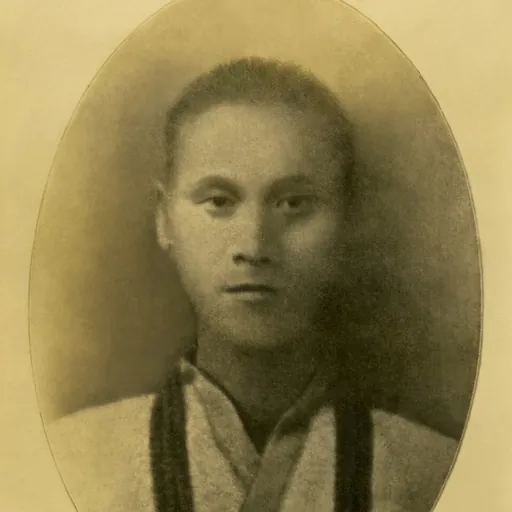
About Seo Il
Lived 1881 – 1921 (aged 40). Seo Il was a Korean military personnel.
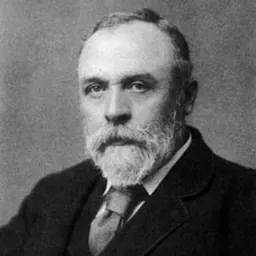
Sŏ Il (; 26 February 1881 – 27 June 1921) was a Korean independence activist. He was a Daejonggyo priest that was credited for creating famous generals of the independence army, such as General Kim Chwajin, whom participated in the Battle of Cheongsanri while Sŏ Il served as the president of the Northern Military Administration Office and the Korean Independence Corps.
Early life and activities Born on February 26, 1881, in Kyongwon County, North Hamgyong Province, Joseon. His real name was Sŏ Kihak ( and his art name was Paekp'o . He entered Gyeongseong Yuji Uisuk, the predecessor of the Hamil School in Gyeongseong studying Chinese classics and graduated in 1902, and worked in education projects. He joined the New People's Association in 1907, and worked as a teacher until 1910. When Japan annexed Korea, he felt the difficulties of the anti-Japanese struggle at home and he went into exile in Manchuria crossing the Tuman River with his family in 1911 and established the Myeongdong School (明東學校) and Cheongil School (靑一學校). He also joined Daejonggyo, a national religion, and worked on missionary work to engage in full-scale anti-Japanese activities.
He joined Daejonggyo in 1912 and focused on the study of its doctrines and missionary activities. In 1916, he became a general lecturer at the head office and as a result of his activities, he became a member of Na Cheol's teachings. He was selected as a successor, was promoted to a shrine, and even rose to the rank of spiritual master. Rather than fighting by force, he focused on spiritual education on the doctrines of Daejonggyo teaching young comrades the national spirit and Chinese classics.
In December, it was said that there cannot be two governments for one people, and based on this, Seo-Il took office and reorganized it into a military administration. He renamed the military government to Northern Military Administration Office. The office consisted of about 1,600 people, armed with weapons purchased from Russia, and established and trained military academies. In addition, they provided police affairs and information liaison in various places, promoted local industries, and established elementary schools and night schools in various places. He also worked on educational projects by establishing a training center. They established an information network in various places, maintained local security based on donations from Daejonggyo believers and military funds raised by Hamgyong residents, and was responsible for recruiting new soldiers and importing weapons.
In addition, he studied the doctrines of Daejonggyo in his spare time, devoted himself to monasticism, interpreted the doctrines in a modern way, devoted himself to writing, and engaged in missionary work. He established an officer training center in Simnipyeong (十里坪), Wangcheong-hyeon to train mid-level officers, and also focused on training projects by establishing night classes and elementary schools in various places.
Leader of the Korean Independence Corps Due to the Japanese army's major subjugation operation, the main force was moved to Dangbyeokjin (當壁鎭) in Mt. Misan County , North Manchuria. He organized the Korean Independence Corps by integrating various units such as the Korean Independence Army, National Army, Military Affairs Command, Righteous Army Command, and the Liberation Corps entered Milsan-hyeon.
He was elected their president and he organized three battalions with 3,500 men and, in an attempt to wage an anti-Japanese war again, moved them to Russia for military aid. He observed the situation and tried to raise his troops by implementing a military system, but his base was destroyed by an attack by domestic enemies.
Free City Incident The Red Army (Bolsheviks) of the Soviet Union, who had secretly reached a compromise with the Japanese, along with the Korean Communist faction in Irkutsk, decimated the Korean Independence Army, which supported the Shanghai Provisional Government, gathered in the Russian city of Amur (Svobodny). Due to the infighting between the Irkutsk and Shanghai factions within the Korean Communist Party, the Red Army demanded the Korean Independence Corps to disarm and disband, but they refused.
On June 27, 1921, the 29th Regiment of the Free City Garrison, the 2nd Corps Cavalry Battalion, the Rakichin Sniper Regiment, and the Freedom Battalion mobilized and began disarming the Sakhalin troops which soon erupted into a battle. However, there was confusion among the Russian soldiers as they could not distinguish between the Sakhalin units and the Korean Independence Corps soldiers, and Russian soldiers. The mobilized Russian troops launched indiscriminate attacks against them inciting the Free City Incident causing the lives many young soldiers. The surviving troops of Lee Cheong-cheon, Oh Gwang-seon, and Cho An-mu were disarmed by the Red Army.
Suicide Faced with frustration, he sought to regroup, but on August 26 of the same year, while planning his resurgence at Mt. Milsan, he was once again attacked by enemy forces, putting not only himself but also the residents of the village he was staying in at risk of being burned alive. Dealt a fatal blow, he felt the weight of his responsibility as the leader of the independence army and ultimately chose to end his life the following day. On August 27, he traveled into the depths of the mountain forest and left behind these words:
Using the Josikbeop (調息法) method, one of the Daejonggyo training method, he ended his life.
Legacy As an independence activist, his activities and leadership can be highly regarded as unrivaled. In addition, Daejonggyo revere him as a saint who systematized religious doctrines through philosophical logic and scientific proof.
Family Wife: Surname of Ch'ae Eldest daughter: Sŏ Mo (, 1902–?) Second daughter: Sŏ Chukch'ŏng (, 1906–?) Son: Sŏ Yunje (; 1908-1969) Independence activist
Awards In 1962, he was posthumously awarded the Order of Merit for National Foundation.
Works Writings Lecture on the Five Great Jongji (五大宗旨 講演) Sam-il Shingo Lecture (三一神誥講義) Hoesamgyeong (會三經)
Books Lectures on the Five Great Jongjis Samil Shinhwa Lectures Three Questions and 1 Answer Gubyeonwonbangdo Hoesamgyeong (會三經)
Don’t just read it —
keep it.
Full-length biographies made to live with: read them, listen on the way to work, watch them tonight.
- E-book
- Audio
- Video
Instant download · yours to keep · every purchase keeps this site free
Important facts
Related people
Same field, nearest in time





Contemporaries
People whose lives overlapped Seo Il's



Frequently asked questions
Who was Seo Il?
Korean independence activist (1881–1921)
When was Seo Il born?
Seo Il was born on 26 February 1881.
When did Seo Il die?
Seo Il died on 28 August 1921.
What was Seo Il's occupation?
Seo Il was a military personnel.
What nationality was Seo Il?
Seo Il was Korean.
Sources & further reading
Cite this page
APA: Biography.guide. (2026). Seo Il. https://biography.guide/seo-il/
MLA: "Seo Il." Biography.guide, https://biography.guide/seo-il/.
Chicago: "Seo Il." Biography.guide. https://biography.guide/seo-il/.
Data last updated: 2026-09-22 · Spot an error? Report a correction.
Portrait: Wikimedia Commons · author & licence
Page generated 2026-09-27 05:04 UTC