
Robert Purvis
Abolitionist
About Robert Purvis
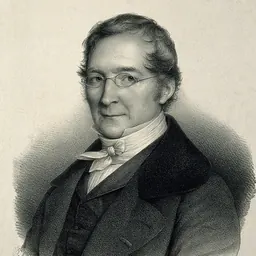
Lived 1810 – 1898 (aged 87). Robert Purvis was an American civil rights advocate and abolitionist, known for Abolitionism in the United States and Underground Railroad.
Marriage and family
In 1832, Purvis married Harriet Davy Forten, a woman of color and the daughter of wealthy sailmaker James Forten and his wife Charlotte, both prominent abolitionists and leaders in Philadelphia. Like her parents and siblings, Harriet Forten Purvis was active in anti-slavery groups in the city, including the interracial Philadelphia Female Anti-Slavery Society.
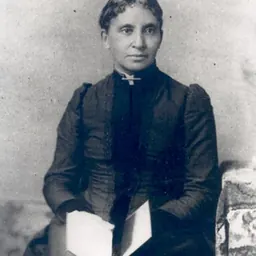
The Purvises had eight children, including son Charles Burleigh Purvis (1841-1926). He became a surgeon and professor for 30 years in the medical school at Howard University. In addition, the couple raised Harriet's niece, Charlotte Forten Grimké, after her mother died. In her later life, Harriet Forten Purvis lectured publicly against segregation and for expanded suffrage for all citizens.
In 1838, he drafted the "Appeal of Forty Thousand Citizens Threatened with Disfranchisement", which urged the repeal of a new state constitutional amendment disfranchising free African Americans. There were widespread tensions and fears among whites following Nat Turner's slave rebellion of 1831 in Virginia. Although Pennsylvania was a free state that had abolished slavery, state legislators persisted in passing this amendment to restrict free blacks' political rights. Free men of color in Pennsylvania did not regain suffrage until after the ratification of the Fifteenth Amendment in 1870, following the Civil War.
From 1845 to 1850, Purvis served as president of the Pennsylvania Anti-Slavery Society, a biracial organization. As a supporter of the Underground Railroad, Purvis served as chairman of the General Vigilance Committee from 1852 to 1857, which gave direct aid to fugitive slaves. According to his records, Purvis estimated that from 1831 to 1861, he helped one slave per day achieve freedom, aiding a total of more than 9,000 slaves to escape to the North. He used his own house, then located outside the city, in Byberry Township, as a station on the Underground Railroad. Purvis built Byberry Hall on the edge of the Quaker-owned, Byberry Friends Meeting campus. Byberry Hall, which still stands today, hosted anti-slavery speakers and was across the street from Purvis's home. Among the enslaved Africans he assisted was Thomas J. Dorsey, who became one of three of the top caterers in Philadelphia in the 19th century. Purvis was a friend of both Thomas and his son William Henry Dorsey, who was an artist and collector of Black history. William compiled hundreds of scrapbooks of Black history during the 19th century and built a collection that he laid out in his home in Philadelphia.
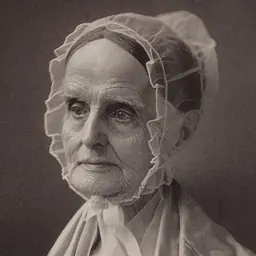
Purvis supported many progressive causes in addition to abolition. With Lucretia Mott, he supported women's rights and suffrage. He was a member of the American Equal Rights Association while Mott was president. Purvis also attended the founding meeting of the Pennsylvania Woman Suffrage Association.
A three-day race riot began on August 1, 1842. The mostly Irish rioters set fires and attacked firefighters and police as they went, heading for Purvis's home, where they protested outside for forty hours. Purvis and his home were reportedly saved from the Irish mob solely by a Catholic priest's intervention.
Death and legacy Neither of Purvis's elder sons survived the American Civil War. Both William P. Purvis (1832–1857) and Robert Purvis (1834–1862) were buried in the Byberry burial ground in northeast Philadelphia. When the burial ground of St. Thomas African Episcopal Church was closed, where his mother had been buried in central Philadelphia, Purvis had her remains transferred to Fair Hill Burial Ground in Philadelphia's Fairhill neighborhood. His wife (1810-1875) and daughter Georgiana (1848-1877) who had died of consumption were buried here, as he was in 1898.
His abolitionist efforts are memorialized by the Commonwealth of Pennsylvania and by the National Park Service.
Don’t just read it —
keep it.
Full-length biographies made to live with: read them, listen on the way to work, watch them tonight.
- E-book
- Audio
- Video
Instant download · yours to keep · every purchase keeps this site free
Important facts
Family & relationships
People in Robert Purvis's life
Named in this biography and alive at the same time
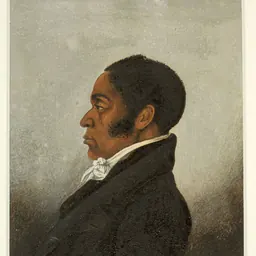
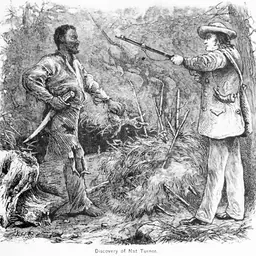
Related people
Same field, nearest in time

Contemporaries
People whose lives overlapped Robert Purvis's




Frequently asked questions
Who was Robert Purvis?
abolitionist (1810–1898)
When was Robert Purvis born?
Robert Purvis was born on 4 August 1810 in Charleston.
When did Robert Purvis die?
Robert Purvis died on 15 April 1898 in Philadelphia.
What was Robert Purvis's occupation?
Robert Purvis was a civil rights advocate and abolitionist.
What was Robert Purvis known for?
Robert Purvis was known for Abolitionism in the United States and Underground Railroad.
What nationality was Robert Purvis?
Robert Purvis was American.
Sources & further reading
Cite this page
APA: Biography.guide. (2026). Robert Purvis. https://biography.guide/robert-purvis-civil-rights-advocate/
MLA: "Robert Purvis." Biography.guide, https://biography.guide/robert-purvis-civil-rights-advocate/.
Chicago: "Robert Purvis." Biography.guide. https://biography.guide/robert-purvis-civil-rights-advocate/.
Data last updated: 2026-09-20 · Spot an error? Report a correction.
Page generated 2026-09-27 05:28 UTC