
About Charlotte Forten Grimké
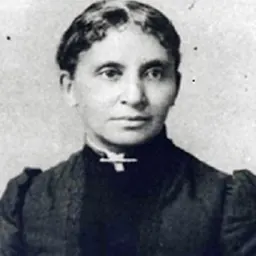
Lived 1837 – 1914 (aged 76). Charlotte Forten Grimké was an American poet, diarist, essayist, journalist, writer and teacher.
Charlotte Louise Bridges Grimké ( Forten; August 17, 1837 – July 23, 1914) was an African-American abolitionist, poet, and educator. She grew up in a prominent abolitionist family in Philadelphia. She taught school for years, including to freedmen in South Carolina during the Civil War. Later in life, she married Francis James Grimké, a Presbyterian minister who led a major church in Washington, DC, for decades. He was a nephew of the abolitionist Grimké sisters and was active in civil rights.
Her diaries written before the end of the Civil War have been published in numerous editions in the 20th century and are significant as a rare record of the life of a free Black woman in the antebellum North.
Early life and education Forten, known as "Lottie," was born on August 17, 1837, in Philadelphia, Pennsylvania, to Mary Virginia Wood (1815–1840) and Robert Bridges Forten (1813–1864).
Paternal family lineage Her father, Robert Forten, was the son of equal rights activist James Forten. Robert Forten and his brother-in-law, Robert Purvis, abolitionists and members of the Philadelphia Vigilance Committee, offered assistance to people who escaped slavery. Her paternal grandfather, the wealthy sailmaker James Forten Sr., was an early abolitionist in Philadelphia.
Her paternal aunts – Margaretta Forten, Sarah Louisa Forten Purvis, and Harriet Forten Purvis – and her paternal grandmother, Charlotte Vandine Forten, were all founding members of the Philadelphia Female Anti-Slavery Society.
Maternal family lineage While the Fortens were free northern Blacks, Charlotte's mother, Mary Virginia Wood, had been born into slavery in the south. She was the daughter of wealthy planter James Cathcart Johnston of Hayes Plantation, Edenton, North Carolina, and the granddaughter of Governor Samuel Johnston of North Carolina. In 1832, James Cathcart Johnston anonymously emancipated Mary, who was 17 years old, along with her mother and sisters, with the help of a Quaker businessman in Baltimore. while her aunt Annie moved to the Cassey House, where she was adopted by Amy Matilda Cassey.
Education In 1854, at the age of 16, Charlotte Forten joined the household of Amy Matilda Cassey and her second husband, Charles Lenox Remond, in Salem, Massachusetts, so that she could attend the Higginson Grammar School, a private academy for young women. She was the only non-white student in a class of 200. Forten cited William Shakespeare, John Milton, Margaret Fuller and William Wordsworth as some of her favorite authors. Her first teaching position was at Eppes Grammar School in Salem, becoming the first African American hired to teach white students in a Salem public school.
Grimké assisted with her husband's ministry at Fifteenth Street Presbyterian Church in Washington, DC, shown here as it was in about 1899.
Activism Forten became a member of the Salem Female Anti-Slavery Society, where she was involved in coalition building and fund-raising. She proved to be influential as an activist and leader on civil rights. Her grandmother Charlotte Vandine Forten and her aunts had established themselves as part of the Black female leadership in Philadelphia and had been founding members of the biracial Philadelphia Female Anti-Slavery Society, founded in 1833.
In 1892, Forten, Helen Appo Cook, Ida B. Wells, Anna Julia Cooper, Mary Jane Patterson, Mary Church Terrell, and Evelyn Shaw formed the Colored Women's League in Washington, D.C. The goals of the service-oriented club were to promote unity, social progress, and the best interests of the African-American community. In 1896, Forten co-founded the National Association of Colored Women which made many contributions to education, health, social services and political activism. Her poetry was published in The Liberator and Anglo African magazines. The Union allowed Northerners to set up schools to begin teaching freedmen who remained on the islands, which had been devoted to large plantations for cotton and rice.
Forten was the first African American to teach at the Penn School (now the Penn Center) on St. Helena's Island, South Carolina. The school was initially founded to teach enslaved African-American children and eventually African-American children freed during the U.S. Civil War. The Union forces divided the land, giving freedmen families plots to work independently. Forten worked with many freedmen and their children on St. Helena Island. During this time, she resided at Seaside Plantation. She chronicled this time in her essays, entitled "Life on the Sea Islands", which were published in Atlantic Monthly in the May and June issues of 1864.
Forten struck up a deep friendship with Robert Gould Shaw, the Commander of the all- Black 54th Massachusetts Regiment during the Sea Islands Campaign. She was present when the 54th stormed Fort Wagner on the night of July 18, 1863. Shaw was killed in the battle, and Forten volunteered as a nurse to the surviving members of the 54th.
Following the war in the late 1860s, she taught in Boston, Massachusetts and Charleston, South Carolina. In 1872, Forten taught at a preparatory school in Washington, D.C. that later became known as Paul Laurence Dunbar High School. One year later, she became a clerk in the Treasury Department. Many church members were leaders in the African-American community in the capital. She organized a women's missionary group and focused on "racial uplift" efforts. When Francis's brother, Archibald Grimké, was appointed as U.S. consul in the Dominican Republic (1894–98), Francis and Charlotte cared for Archibald's daughter Angelina Weld Grimké, who lived with them in the capital. Angelina Grimké later became an author in her own right and was one of the first African-American women to have a play publicly performed.
Details of Charlotte Forten Grimké's health and travels during the 1880s and 1890s are documented in the recently discovered letters of Louisa Matilda Jacobs, Charlotte's third-cousin, and daughter of fugitive-slave-narrative author Harriet Ann Jacobs.
Charlotte Forten Grimké died on July 23, 1914 after years of declining health and thirteen months bedridden.
The Charlotte Forten Grimke House in Washington, D.C., is listed on the National Register of Historic Places.
Writings In 1864, Charlotte left her teaching position in Port Royal, South Carolina and returned to Philadelphia where she began writing her experiences of the Port Royal experiment. Her essays, "Life on the Sea Islands, Part I and Part II" were published in Atlantic Monthly publication in 1894.
She was a regular journal writer until she returned North after teaching in South Carolina. After her return, her entries were less frequent, although she wrote about her daughter's death and her busy life with her husband in Washington, D.C. Her journals are a rare example of documents detailing the life of a free Black female in the Antebellum North.
Don’t just read it —
keep it.
Full-length biographies made to live with: read them, listen on the way to work, watch them tonight.
- E-book
- Audio
- Video
Instant download · yours to keep · every purchase keeps this site free
Important facts
Family & relationships
People in Charlotte Forten Grimké's life
Named in this biography and alive at the same time
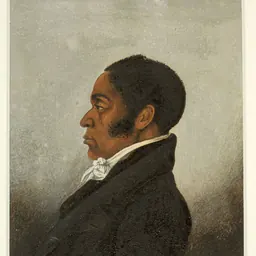

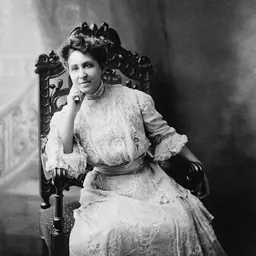


Related people
Same field, nearest in time
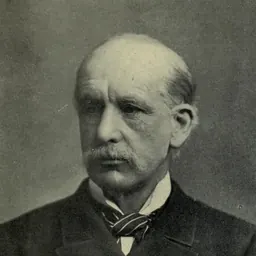
Contemporaries
People whose lives overlapped Charlotte Forten Grimké's



Frequently asked questions
Who was Charlotte Forten Grimké?
American writer and activist (1837-1914)
When was Charlotte Forten Grimké born?
Charlotte Forten Grimké was born on 17 August 1837 in Philadelphia.
When did Charlotte Forten Grimké die?
Charlotte Forten Grimké died on 23 July 1914 in Washington, D.C..
What was Charlotte Forten Grimké's occupation?
Charlotte Forten Grimké was a poet, diarist, essayist, journalist, writer and teacher.
What nationality was Charlotte Forten Grimké?
Charlotte Forten Grimké was American.
Sources & further reading
· Wikipedia: Charlotte Forten Grimké
· DBpedia: Charlotte Forten Grimké
Cite this page
APA: Biography.guide. (2026). Charlotte Forten Grimké. https://biography.guide/charlotte-forten-grimke/
MLA: "Charlotte Forten Grimké." Biography.guide, https://biography.guide/charlotte-forten-grimke/.
Chicago: "Charlotte Forten Grimké." Biography.guide. https://biography.guide/charlotte-forten-grimke/.
Data last updated: 2026-09-27 · Spot an error? Report a correction.
Page generated 2026-09-27 05:16 UTC