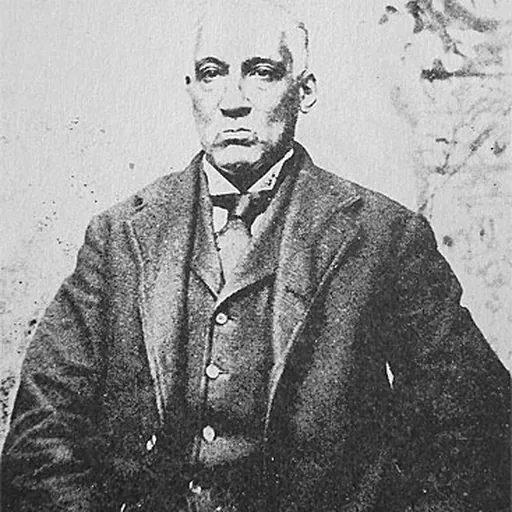
About William Henry Dorsey
Lived 1837 – 1920 (aged 82–83). William Henry Dorsey was an American painter, historian, municipal employee and artist.
William Henry Dorsey (October 23, 1837 – January 9, 1923) was an American bibliophile, artist, scrapbooker, numismatist, social historian and collector of Black history and art. He was most noted for the 388 scrapbooks he compiled of newspaper and magazine clippings chronicling Black life in his hometown of Philadelphia and across the country during the 19th century.
Early life and family history Dorsey was born in Philadelphia on October 23, 1837, into a prosperous family headed by his father Thomas J. Dorsey, a noted caterer and part of the Black elite. Thomas escaped slavery from a plantation in Maryland in the 1830s and made his way to Philadelphia with his brothers, including Basil Dorsey. They ended up on the farm of Black abolitionist Robert Purvis. Thomas was captured and returned, but the friends he made in Philadelphia raised money to buy his freedom in 1836.
He was among a "triumvirate of colored caterers ‘who some years ago might have been said to rule the social world of Philadelphia through its stomach", one newspaper reported in 1896. The others were Henry Jones and Henry Minton.
Thomas married a free Black woman named Louisa Tobias. William was their oldest and only son, and they had two daughters, Sarah and Mary Louise. Dorsey attended Bird School and the Institute for Colored Youth (which later became Cheyney University), attended by the children of well-to-do parents. He eschewed following in his father's footsteps as a caterer and deemed himself an artist. He studied with Antonio Zeno Shindler. After Stokley was defeated, the new mayor Samuel King removed Dorsey as a messenger but later hired him as a turnkey at the Central Station.
Dorsey's granddaughter described him as somber man who was a loner, big, with high cheekbones and the "reddish color" of a Native American.
He was also politically active in the Old Reliable Club, and as vice president and secretary of the Charles Sumner Club, a literary, social and political organization founded in 1873.
An ardent scrapbooker Dorsey caught the collecting bug from his father, who was known for his large array of books and memorabilia. The son's greatest collection were his scrapbooks, 388 of which are still around today but in derelict condition. Dorsey clipped and saved his first newspaper article in 1866, a short item about the death of his great-grandmother who was 100 years old. He earnestly began scrapbooking in 1870 and continued until 1903 when he posted his last article.
His home museum Dorsey had one of the most impressive and eclectic collections of items about Black history, as well as history of other peoples. A number of people gifted him with books, pictures, scrapbooks, catalogs and artifacts for the collection. "It was in the front room of the second story of one of those small but cosy homes of the many narrow streets of Philadelphia that we were ushered into a miniature museum and art gallery, the private collection of our old friend, Mr. William H. Dorsey, of that city. Our surprise at what was in store for us was so unexpected and complete, and withal so pleasant, that we cannot resist the temptation to give the readers of the National Era an opportunity of realizing the same pleasure". There was a landscape by Duncanson titled "The Evening", and a painting titled "Emancipation" and a head of Michelangelo by his friend Chaplin.
In 1862, Thomas began planning an exhibition to be held in New York in October 1863. The first national Exhibition of Anglo-Africa Industry and Art was akin to a world's fair, with steam engines and machinery, artwork, carriages and vehicles, furniture, cooking utensils, clothing and perfumes, and embroidery and needlework. The emphasis, though, was on art. The exhibition was to be financed by the sale of shares in the Anglo-African Institute, of which Dorsey was a board member. Thomas died in March 1863 before the exhibition was finalized, and it never materialized.
Two years later, his coins, books and autographs were advertised to be sold at auction by his wife. His paintings were apparently sold at some point, too, because Dorsey ended up with a Thomas bust created by white sculptor John Quincy Adams Ward. Thomas' portrait of Haitian liberator Toussiant L'Ouverture by Chaplin also became part of Dorsey's collection.
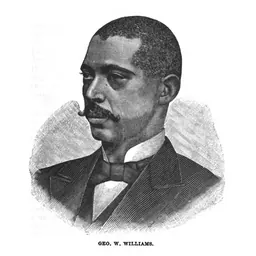
Dorsey was a founder of the American Negro Historical Society (ANHS), organized October 25, 1897. It was an idea of historian/collector Roger M. Adger, but he was not the first to come up with it. In 1883, George Washington Williams, the first Black member of the Ohio Legislature and author of "The History of the Negro Race in America 1619-1880", suggested a society to preserve the history of Black people. His idea never took hold.
Organizers of the new ANHS included men and women: Dorsey, Adger, Rev. Matthew Anderson, Rev. Henry L. Phillips, Walter P. Hall, Alfred S. Cassey, Robert Jones, James. W. Caldwell, Charles H. Brooks, William Potter, William C. Bolivar, Henry S. Martin, Hans Shadd, Frances E.W. Harper, P. Albert Dutrieuille, Christopher J. Perry Sr., Joshua B. Matthews, Thomas Ringgold, Levi Oberton and Theophilus J. Minton. The ANHS' purpose was to "collect relics, literature, historical facts in connection with the African race, illustrative of their progress and development".
At its monthly meetings, the group offered a forum for presentation of scholarly papers and discussions pertaining to Black history, art, music, schools, industrialization and more, and these were open to the public. Among the speakers were DuBois, Harper, Minton, Cromwell, Adger, Algernon B. Jackson, Alice Moore Dunbar, Mary Ardley Smith, Alain LeRoy Locke, Jessie Fauset, Caroline LaCount and Rev. John B. Reeve.
Once its member Bolivar, a noted bibliophile and writer, was offered a column in the Philadelphia Tribune, the lectures were discontinued. The organization received donations of books, pamphlets, autographs, pictures, programs and artifacts that were placed with Dorsey, who was its custodian and also a donor. The society also received items from the collections of Adger and Jacob C. White Jr. In 1934, Leon Gardiner passed on some ANHS materials to the Historical Society of Pennsylvania.
In its "Annual Exhibition Record of the Pennsylvania Academy of the Fine Arts from 1807-1870", the academy (PAFA) listed a "William H. Dorsay (or Dorsey)" as an exhibitor. According to the entry, Dorsey was born circa 1824 with an address at 1104 Locust Street in the years 1867 and 1868. At least five works were shown in the exhibition, including "Coast Scene", a Dorsey artwork mentioned by Roger Lane in his book "William Dorsey's Philadelphia & Ours: On the Past and Future of the Black City in America".
In the spring of 1887, he illustrated a story for the Philadelphia Tribune about problems at Olive Cemetery, including neglect, flooding and falling stones. He exhibited at several industrial fairs that were organized to raise money to help pay the debts of the Christian Recorder newspaper, whose focus was on news about Black people. The aim of the fairs was to demonstrate the industrial and artistic skills of the Black population, who were asked to donate items for sale. In her book "Reminiscences of School Life, and Hints on Teaching" (1913), Fanny Jackson Coppin told of the 1879 fair and contributions by such "well-known" artists as Tanner, whose father was editor of the paper; Douglass and Dorsey. He also participated in the 1891 fair along with Bolivar, Adger and Lewis, whose entry was a pair of busts.
In 1897, Dorsey and Jones, an ANHS founder and author, created a model for a monument to honor Octavius V. Catto, a Black activist and schoolteacher who was killed in 1871 on Election Day by a white man. Black residents of Philadelphia had been quietly planning the memorial, which was to be erected in Merion Cemetery at 513 S. 15th Street. The granite monument was designed as triangular in shape, 14 feet at the base and 21 feet high with openings on each side. A life-size bronze head of Catto was to be placed at the main entrance, and his remains were to be placed in a cement sarcophagus inside the monument. Funds were to be raised to build it. Dorsey kept articles about Catto's death in his scrapbooks.
Noting that the list was too short, Dorsey pointed to portraits painted by Douglass and Chaplin, and identified Bowser, Patrick Henry Reason, Duncanson, Bannister and Lewis, who had won praise at the 1876 Philadelphia Centennial Exhibition for her sculpture "The Death of Cleopatra". He noted that Black artists faced obstacles because of the "unending prejudice of the dominant race to buffet him from place to place, for only a few years have elapsed since we have been admitted, even as visitors, to … art exhibits".
Don’t just read it —
keep it.
Full-length biographies made to live with: read them, listen on the way to work, watch them tonight.
- E-book
- Audio
- Video
Instant download · yours to keep · every purchase keeps this site free
Important facts
People in William Henry Dorsey's life
Named in this biography and alive at the same time



Related people
Same field, nearest in time
Contemporaries
People whose lives overlapped William Henry Dorsey's



Frequently asked questions
Who was William Henry Dorsey?
historian, artist, bibliophile, scrapbooker, and collector of 19th-century African Americana
When was William Henry Dorsey born?
William Henry Dorsey was born on 23 October 1837 in Philadelphia.
When did William Henry Dorsey die?
William Henry Dorsey died in 1920 in Philadelphia.
What was William Henry Dorsey's occupation?
William Henry Dorsey was a painter, historian, municipal employee and artist.
What nationality was William Henry Dorsey?
William Henry Dorsey was American.
Sources & further reading
· Wikipedia: William Henry Dorsey
· DBpedia: William Henry Dorsey
Cite this page
APA: Biography.guide. (2026). William Henry Dorsey. https://biography.guide/william-henry-dorsey/
MLA: "William Henry Dorsey." Biography.guide, https://biography.guide/william-henry-dorsey/.
Chicago: "William Henry Dorsey." Biography.guide. https://biography.guide/william-henry-dorsey/.
Data last updated: 2026-09-23 · Spot an error? Report a correction.
Portrait: Wikimedia Commons · author & licence
Page generated 2026-09-27 05:07 UTC