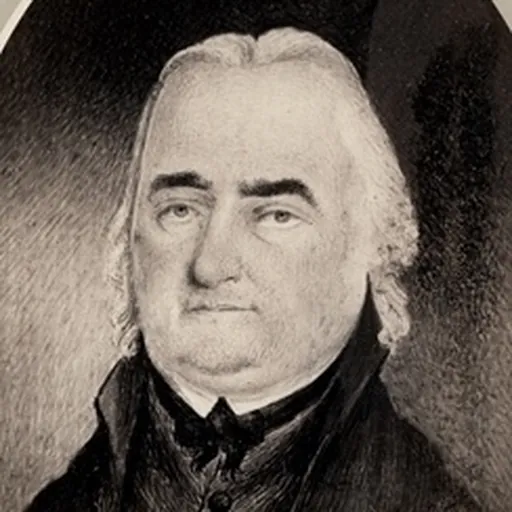
Robert Molyneux
English-American Jesuit
About Robert Molyneux
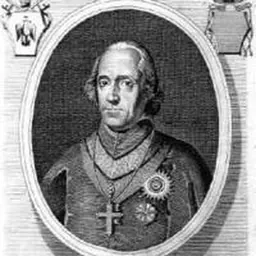
Lived 1738 – 1808 (aged 70). Robert Molyneux was a British and American catholic priest, academic administrator and missionary.
Robert P. Molyneux (July 24, 1738 – December 9, 1808)Efn|name=surname|Molyneux's surname was spelled in some writings as Molyneaux or Molineaux. before entering the Society of Jesus on September 7, 1757, following in the path of his brother, William. Molyneux then enrolled at the College of St Omer in France, and continued with the school when it relocated to Bruges, Belgium. and had as one of his students John Carroll, the future Archbishop of Baltimore. The Bishop of Maryland, John Carroll, sought to appoint Molyneux his coadjutor bishop, but Molyneux declined the post. Molyneux was named pastor of Old St. Joseph's in September 1772, He had as his assistant Ferdinand Farmer, With the outbreak of the American Revolutionary War in 1775, Molyneux adopted a personal policies described as general neutrality, as well as moderate patriotism. Molyneux took the oath of allegiance to the State of Pennsylvania, and in 1783, signed a petition to have Congress return to Philadelphia.
Molyneux supported the establishment of a Catholic episcopal hierarchy in the United States, so that it would be separate from the ecclesiastical jurisdiction of the English bishops. Therefore, he encouraged John Carroll to accept the position of Prefect Apostolic of the United States, Molyneux then joined others in writing to Rome to request the elevation of the apostolic prefecture to the rank of diocese and the installation of an American bishop.
While pastor, Molyneux published two catechisms, one in 1785 and another 1788, making him, so far as is known, the first American to edit a catechism. He also gained a reputation as an eloquent preacher. From 1786 to 1788, Molyneux served as a trustee of the University of the State of Pennsylvania by virtue of being the most senior Catholic cleric in Philadelphia.
His pastorate of the two churches came to an end in February 1788, Molyneux then left Philadelphia for the Jesuits' Maryland missions, first going to Bohemia Manor. John Carroll then appointed him the vicar general for the southern district of the diocese, and he was stationed at Newtown Manor. Molyneux immediately undertook a project to expand the college, purchasing of land, Construction on the Old North building, which was modeled after Nassau Hall at Princeton University, began in 1794. Funding for construction of the building was unsteady, as the school was unable to raise adequate money through donations by Maryland Catholics. In late 1796, Molyneux submitted his resignation to John Carroll because of his declining health; Louis William DuBourg was named as his successor in October of that year.
Superior of the Maryland Jesuits When Pius VII was elected pope, Emperor Paul I of Russia requested the formal restoration of the Jesuit order. In response, the pope issued the bull on March 7, 1801, which officially permitted the Society of Jesus to continue existing in the Russian Empire. In turn, the members of the Jesuits' former English province sought the pope's permission to be received back into the Society, as members of the Russian province. They pope gave them verbal approval and expressed his desire for the worldwide restoration of the Jesuits, but did not commit this to writing, as the political enemies of the Society remained powerful.
While superior of the Jesuits, Molyneux lived at St. Thomas Manor.
Seeing these developments, Bishop Carroll instructed his coadjutor, Leonard Neale, (both former Jesuits) to write Gabriel Gruber, the Jesuit Superior General, to request permission for the Maryland Jesuits to join with the Russian province. Gruber responded that he believed that the pope's oraculum vivæ vocis approbation of the Jesuits in Russia authorized him to quietly admit Jesuits from anywhere in the world to the Russian province. and instructed them that they must each individually choose whether they would accept the risk of re-joining the Society. As the first American superior of the restored Society, he resumed the position last held by John Lewis. As superior, he took up residence at St. Thomas Manor. and a scholasticate two years after that. Five Jesuits from the Russian province were sent to Maryland to work and teach at Georgetown.
Second presidency of Georgetown In addition to his duties as superior, Molyneux again resumed the presidency of Georgetown on October 1, 1806, replacing Bishop Leonard Neale.
Molyneux's health began to fail, and he exhibited dropsy. He resigned the presidency, and shortly thereafter, died at Georgetown College on December 9, 1808. He had appointed Charles Neale to succeed him as superior of the Jesuits; Francis Neale became acting president of the college until William Matthews' appointment. He is buried in the Jesuit Community Cemetery at the college.
Don’t just read it —
keep it.
Full-length biographies made to live with: read them, listen on the way to work, watch them tonight.
- E-book
- Audio
- Video
Instant download · yours to keep · every purchase keeps this site free
Important facts
People in Robert Molyneux's life
Named in this biography and alive at the same time


Related people
Same field, nearest in time

Contemporaries
People whose lives overlapped Robert Molyneux's






Frequently asked questions
Who was Robert Molyneux?
English-American Jesuit (1738-1808)
When was Robert Molyneux born?
Robert Molyneux was born on 24 July 1738 in Formby.
When did Robert Molyneux die?
Robert Molyneux died on 9 December 1808 in Georgetown University main campus.
What was Robert Molyneux's occupation?
Robert Molyneux was a catholic priest, academic administrator and missionary.
What nationality was Robert Molyneux?
Robert Molyneux was British and American.
Sources & further reading
Cite this page
APA: Biography.guide. (2026). Robert Molyneux. https://biography.guide/robert-molyneux/
MLA: "Robert Molyneux." Biography.guide, https://biography.guide/robert-molyneux/.
Chicago: "Robert Molyneux." Biography.guide. https://biography.guide/robert-molyneux/.
Data last updated: 2026-09-21 · Spot an error? Report a correction.
Portrait: Wikimedia Commons · author & licence
Page generated 2026-09-27 05:00 UTC