
William Matthews
19th-century American Catholic priest
About William Matthews
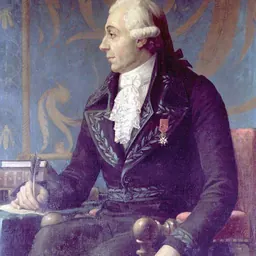
Lived 1770 – 1854 (aged 83). William Matthews was an American catholic priest, academic administrator, professor, educator, philanthropist and librarian.
William Matthews (December 16, 1770 – April 30, 1854), occasionally spelled Mathews, and served as a liaison between the bishop and Catholic institutions and priests in Washington. Matthews was also involved in raising money for St. Mary's Seminary in Baltimore by selling lottery tickets to parishioners. From 1827 to 1830, Charles Constantine Pise was Matthews' assistant at St. Patrick's. Another one of his assistants was Gabriel Richard. The church was eventually completed in 1821.
He opposed the control of St. Peter's Church properties by lay trustees, as the issue of trusteeism was still active in American Catholic Church. This opposition motivated his subsequent selection for an ecclesiastical mission in Philadelphia. This upset Matthews, who arranged for Archbishop Ambrose Maréchal of Baltimore to use the diplomatic pouch of the French ambassador to the United States to express his misgivings; the ambassador would deliver the archbishop's letters to French ministers to the Holy See, who would present the communications. This would have provided some weightiness to Maréchal's petitions, but it is unclear if he made use of this arrangement.
Recovery of Ann Mattingly One of Matthews' parishioners, Ann Mattingly, suffered from a tumor in her breast for at least six years. She was in poor health; several doctors and numerous other witnesses had attested to Mattingly's advanced and worsening illness and their inability to treat the disease with the medicine of the time. By 1824, her physicians and attending priests, including Matthews, expected her imminent death. Matthews, along with Stephen Dubuisson and Anthony Kohlmann, turned to the German priest and reputed miracle worker Prince Hohenlohe who prescribed a novena for his cures to be effective; he also set aside the tenth day of each month for offering Mass for the sick outside Europe. Following nine days of public prayer at St. Patrick's parish, on the night of March 9, 1824, Matthews visited Mattingly at 10 pm to hear her confession. The following morning, she received communion during a Mass said by Dubuisson at 4 am. It was then reported to Matthews that she was instantly restored to health and that large ulcers on her back vanished. Matthews immediately went to visit her; according to him, she was smiling and greeted him at the door. Mattingly's quick recovery was noted by several prominent Washington physicians, and by those attending to her in bed, as shocking. By way of Anthony Kohlmann, this pamphlet made its way to Pope Leo XII, who had it translated into Italian and published by his personal printer.
Academic career
Georgetown College During Matthews' presidency, the towers of Old North Hall were completed.
By 1806, Matthews had become vice president of Georgetown College, and by 1808, he had become a member of its board of directors, where he served until 1815. He was elected president on February 28, 1809, succeeding his uncle Francis Neale. On the same day that he became president, Matthews entered the Jesuit novitiate, which was highly atypical for someone of his age and position. Matthews' relationship with Anthony Kohlmann, a subsequent president of Georgetown, was particularly difficult. to use the structure as a school for lay students beginning in 1817. Subsequently, Anthony Kohlmann returned to Washington and continued operation of the school as its superior. This gave rise to the Washington Catholic Seminary (a school primarily for lay students, not seminarians) on September 8, 1821, contrary to the initial intentions of Matthews—who sought to build a rectory—and the Jesuits, who sought to use the building as their seminary. Since this arrangement did not provide Matthews with the assistant priests he initially sought, he wrote to Archbishop Maréchal expressing his desire that the Jesuits, who he viewed as trying to take over his parish, be removed from the land of St. Patrick's.
Nonetheless, Matthews succeeded Adam Marshall as third president of Washington Catholic Seminary—later Gonzaga College High School—in 1824.
Upon the seminary's suppression, Keiley left the Society of Jesus and founded a new, short-lived school. Matthews remained and oversaw the school that was now officially closed but still operating despite the order. He remained president until 1848 when the Jesuits, now permitted to accept tuition, resumed control of the school. After Matthews, John E. Blox became president.
Civic life
Washington Library
In 1811, Matthews co-founded the District of Columbia's first permanent public library, the Washington Library Association, which secured its congressional charter as the Washington Library Company on April 18, 1814, preceding the District of Columbia Public Library. Along with 200 other benefactors, Matthews contributed money by purchasing substantial stock in the library. He served on several of the library's committees, which were responsible for drafting its rules and purchasing books. He was elected the library's second president on April 18, 1821, succeeding the pastor of the F Street Presbyterian Church, Dr. James Laurie. The library prospered under Matthews, where it was used by employees of the federal government and private citizens. He led a successful campaign to raise money by selling library stock, which was invested in Washington's banks and real estate.
In the spring of 1827, he purchased a Masonic lodge on Eleventh Street as the first permanent home for the library.
Washington Public Schools Matthews was a trustee of the District of Columbia Public Schools from July 13, 1813, to 1844. For a part of his term, he served as co-director of the school system, and as one of three members of the board of trustees who collectively acted as superintendents of the Lancasterian school—one of three schools of the public school system alongside the Eastern and Western schools. In this capacity, he visited the school quarterly, and oversaw instruction of the students and performance of the teachers.
The school system was perpetually underfunded by the Washington City Council; as a result, the less resource-intensive Lancasterian system was instituted and the school suffered insufficient facilities for many years. It was periodically taken over by the District of Columbia Militia for training, which disrupted studies. On several occasions, the board of trustees requested that Matthews obtain the funds from the City Council that were statutorily promised to them; he separately solicited private donations as well. Matthews further acted as a member of a committee charged with persuading President James Madison to sell his stable on Fourteenth and G Streets to be used as the new schoolhouse for the Lancasterian school. He sat on another committee that was charged with making rules and regulations for the school system in 1815, and the reorganization of the system in 1816.
St. Vincent's Orphan Asylum The new St. Vincent's Orphan Asylum building on G Street, which was built with monies bequeathed by Matthews in 1857 alt=Black and white three-quarter view of St. Vincent's Orphan Asylum building
In 1825, Matthews founded the St. Vincent's Female Orphan Asylum near St. Patrick's Church in Washington. Matthews gave $400 and a small, white house on F Street to the three sisters who came to found the orphanage. During Matthews' time as its president, the institution was run by the nuns. Funding for the institution came initially from parishioners of St. Patrick's; the parish would hold fundraising events for the asylum, which became the center of parish life. This allowed it to expand to a larger facility on 10th and G Streets in 1828. In 1832, Matthews persuaded Congress to equally divide between St. Vincent's and the Washington Orphan Asylum a plot of land that was valued at $20,000.
The orphanage was incorporated by an act of Congress, which also remitted some of its taxes until Congress exempted it from property taxes entirely. Matthews' friendships with many of Washington's social elite drew contributions to the orphanage from people such as Mayor Thomas Carberry and President Andrew Jackson. He was also well acquainted with Daniel Webster, Henry Clay, and Roger Taney. These friendships were partly the result of Matthews' strong Federalist and later Whig views.
The initial purpose of the institution was to be an orphanage for girls, but since its founding, it was operated as a free school for poor children of Washington that educated orphans and non-orphans alike. This educational function became integral to the institution's purpose, and the number of non-orphaned students eventually far exceeded the number of orphans. In 1831, a board of trustees and a board of female lay managers were created, the latter of which was composed of prominent women in the District who were able to enlist financial support for the institution. On May 14, 1849, to accommodate the institution's growth, the cornerstone for a new building was laid at the same site. Matthews served as president of the asylum from its founding to his death in 1854. oversaw the establishment of the new orphanage, and Matthews served as president of its board from its founding.
Vicar Apostolic of Philadelphia St. Mary's Cathedral, depicted in 1829, was one of the centers of the trustee dispute. alt=Color image of St. Mary's Cathedral with people on sidewalk
On February 26, 1828, the Prefect of the Propaganda Fide, Cardinal Mauro Cappellari, instructed Archbishop Ambrose Maréchal of Baltimore to effectuate the appointment of Matthews by Pope Leo XII as vicar apostolic and apostolic administrator of the Diocese of Philadelphia. This order was promulgated because Bishop Henry Conwell of Philadelphia had been recalled to Rome by the Holy See due to a long-brewing schism over lay trusteeism, and Maréchal had been ordered to oversee the diocese during his absence. Alongside his appointment as administrator, Matthews was also appointed by Bishop Conwell as senior pastor and superior of the clergy at St. Mary's Cathedral, which was one of the centers of the trustee dispute. When Bishop Conwell attempted to return to his diocese from Rome against the orders of the Propaganda Fide during their investigation, the congregation empowered Matthews to announce Conwell's suspension from episcopal office.
As apostolic administrator, Matthews took part in the First Provincial Council of Baltimore and acted as a theologian for the participating bishops. He also acted as a representative of the Diocese of Philadelphia at the council, in place of Bishop Conwell. He was later appointed the coadjutor of the Diocese of Philadelphia, which would have elevated him to the episcopate, with the expectation that he would eventually become Bishop of Philadelphia, but he declined the position and the elevation. and his term came to an end in 1829. The following year, Matthews officiated at the wedding of Mary Anne Lewis—a ward of President Andrew Jackson and a Catholic—and Joseph Pageot, the secretary of the French diplomatic legation to the United States. The wedding took place on November 29, 1832, in the East Room of the White House, and signified the first Catholic ceremony in the history of the White House, and the only Catholic wedding in its history. One year later, Matthews again presided over a ceremony in the White House, this time in the Red Room, Matthews believed that since Catholics were granted the freedom to practice their religion by the Constitution of the United States, they had a duty to contribute to the "moral and physical good" of their communities. The church was named St. Matthew's Church in honor of both Saint Matthew and William Matthews. The building was replaced by the Cathedral of St. Matthew the Apostle as the parish's church in the 1890s.
Death and legacy Matthews depicted in a mural by Edwin Blashfield in St. Matthew's Cathedral in Washington (center, wearing black, over the right shoulder of the cardinal)
Matthews died on April 30, 1854, and was buried in the cemetery adjacent to St. Patrick's Church. In the mid-1870s, to allow for construction of a new church, his body was exhumed along with the rest of those in the cemetery. While being transferred to a new coffin, it was observed that the body was remarkably preserved. The corpse was laid in front of the altar, where it remained during the All Souls' Day Mass, before being reinterred in the priests' section of Mount Olivet Cemetery. It was reported that at his death, he requested that he be "laid upon the floor to expire" because he "did not deserve to die in his chair". During the latter part of his life and after his death, Matthews was nicknamed the "patriarch of Washington" due to his contributions to the religious and civic worlds of the city. On his gravestone in Mount Olivet Cemetery, the Serra Club placed a bronze plaque in 1973, commemorating his life. Matthews is depicted alongside other important figures of the early Catholic church in America; he stands beside Archbishop Michael Curley and Cardinal James Gibbons. Matthews is also depicted in the interior frieze of the Cathedral of Mary Our Queen in Baltimore. The relief depicts his ordination, where he is shown kneeling with his head bowed as Bishop John Carroll places his hands on Matthews' head.
Don’t just read it —
keep it.
Full-length biographies made to live with: read them, listen on the way to work, watch them tonight.
- E-book
- Audio
- Video
Instant download · yours to keep · every purchase keeps this site free
Important facts
People in William Matthews's life
Named in this biography and alive at the same time




Related people
Same field, nearest in time

Contemporaries
People whose lives overlapped William Matthews's




Frequently asked questions
Who was William Matthews?
19th-century American Catholic priest
When was William Matthews born?
William Matthews was born on 16 December 1770 in Port Tobacco Village.
When did William Matthews die?
William Matthews died on 30 April 1854 in Washington, D.C..
What was William Matthews's occupation?
William Matthews was a catholic priest, academic administrator, professor, educator, philanthropist and librarian.
What nationality was William Matthews?
William Matthews was American.
Sources & further reading
· DBpedia: William Matthews (priest)
Cite this page
APA: Biography.guide. (2026). William Matthews. https://biography.guide/william-matthews-catholic-priest/
MLA: "William Matthews." Biography.guide, https://biography.guide/william-matthews-catholic-priest/.
Chicago: "William Matthews." Biography.guide. https://biography.guide/william-matthews-catholic-priest/.
Data last updated: 2026-09-20 · Spot an error? Report a correction.
Page generated 2026-09-27 05:34 UTC