
Anthony Kohlmann
Alsatian Jesuit educator and missionary
About Anthony Kohlmann
Lived 1771 – 1836 (aged 64). Anthony Kohlmann was a French, American and Italian missionary, catholic priest, academic administrator, educator and theologian.
Anthony Kohlmann (born Anton; July 13, 1771 – April 11, 1836) was an Alsatian Catholic priest, missionary, theologian, and Jesuit educator. He played a decisive role in the early formation of the Archdiocese of New York, where he was the subject of a lawsuit that for the first time recognized the confessional privilege in the United States, and served as the president of Georgetown College from 1817 to 1820.
Kohlmann joined the Society of the Sacred Heart and ministered throughout Europe before entering the Society of Jesus. He left for the United States in 1806, where he taught at Georgetown College and ministered to German-speaking congregations in the mid-Atlantic region. In 1808, he became the pastor of New York City's only Catholic church, and then was made the apostolic administrator and first vicar general of the newly created Diocese of New York. He established the diocese's first cathedral in 1809. Kohlmann also founded a school, the New York Literary Institution; established an orphanage; and invited the first Ursuline nuns to the United States.
In 1813, the City of New York sought to compel Kohlmann to disclose the identity of a thief, which he learned during a confession. In a landmark decision, the state court ruled that he could not be compelled to violate the seal of the confessional, recognizing the confessional privilege for the first time in the United States. Kohlmann returned to Maryland in 1815 as superior of the Jesuits' Maryland Mission and president of Georgetown College. Three years later, he left Georgetown to establish the Washington Seminary, which became Gonzaga College High School. In 1824, Pope Leo XII named Kohlmann the chair of theology at the Pontifical Gregorian University in Rome. Kohlmann later became a consultor to the College of Cardinals and various curial congregations, and was then appointed Qualificator of the Inquisition.
Early life Anton Kohlmann was born on July 13, 1771, in Kaysersberg, in the region of Alsace in the Kingdom of France. As a youth, he began his studies in the nearby town of Colmar. He joined the Capuchin order, but fled to Switzerland because the order was persecuted as part of the larger dechristianization of France during the French Revolution. He completed his theological studies at the Collège Saint-Michel, and was ordained a priest in Fribourg in April 1796. Kohlmann's brother, Paul, also became a priest and would join him in the United States.
Ministry Shortly after his ordination, Its early members were primarily former Jesuits, who joined after the suppression of the Society of Jesus in 1773. |group= and completed his novitiate period in Göggingen, located in the Holy Roman Empire. which was run by the Society of the Faith of Jesus, an order with which the Society of the Sacred Heart had merged in 1799. He eventually was instructed to travel to Russia, and he arrived in Riga in June 1805. The Jesuit Superior General formally permitted the Jesuits to be restored in the United States in 1805, and a novitiate was opened the following year at Georgetown College in Washington, D.C. Francis Neale was named the master of novices, and Kohlmann, though still a novice himself, was made the to the master of novices. He was also assigned to teach philosophy.
New York St. Peter's Church (pictured) was the only Catholic church in New York City when Kohlmann became its pastor in 1808.
Bishop Carroll found it difficult to govern a diocese whose territory encompassed the entire United States. Carroll sent a party of clergy to New York City. Headed by Kohlmann, it consisted of the future bishop Benedict Fenwick and four Jesuit scholastics. Arriving in October 1808, Kohlmann assumed pastoral responsibility for approximately 14,000 Catholics, who were primarily Irish, French, and German. He also created a subscription among parishioners to raise money for the poor.
Kohlmann determined that St. Peter's was inadequate to serve the entire Catholic population of New York City. He began establishing a new church that would serve as the cathedral of the diocese. He purchased land on what were then the outskirts of New York City, adjoining farmland at the edge of the city. The cornerstone of the St. Patrick's Old Cathedral was laid on June 8, 1809. In 1809, he became the cathedral's first pastor, alongside Fenwick. Upon its completion, Old St. Patrick's became the largest and most ornate church in New York State.
In 1809, in the course of their pastoral duties, Kohlmann and Fenwick were called to the deathbed of the American revolutionary and avowed atheist Thomas Paine, who hoped that the priests would be able to heal him. When they attempted to persuade him to disavow his atheist beliefs, Paine became enraged and expelled them from his house. In 1810, Bishop Concanen died in Naples, having never reached his diocese in America. He was succeeded by Fenwick as vicar general and administrator of New York and pastor of St. Peter's Church.
New York Literary Institution Kohlmann founded both the New York Literary Institution and what was then St. Patrick's Cathedral (pictured), which were across the street from each other.
In addition to his pastoral work, Carroll charged Kohlmann with establishing a Catholic college in the city. he opened a classical school called the New York Literary Institution, With the school outgrowing its location, in September 1809, it moved to Broadway, and, in March of the following year, Kohlmann relocated the school far into the countryside of New York City, across the street from the Elgin Botanic Garden. The new site of the New York Literary Institution would later house the new St. Patrick's Cathedral in Midtown Manhattan.
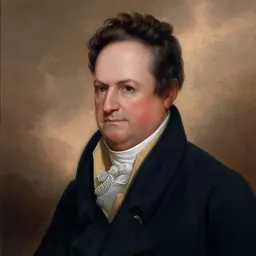
Kohlmann became convinced that New York City would remain the preeminent city in the United States and that the Jesuits should shift their ministerial efforts to it, Before long, the Jesuit superiors in Maryland determined that there were not enough Jesuits to staff both the New York school and Georgetown. Despite Kohlmann's protestations, the New York Literary Institution was disbanded in 1813, and the Jesuits were recalled to Maryland. When their desire for novices did not materialize, the nuns returned to Ireland three years after their arrival. Kohlmann also established an orphanage, which he placed under the care of Trappist nuns who had fled persecution in France. This institution was short-lived, as the Trappists left for Le Havre in October 1814. Speaking for a unanimous court, DeWitt Clinton wrote:
The court's decision represented the first legal recognition of the confessional privilege in the United States. As a result, the New York State Legislature passed a law on December 10, 1828, codifying the confessional privilege: that when clergy members come to know of facts through their ministerial capacity and their denomination imposes a requirement of secrecy, they cannot be compelled to reveal those facts. Kohlmann also wrote a book directed at non-Catholics, explaining the Catholic doctrine on the Sacrament of Penance.
Maryland and Washington, D.C.
Upon his arrival in Maryland in 1815, Kohlmann was made the master of novices at the novitiate at White Marsh Manor. Shortly after that, Giovanni Antonio Grassi left Maryland for Rome, and Kohlmann succeeded him as the superior of the Jesuits' Maryland Mission on September 10, 1817. He also assumed Kohlmann's role of mission superior on April 23, 1819.
Georgetown College Early depiction of Georgetown College's campus, with Old North on the right.
When Benedict Fenwick left for Rome in 1817, Kohlmann was selected to succeed him as president of Georgetown College. Though Kohlmann remained convinced that the Jesuits must close Georgetown to concentrate their meager resources on the training of Jesuits, he did not attempt to close the college while in office. He also encouraged proselytization of the Protestant students, to which their parents and some of the Anglo-American Jesuits objected.
During his administration, the number of students enrolled at the college declined somewhat. This was due in large part to the Panic of 1819 and partly to the strict discipline that Kohlmann enforced, which resulted in a significant number of students being expelled or transferring out. In 1818, students at the college staged a revolt by plotting to kill the prefect of students, Stephen Larigaudelle Dubuisson, who was responsible for maintaining discipline. While such conspiracies had become frequent at other American colleges, this was the first time such a design had appeared at a Catholic college. However, the plot was discovered before it could be acted upon, and Kohlmann expelled the six conspirators. Overall, his leadership of the college was not considered successful. Kohlmann's term as president of the college ended in 1820,
Washington Seminary In 1819, a building was constructed next to St. Patrick's Church in downtown Washington, D.C. It was to serve as the home of the Washington Seminary, which was envisioned as a standalone Jesuit novitiate, to alleviate overcrowding at Georgetown. This never came to fruition, however, and the building went unused for one or two years. Instead, the novitiate found another location, and the Washington Seminary opened as a Jesuit scholasticate under Kohlmann's leadership. He became the first president and rector of the school on August 15, 1820, and also assumed the position of professor of dogma. as it violated a law of the Jesuit order that forbade them from accepting compensation for educating youths. As a result of it no longer being exclusively for priestly training, the school would later become Gonzaga College High School. The school prospered and came to be the preeminent day school in Washington.
In response to the writings of the Unitarian minister Jared Sparks, which were aimed at Baltimore readers, and he was succeeded by Adam Marshall.
Kohlmann became involved in the purported miraculous cure of Ann Mattingly, the sister of Thomas Carbery, the Mayor of the District of Columbia. Kohlmann instructed her to pray a novena in union with the German Prince Alexander von Hohenlohe, On March 10, 1824, Mattingly was restored to health. Seeking to have the miracle declare true, he would later arrange an audience with Pope Leo XII, in which the pope was impressed by the event and ordered a pamphlet about it translated into Italian and published.
Roman career Kohlmann Hall at Fordham University was constructed in 1923.
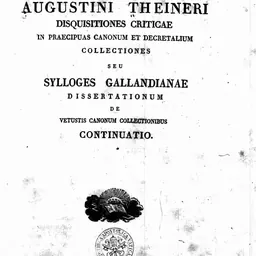
In 1824, Pope Leo XII placed the Pontifical Gregorian University under the care of the Society of Jesus, as it had been before the order's suppression. Impressed by Kohlmann's book on Unitarianism, In 1833, he met the future theologian Augustin Theiner; along with the future cardinal Karl-August von Reisach, Kohlmann influenced Theiner's decision to convert to Catholicism.
By 1836, Kohlmann's health had begun to deteriorate, Originally the headquarters of the Jesuit Order's New York province, it was later converted into the residence for Jesuits teaching at Fordham Preparatory School.
Don’t just read it —
keep it.
Full-length biographies made to live with: read them, listen on the way to work, watch them tonight.
- E-book
- Audio
- Video
Instant download · yours to keep · every purchase keeps this site free
Important facts
People in Anthony Kohlmann's life
Named in this biography and alive at the same time

Related people
Same field, nearest in time


Contemporaries
People whose lives overlapped Anthony Kohlmann's



Frequently asked questions
Who was Anthony Kohlmann?
Alsatian Jesuit educator and missionary
When was Anthony Kohlmann born?
Anthony Kohlmann was born on 13 July 1771 in Kaysersberg.
When did Anthony Kohlmann die?
Anthony Kohlmann died on 11 April 1836 in Rome.
What was Anthony Kohlmann's occupation?
Anthony Kohlmann was a missionary, catholic priest, academic administrator, educator and theologian.
What nationality was Anthony Kohlmann?
Anthony Kohlmann was French, American and Italian.
Sources & further reading
Cite this page
APA: Biography.guide. (2026). Anthony Kohlmann. https://biography.guide/anthony-kohlmann/
MLA: "Anthony Kohlmann." Biography.guide, https://biography.guide/anthony-kohlmann/.
Chicago: "Anthony Kohlmann." Biography.guide. https://biography.guide/anthony-kohlmann/.
Data last updated: 2026-09-20 · Spot an error? Report a correction.
Page generated 2026-09-27 05:18 UTC