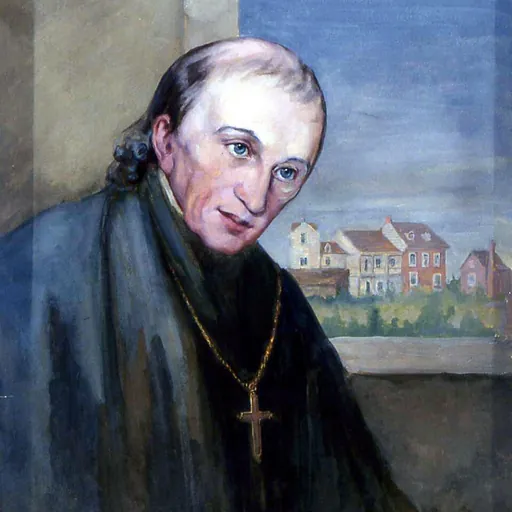
Leonard Neale
American Catholic archbishop
About Leonard Neale
Lived 1746 – 1817 (aged 70). Leonard Neale was an American catholic priest, missionary, academic administrator and catholic bishop.
Leonard Neale (October 15, 1746 – June 18, 1817) was an American Catholic prelate and Jesuit who became the second archbishop of Baltimore and the first Catholic bishop to be ordained in the United States. While president of Georgetown College, Neale became the coadjutor bishop to Bishop John Carroll and founded the Georgetown Visitation Monastery and Academy.
Neale was born in the British Province of Maryland to a prominent family that produced many Catholic leaders, including his brothers, Francis and Charles. He was educated in Europe, where he entered the Society of Jesus in 1767. Neale then volunteered to become a missionary in a Dutch colony in South America in 1779. He spent four years there, before becoming discouraged by the resistance from both the European colonists and indigenous people to his proselytism. He returned to Maryland, where he rejoined his former Jesuit colleagues from Europe at St. Thomas Manor.
In 1793, Neale was appointed pastor of Old St. Joseph's and Old St. Mary's Churches in Philadelphia. Bishop Carroll also made him vicar general for Philadelphia and the northern states. During the yellow fever epidemic in Philadelphia, Neale established the first Catholic orphanage there to care for the many orphaned children.
Neale served as president of Georgetown College in Washington from 1799 to 1806, where his imposition of strict discipline helped cause declining student enrollment. Though he was appointed coadjutor bishop in 1795, Neale was not consecrated until 1800. Neale supported the restoration of the Jesuits in the United States, which occurred in 1805. Neale became the Archbishop of Baltimore in 1815. He faced several conflicts with lay trustees, one resulting in a temporary schism at a parish in Charleston, South Carolina.
Early life
Leonard Neale was born on October 15, 1746, at Chandler's Hope, the Neale family estate near Port Tobacco Village in the British Province of Maryland.
Neale's parents, William Neale and Anne Neal née Brooke, had thirteen children. Two of Neale's brothers died early, while the four surviving brothers became Catholic priests. Reverend Charles Neale served as superior of the American Jesuit community. A sister, Anne Neale, served in the Order of Poor Clares in Aire-sur-la-Lys, France Another sister, Mary Neale Williams, was the mother of Reverend William Matthews, another president of Georgetown College. Anne Neale wanted to further her sons' education in a Catholic college in Maryland, but the provincial government had banned them. She was forced to send them all to the College of English Jesuits at Saint-Omer in France.
Leonard Neale left for Saint-Omer in 1758 at age 12, where he achieved a good academic record. As a child, Neale had decided to become a priest and now decided to fulfill that ambition. He moved to Bruges in Flanders in the Austrian Netherlands to continue his studies when the college relocated there in 1762. Neale entered the Society of Jesus on September 7, 1767. When the college relocated a second time to Liège in the Austrian Netherlands, Neale completed his study of philosophy and theology in that city. Immediately after his ordination, Neale returned to the College of Liège to join the faculty there. However, his tenure at the college was very short lived. In response, the Austrian Empire seized the College of Liège and expelled all the Jesuits priests from the Austrian Netherlands.
Missionary in South America In 1779, at Neale's request, the Jesuit Order sent him to Demerara, a Dutch West India Company colony that is part of present-day Guyana, to serve as a missionary.
Neale found that proselytizing the indigenous people was equally difficult. On one occasion, Neale was passing through a tribal village when he saw a small child who was dying. His father, a tribal chief implored Neale to cure him. Neale baptized the boy, who then miraculously recovered from his illness. The chief and his family all converted to Catholicism along with a few other villagers. However, the indigenous people generally resisted Neale's efforts and also refused to permit construction of a chapel on their lands. Discouraged and weakened from malaria, Neale left Demerara in January 1783, setting sail for Maryland. His voyage was delayed briefly when the Royal Navy seized his ship near Demerara during the Fourth Anglo-Dutch War.
Priest in Maryland
Once back in Maryland, Neale started serving at St. Thomas Manor near Chandler's Hope, the family estate. With the end of the American Revolution, Reverend John Carroll, a Jesuit colleague from Europe, started meeting with the few priests in the area to lay the foundations for the new American Catholic Church. Neale attended the first meeting of the Corporation of Roman Catholic Clergymen of Maryland at White Marsh Manor in Bowie, Maryland, in 1783.
Vicar General of Philadelphia In 1793, Neale volunteered to go to Philadelphia to help the church there during a yellow fever epidemic, despite his own weak health. The disease had killed ten percent of the city's population. At Old St. Joseph's Church, the pastor, Dominic Graessel, two assistant priests and hundreds of parishioners had died during the epidemic. Neale started serving as pastor of both Old St. Joseph's Church and Old St. Mary's Church. Carroll also named Neale as vicar general, responsible for supervising Catholics in Philadelphia and all the northern states.
While serving in Philadelphia, Neale met Alice Lalor, a young woman who was a devout Catholic. Before coming to the United States, Lalor had promised to help her bishop in Ireland found a religious order in Kilkenny. However, her family insisted that she immigrate with them. Lalor vowed to return to Ireland in two years to set up the community. Neale convinced her to instead found a religious community in Philadelphia. Lalor and two other women, with Neale's assistance, established a small Catholic school for girls in Philadelphia. However, Lalor was soon forced to close the school after her two co-founders died of yellow fever.
In 1796, Neale faced a challenge of his authority from the lay board of trustees at one of Philadelphia's parishes. Used to their independence, the board believed that it, not the bishop, had the right to control parish property and the selection of priests. After yellow fever broke out again in Philadelphia in 1797 and 1798, Neale established the first Catholic orphanage in the city to care for children orphaned by the disease. Neale received a summons to come to Mount Vernon, the Washington estate in Virginia. Travelling down the Potomac River from St. Thomas Manor, Neale allegedly met with Washington. He heard his confession and then conditionally baptized him, receiving him into the Catholic Church. The story was passed along over time by other Jesuit priests and enslaved people at Mount Vernon. However, the Catholic historian Martin I. J. Griffin concluded that it was probably untrue. Written accounts by witnesses of Washington's final hours did not mention the presence of Neale or any other clergy.
Coadjutor Bishop of Baltimore As the Diocese of Baltimore grew in size and population, Carroll requested that the Sacred Congregation de Propaganda Fide appoint Neale as coadjutor bishop of Baltimore to assist him.
Georgetown University
In 1799, Carroll named Neale as president of Georgetown College, the successor institution to the Academy of Georgetown. Leonard Neale assumed office on March 30, 1799. Neale moved from Philadelphia to Washington to live on the Georgetown campus, as requested by the college board of directors.
As president of Georgetown, Neale instituted strict discipline on the student body, adopting a quasi-monastic regimen. To eliminate fraternization between the seminarians and the lay students, he segregated the seminarians from all lay students and moved the non-Catholic lay students to off-campus housing. The college also faced increase competition for lay students from St. Mary's Seminary in Baltimore. Its leader, former Georgetown president Louis DuBourg, had opened a program for these students. Neale responded by expanding the course of studies at Georgetown, adding philosophy in 1801 as the final course in the full Jesuit curriculum.
Jesuit restoration The 1773 suppression of the Jesuits, which prohibited them in the United States and elsewhere around the world, had not been enforced by the Russian tsars against the small Jesuit community in the Russian Empire. In 1805, Pope Pius VII, at the request of Emperor Paul I of Russia, issued a papal bull that officially lifted the order of suppression in Russia. Leonard Neale and his brothers, Francis and Charles, told Carroll that if Jesuit priests in the United States affiliated with the Jesuit province in Russia, it would under church law restore the Jesuit community in the United States. Though initially dubious of the feasibility of this scheme, Carroll eventually consented to it. He and Leonard Neale then petitioned Reverend Gabriel Gruber, the Jesuit Superior General, to make the affiliation.
In 1805, the Society of Jesus was allowed to reestablish in the United States, with two new Jesuit priests arriving from Europe that same year. Neale was now able to open a Jesuit novitiate at Georgetown College.
With Neale's guidance, the women decided to enter the Order of the Visitation of Holy Mary. Neale drew up the rules for the new enclosed religious community. When the Poor Clares sisters decided to return to Europe, Neale purchased their building in Georgetown and turned it over to the Visitation sisters on June 29, 1808. For this action, he is recognized as the founder of the institution.
However, the trustees of St. Mary were offended that Carroll did not consult with them on the pastor's appointment. They also preferred an Irish priest to reflect the ethnic makeup of the parish. The board appointed Browne as pastor at St. Mary's and dismissed Clorivière, defying Neale, who was now archbishop. Gallagher argued that Neale had no authority to appoint a new pastor without his assent, and that doing so was causing a schism. Neale then placed St. Mary's under an interdict, prohibiting Catholic rites at the church
In May 1816, Browne traveled to Rome to appeal the interdict and his suspension to the Vatican. Cardinal Lorenzo Litta, the prefect of the Propaganda Fide, lifted the St. Mary's interdict and allowed Browne to remain as pastor there. Neale appealed Litta's decision to Pius VII, who reversed it on July 6, 1817, a few weeks after Neale's death. Clorivière, at his own request, was later assigned to the Visitation school in Washington as chaplain, Browne remained pastor at St. Mary's and the trustees submitted to the new archbishop's authority.
Death and legacy
Due to his declining health, Neale requested that the Vatican appoint Bishop Jean-Louis Lefebvre de Cheverus as coadjutor archbishop of Baltimore to assist him. However, Cheverus, then bishop of the Diocese of Boston, did not want to leave Boston.
The Leonard Neale House in Washington served as the home of a Jesuit community from the 1960s until 2016, when the community merged with the Jesuits at Gonzaga College High School in Washington. The Archbishop Neale School in La Plata, Maryland, is named after Leonard Neale.
Don’t just read it —
keep it.
Full-length biographies made to live with: read them, listen on the way to work, watch them tonight.
- E-book
- Audio
- Video
Instant download · yours to keep · every purchase keeps this site free
Important facts
People in Leonard Neale's life
Named in this biography and alive at the same time



Related people
Same field, nearest in time

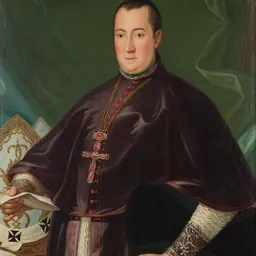
Contemporaries
People whose lives overlapped Leonard Neale's





Frequently asked questions
Who was Leonard Neale?
American Catholic archbishop (1746-1817)
When was Leonard Neale born?
Leonard Neale was born on 15 October 1746 in Port Tobacco Village.
When did Leonard Neale die?
Leonard Neale died on 18 June 1817 in Baltimore.
What was Leonard Neale's occupation?
Leonard Neale was a catholic priest, missionary, academic administrator and catholic bishop.
What nationality was Leonard Neale?
Leonard Neale was American.
Sources & further reading
Cite this page
APA: Biography.guide. (2026). Leonard Neale. https://biography.guide/leonard-neale/
MLA: "Leonard Neale." Biography.guide, https://biography.guide/leonard-neale/.
Chicago: "Leonard Neale." Biography.guide. https://biography.guide/leonard-neale/.
Data last updated: 2026-09-22 · Spot an error? Report a correction.
Portrait: Wikimedia Commons · author & licence
Page generated 2026-09-27 05:04 UTC