
Rachel Barrett
Welsh suffragette and newspaper editor
About Rachel Barrett
Lived 1874 – 1953 (aged 78). Rachel Barrett was a British political activist, newspaper editor, teacher and suffragette.
Rachel Barrett (12 November 1874 – 26 August 1953) was a Welsh suffragette and newspaper editor born in Carmarthen. Educated at the University College of Wales in Aberystwyth she became a science teacher, but quit her job in 1906 on hearing Nellie Martel speak of women's suffrage, joined the Women's Social and Political Union (WSPU) and moved to London. In 1907, she became a WSPU organiser, and after Christabel Pankhurst fled to Paris, Barrett became joint organiser of the national WSPU campaign. In 1912, despite no journalistic background, she took charge of the new newspaper The Suffragette. Barrett was arrested on occasions for activities linked to the suffrage movement and, in 1913–1914, spent some time incognito to avoid re-arrest.
Early life Barrett was born in Carmarthen on 12 November 1874 She grew up in the town of Llandeilo with her elder brother Rees and a younger sister, Janette. By the 1881 census, her mother Anne was the lone adult living at their address on Alan Road, her father having died in 1878. Barrett spoke on behalf of the WSPU at many meetings, often in Welsh, which conflicted with her role as a schoolteacher as her headmistress disapproved of the publicity, especially after news of Barrett being flour-bombed with Adela Pankhurst
Barrett was also active with Adela Pankhurst at Bradford. With her campaign activities over Barrett was free to attend the LSE, which proved useful for attending WSPU activities in nearby Clement's Inn. Over the Christmas period Barrett was again busy campaigning for the WSPU, with Pankhurst, Martel, Lamb, and Nellie Crocker at the "rough and boisterous" staunchly Liberal Mid-Devon seat at Newton Abbott,
In 1910, Barrett was chosen to lead a group of women to talk to the Chancellor of the Exchequer, David Lloyd George, regarding the Liberal Party's role in supporting the first Conciliation Bill. The meeting lasted two and a half hours, and by its end she was convinced that Lloyd George had been insincere over his support for equal voting rights and believed him to be against women's suffrage. By the end of the year her post was changed to organising all WSPU activities in Wales and she was relocated to the country's headquarters in Cardiff. Writing in her autobiography Barrett described becoming an editor as "an appalling task as I knew nothing whatever of journalism". Barrett was sentenced to nine months' imprisonment at Holloway. She immediately went on hunger strike, was transferred to Canterbury Prison, and after five days she was released under the "Cat and Mouse Act". She moved into "Mouse Castle", 2 Campden Hill Square, home of the Brackenbury family who were sympathetic suffragists. In Barrett's obituary in the Women's Bulletin, it read that the raising of the statue "...stands as a permanent memorial to Rachel's organising ability." In 1929, Barrett was appointed secretary of the Equal Political Rights Campaign Committee, an organisation that sought equality between men and women in all political spheres.
Later life In her later life, Barrett joined the Suffragette Fellowship with Edith How-Martyn There she lived at Lamb Cottage.
Relationship with I. A. R. Wylie
During her time editing The Suffragette, Barrett struck up a lesbian relationship with the female Australian author I. A. R. Wylie, who contributed to the paper in 1913. In 1919, Barrett and Wylie travelled to the United States, where they bought a car and spent over a year travelling round the country. They stayed in New York and San Francisco and were recorded in the 1920 census as living in Carmel-by-the-Sea in California, where Wylie was classed as the head of the household and Barrett as her friend.
The two women remained close for some time and, in 1928, were supporters of their close friends Una Troubridge and Radclyffe Hall during the trial of The Well of Loneliness. When Barrett died, she left the residue of her estate to Wylie.
Death Barrett died of a cerebral haemorrhage on 26 August 1953 at the Carylls Nursing Home in Faygate, Sussex. She was 78 years old. She left Lamb Cottage to her niece Gwyneth Anderson, who lived there with her husband, the British poet, J. Redwood Anderson.
Don’t just read it —
keep it.
Full-length biographies made to live with: read them, listen on the way to work, watch them tonight.
- E-book
- Audio
- Video
Instant download · yours to keep · every purchase keeps this site free
Important facts
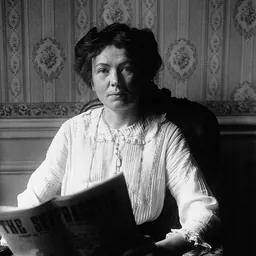
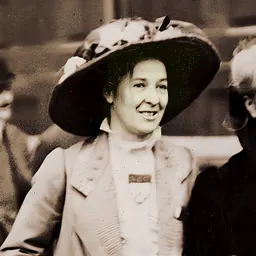
People in Rachel Barrett's life
Named in this biography and alive at the same time




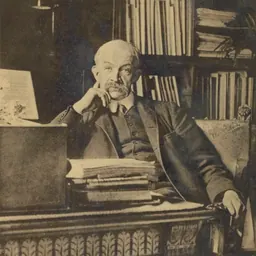
Related people
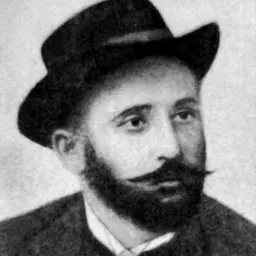
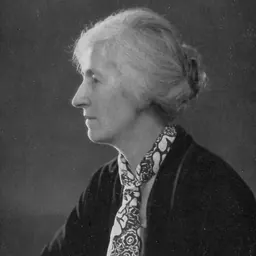
Same field, nearest in time


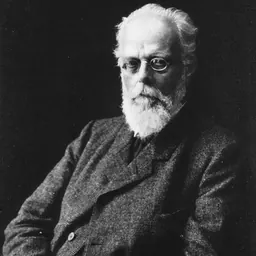
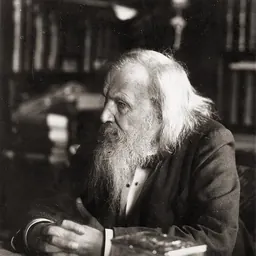
Contemporaries
People whose lives overlapped Rachel Barrett's

Frequently asked questions
Who was Rachel Barrett?
Welsh suffragette and newspaper editor
When was Rachel Barrett born?
Rachel Barrett was born on 12 November 1874 in Carmarthen.
When did Rachel Barrett die?
Rachel Barrett died on 26 August 1953 in Faygate.
What was Rachel Barrett's occupation?
Rachel Barrett was a political activist, newspaper editor, teacher and suffragette.
What nationality was Rachel Barrett?
Rachel Barrett was British.
Sources & further reading
Cite this page
APA: Biography.guide. (2026). Rachel Barrett. https://biography.guide/rachel-barrett/
MLA: "Rachel Barrett." Biography.guide, https://biography.guide/rachel-barrett/.
Chicago: "Rachel Barrett." Biography.guide. https://biography.guide/rachel-barrett/.
Data last updated: 2026-09-27 · Spot an error? Report a correction.
Page generated 2026-09-27 05:17 UTC