
About Percy W. Clarkson
Lived 1893 – 1962 (aged 68). Percy W. Clarkson was a military personnel.
Percy William Clarkson (December 9, 1893 – September 14, 1962) was a highly decorated officer in United States Army with the rank of major general. He is most noted as commander of the 33rd Infantry Division from 1943 to 1945 during its World War II involvement in the United States armed forces' reconquest of the Philippines.
Early career
Percy W. Clarkson was born on December 9, 1893, in San Antonio, Texas as the son of William Banton Clarkson and Alice Ann Peaples. His parents were immigrants from Liverpool, England. His father worked as a cotton broker in order to provide for Percy and his four siblings. His older brother Herbert also served in the Army, and reached the rank of brigadier general during World War II.
Clarkson completed high school in Houston and enrolled in the Texas A&M College in College Station, Texas in summer 1911. There, he was active in football, served as the vice-president of the San Antonio Club, and reached the rank of second lieutenant in the Corps of Cadets.
He graduated in 1915 with a Bachelor of Science degree in electrical engineering. After one year of working in the private sector, he applied for a commission the United States Army. He was commissioned second lieutenant in the Infantry Branch on November 30, 1916, and was ordered to the Army Service School at Fort Leavenworth, Kansas for officers' training.
Clarkson remained in that capacity until that September, when he returned to the Army Infantry School at Fort Benning for Advanced Course. After graduating the following June, he was ordered to the Army Command and General Staff School at Fort Leavenworth, Kansas, and completed a one-year course there in June 1928. He was subsequently promoted to major and ordered to the United States Military Academy at West Point, New York for duty as an assistant professor of Chemistry and Electricity.
Clarkson was then appointed an assistant to the inspector of Eighth Corps Area (also located at Fort Sam Houston), and served under Colonel Charles P. George Jr. for the next three years. While in that capacity, he was promoted to lieutenant colonel in September 1938. In June 1940, Clarkson was transferred to Washington, D.C. and assigned to the Office of the assistant chief of staff for G-1 (administration), War Department General Staff, where he served under Brigadier General Wade H. Haislip as chief of the Officers' Branch. He was promoted to colonel in mid-October 1941.
In late August 1944, Clarkson received orders to send a regimental combat team (RCT) built around the 123rd Infantry Regiment to Maffin Bay, Papua, in order to insure operation of Wakde Airdrome and to maintain its security. He chose his deputy, Brigadier General Donald J. Myers, to lead the task force, which met occasional enemy resistance consisting of snipers, machine gun nests, and enemy patrols. The RCT remained at Maffin Bay until the end of January 1945.
After a week of heavy fighting, Clarkson declared the city secured, with over 2,000 Japanese killed. The 33rd Division then took Camp John Hay. After mopping up the area, it moved on to break the San Nicholas-Tebbo-Itogon route. During the liberation of Baguio, Manuel Roxas, a former aide to General Douglas MacArthur, was liberated. Clarkson and his division operated a long-range combat patrols around Daklan Airfield in the Northern Luzon in a systematic search for stragglers who had evaded the American forces before continued in the fighting in rugged terrain to take Pugo, Mount Calugong, and finally Hill 24-A atop Mount Mirador, dominating Baguio.
In March 1947, Clarkson was transferred to Fort Campbell, Kentucky, where he assumed command of the 3rd Infantry Division. He later moved his headquarters to Fort Benning, Georgia, and supervised the training of his division in the months before the outbreak of the Korean War. He did not lead his division to the combat in Korea, and received orders for transfer to Hawaii in August 1950.
Clarkson then assumed duty as deputy commander, United States Army Pacific, with headquarters at Fort Shafter. He served consecutively under Lieutenant General Henry Aurand and John W. O'Daniel, and served additional duty as commander of the Joint Task Force 132 during 1952 Eniwetok atomic bomb tests. Clarkson's additional duties were later redesignated, and he became commander of Joint Task Force 7, which consisted of an Army-Navy-Air Force group running hydrogen bomb tests in the Pacific. He served in Hawaii until July 31, 1954, when he retired from active duty after 38 years of service.
Clarkson received his third Distinguished Service Medal for his service during the atomic bomb tests.
Retirement
Following his retirement from the Army, Clarkson and his wife settled in San Antonio, Texas, where he assumed a job as chairman of the board of Fort Sam Houston National Bank. He was also a member of the San Antonio Chamber of Commerce, and served on the boards of trustees of the San Antonio Medical Foundation and Symphony Society of San Antonio.
He was active in the 33rd Division Veterans Association, where he was admired by his fellow officers. Among the officers who attended the reunion in December 1961 to pay tribute to him were General Walter Krueger, former commander Sixth Army; Brigadier General Andrew T. McAnsh, former 33rd Division chief of staff; Major General John S. Gleason Jr., former 33rd Division ordnance officer; Colonel Jacob Arvey, former judge-advocate of 33rd Division; and Brigadier General Frank S. Singer, former 33rd Division personnel officer.
Decorations
Here is the ribbon bar of Major General Percy W. Clarkson:
1st Row Army Distinguished Service Medal with two Oak Leaf Clusters Silver Star with Oak Leaf Cluster 2nd Row Legion of Merit Bronze Star Medal Air Medal 3rd Row Army Commendation Medal Purple Heart World War I Victory Medal with three battle clasps 4th Row Army of Occupation of Germany Medal American Defense Service Medal American Campaign Medal 5th Row Asiatic-Pacific Campaign Medal with two campaign stars World War II Victory Medal Army of Occupation Medal with Japan Clasp 6th Row National Defense Service Medal Philippine Liberation Medal with two stars Ordre des Palmes académiques, Knight (France)Presidential Unit Citation
Don’t just read it —
keep it.
Full-length biographies made to live with: read them, listen on the way to work, watch them tonight.
- E-book
- Audio
- Video
Instant download · yours to keep · every purchase keeps this site free
Important facts
People in Percy W. Clarkson's life
Named in this biography and alive at the same time



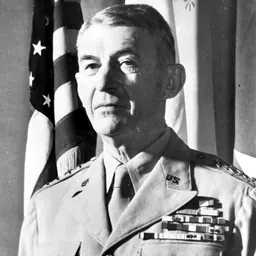
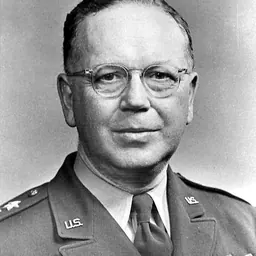


Related people
Same field, nearest in time



Contemporaries
People whose lives overlapped Percy W. Clarkson's

Frequently asked questions
Who was Percy W. Clarkson?
United States Army general (1893–1962)
When was Percy W. Clarkson born?
Percy W. Clarkson was born on 9 December 1893.
When did Percy W. Clarkson die?
Percy W. Clarkson died on 14 September 1962.
What was Percy W. Clarkson's occupation?
Percy W. Clarkson was a military personnel.
Sources & further reading
· Wikipedia: Percy W. Clarkson
Cite this page
APA: Biography.guide. (2026). Percy W. Clarkson. https://biography.guide/percy-w-clarkson/
MLA: "Percy W. Clarkson." Biography.guide, https://biography.guide/percy-w-clarkson/.
Chicago: "Percy W. Clarkson." Biography.guide. https://biography.guide/percy-w-clarkson/.
Data last updated: 2026-09-20 · Spot an error? Report a correction.
Page generated 2026-09-27 05:15 UTC