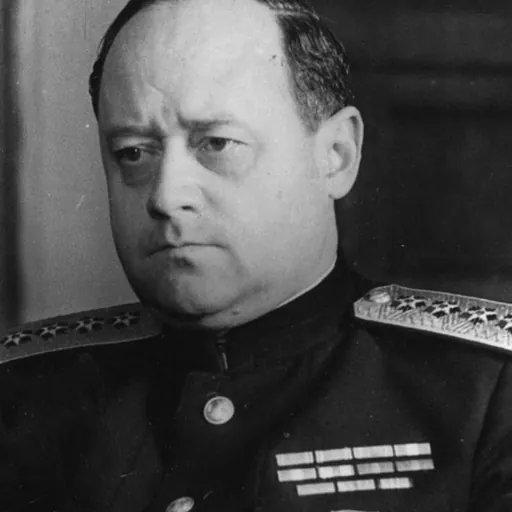
About Ivan Isakov
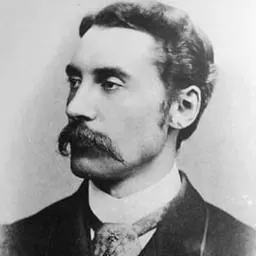
Lived 1894 – 1967 (aged 73). Ivan Isakov was a Russian military personnel, politician and soldier.
Ivan Stepanovich Isakov (, ; – 11 October 1967), born Hovhannes Ter-Isahakyan, was a Soviet Armenian military commander, Chief of Staff of the Soviet Navy, Deputy USSR Navy Minister, and held the rank of Admiral of the Fleet of the Soviet Union. He played a crucial role in shaping the Soviet Navy, particularly the Baltic and Black Sea flotillas during the Second World War. Aside from his military career, Isakov became a member and writer of the oceanographic committee of the Soviet Union Academy of Sciences in 1958 and, in 1967, became an honorary member of the Armenian Soviet Socialist Republic's Academy of Sciences.
Early life Ivan Isakov was born Hovhannes Ter-Isahakyan in the family of an Armenian railway worker in the village of Hadjikend in the Kars Oblast, then a part of the Russian Empire (currently the Kars vilayet of Turkey). He changed his name after Russian Revolution. His father died soon after he was born. Afterward, his mother raised their three children with her brother. His uncle had dreamed of service in the navy and had a library of marine literature, which inspired an identical love of watercraft for Isakov. The family later moved to Tiflis, where he studied mathematics and engineering at the local realschule, which Isakov graduated from in 1913. He continued his service after the October Revolution in the Baltic Sea fleet as a torpedo officer, where he served on several warships, including the Izyaslav, the Riga, the Kobchik and the Korshun.
In 1920, Isakov was transferred and assigned to the destroyer Deyatelni, which patrolled from the Volga River down to the Caspian Sea and later shelled the positions of Allied interventionist forces in the midst of the Russian Civil War. Noted for his distinction during the battles, he was made the gun battery commander of the destroyer Izyaslav in 1921. Isakov broke away from teaching with the onset of the Winter War and entered active service; he coordinated not only the movement of naval warships in the Baltic Sea but also the ground forces of the Red Army in the Soviet war against Finland. , spending the remainder of the war in a field hospital. Nevertheless, Isakov continued to serve in his capacity as chief of staff of Soviet naval forces. He received his Doktor nauk in 1937 after defending his dissertation on the routing of German forces by the Imperial Japanese Navy in the Battle of Tsingtao in 1914.
Appraisal, critics and legacy
As a naval commander, Isakov has been described by one military historian as "more a naval practitioner than a theoretician" who "emphasized that the theory of the command of the sea was a rational theory."
As a Russified Armenian, Isakov's personal worldview and identification can be characterized as a Great Russian's own instead of a Soviet's. In January 1965, Isakov wrote in the newspaper Nedelya that "for centuries foreign enemies have tried to close for the Russian people all exits to the sea." Then he recalled, how "Astrakhan's kingdom has blocked the Caspian Sea. In the Baltic the role of Cerberus was played in turn by the Livonian Knights, the Hanseatic League and later Sweden". Isakov concluded "The fortress Oreshek or Schlüsselburg has remained in the mouth of the Neva to this very day as a reminder of how afraid they were of letting the Russians out of Lake Ilmen."
On the basis of this article, Ivan Dziuba, a Ukrainian-born Soviet philologist and a staunch Leninist, criticized Isakov strongly in his book Internationalism or Russification (1968) for repeating "what was written by the propagandists of tsarist times and in their falsified history textbooks," an attitude "which looked on the whole surrounding world whether it was in the way of Russia or not, whether it satisfied the appetites of tsarism or not." Dziuba used Isakov as an example of how tsarist Russia was identified completely with the contemporary USSR and how Great Russian chauvinism had surpassed "the Communist class approach" with "a pitiable Shulgin-type interpretation of the grandiose class battle of the proletariat, of the grandiose drama of universal history!" and a Russian frigate.
Honours and awards
Soviet Union
Wound stripe Stalin Prize (1950)
Foreign
Writings Isakov had written several books, mainly about naval warfare: "Japanese Operations Again Tsingdao in 1914", 1936 "USSR Naval Fleet in the Patriotic War", 1947 "Stories About the Navy", 1962 "The End of a Nine", 1963 "The First Diplomatic Assignment", 1964 "Story of an Indestructible Major", 1965 "Naval Attractions", 1984 "Selected Works", 1984
Don’t just read it —
keep it.
Full-length biographies made to live with: read them, listen on the way to work, watch them tonight.
- E-book
- Audio
- Video
Instant download · yours to keep · every purchase keeps this site free
Important facts
People in Ivan Isakov's life
Named in this biography and alive at the same time


Related people
Same field, nearest in time






Contemporaries
People whose lives overlapped Ivan Isakov's

Frequently asked questions
Who was Ivan Isakov?
Soviet military commander (1894-1967)
When was Ivan Isakov born?
Ivan Isakov was born on 22 August 1894 in Hacıkənd.
When did Ivan Isakov die?
Ivan Isakov died on 11 October 1967 in Moscow.
What was Ivan Isakov's occupation?
Ivan Isakov was a military personnel, politician and soldier.
What nationality was Ivan Isakov?
Ivan Isakov was Russian.
Sources & further reading
Cite this page
APA: Biography.guide. (2026). Ivan Isakov. https://biography.guide/ivan-isakov/
MLA: "Ivan Isakov." Biography.guide, https://biography.guide/ivan-isakov/.
Chicago: "Ivan Isakov." Biography.guide. https://biography.guide/ivan-isakov/.
Data last updated: 2026-09-21 · Spot an error? Report a correction.
Portrait: Wikimedia Commons · author & licence
Page generated 2026-09-27 05:00 UTC