
About Henry Aurand
Lived 1894 – 1980 (aged 86). Henry Aurand was an American military personnel.
Lieutenant General Henry Spiese Aurand (April 21, 1894 – June 18, 1980) was a United States Army career officer. He was a veteran of the Mexican Expedition and World War II. A graduate of the United States Military Academy at West Point, New York, Aurand was ranked 20th in the class of 1915, known as "the class the stars fell on" because no fewer than 59 of the 164 members of the class who graduated became generals. His classmates included Dwight D. Eisenhower and Omar Bradley, both of whom later achieved five-star rank. He was commissioned in the Coast Artillery Corps, but later transferred to the Ordnance Department.
He served on the Mexican border during the Pancho Villa Expedition, was an assistant to the officer in charge of the design and construction of the Aberdeen Proving Ground, and was at the Sandy Hook Proving Ground from 1917 to 1919. Between the wars Aurand attended Ordnance School at the Watertown Arsenal in 1921–1922, the Army Command and Staff College at Fort Leavenworth, Kansas 1927–1928, the Army War College in 1930–1931, and the Army Industrial College in 1939–1940. He served in the Philippines from 1925 to 1927, and on the faculty of the Ordnance School at Watertown Arsenal from 1929 to 1930. From 1933 to 1937, he was an instructor in logistics at the Army War College.
During World War II Aurand was the Director of Defense Aid, the program that sent Lend Lease materials to the Allies. He became the Chief of the International Division, Army Service Forces in 1942 and later that year the secretary of the Combined Production and Resources Board. In September 1942 he became the Commanding General of the Sixth Service Command, based in Chicago, Illinois. In 1944, Aurand was assigned as the Assistant Chief Ordnance Officer, European Theater of Operations, United States Army (ETOUSA) and Communications Zone (COMZ). He become the Commanding General, Normandy Base Section, in December 1944. In May 1945, he went to the China Theater as the Commanding General, United States Army Services of Supply there.
Aurand returned to the United States as the Commanding General of the Sixth Service Command, and he was commander of the Africa-Middle East Theater in 1946. In June 1946, he became the last Director of Research and Development, War Department. In 1948, he became the Director of Logistics, Department of the Army. His final assignment was as Commanding General, United States Army, Pacific, a position he held until his retirement in 1952.
Early life Henry Spiese Aurand was born in Tamaqua, Pennsylvania, on April 21, 1894, the only child of Peter Augustus Aurand, a conductor on the Philadelphia and Reading Railroad, and his wife Annie Speise. When he was eleven years old, the family moved from Tamaqua to Shamokin, Pennsylvania. He attended Shamokin Area High School, where he played violin in the school orchestra, captained the debating team, and edited the school literary magazine. His ambition was to go to Pennsylvania State College and become a civil engineer, but he sat the examination for the United States Military Academy at West Point, New York, and received a nomination as an alternative. When the principal candidate failed the physical examination, Aurand wrote to his United States Congressman, John Geiser McHenry, declining the nomination. McHenry replied that he had already been declined twice, and would not take no for an answer. After a family discussion, it was decided that Aurand would go to West Point, serve the minimum four years, and then complete postgraduate engineer training at Pennsylvania State College.
Aurand entered West Point on June 14, 1911, becoming a member of the class of 1915, which became known as "the class the stars fell on" because no less than 59 of the 164 members of the class who graduated became generals. His classmates included Dwight Eisenhower and Omar Bradley. West Point cadets chose which of the five combat arms of the Army (infantry, cavalry, field artillery, coast artillery or engineers) they would join with each nominating in order of class rank, limited only by the quotas set by each arm. Aurand was ranked twentieth in the class, which was high enough to have a completely free choice. Most of the highest-ranking cadets (and indeed all those ranked above Aurand) chose to join the engineers, but Aurand chose the Coast Artillery, in the hope of eventually transferring to the Ordnance Department and becoming a mechanical engineer. He graduated and was commissioned a second lieutenant in the Coast Artillery on June 12, 1915.
World War I Aurand's first posting was to the 169th Company at Fort Monroe, Virginia, from September 11, 1915, to April 15, 1916. He then went to Fort Oglethorpe, Georgia, but on June 2 was sent to El Paso, Texas, where he was in charge of civilian truck companies supporting the Pancho Villa Expedition in Mexico. He was promoted to first lieutenant on July 1. While there, he married Margaret John (Peggy) Decker, the sister of a fellow officer, in San Antonio, Texas, on July 13, 1916. Her father, Davis Evan Decker, was a Texas state senator and judge; her grandmother, Nancy Elizabeth Morrow, was the oldest daughter of Sam Houston. They had two children: Evan Peter Aurand, who graduated from the United States Naval Academy with the class of 1938, and eventually rose to the rank of vice admiral; and Henry (Hank) Spiese Aurand Jr., who graduated from West Point with the class of 1944.
From October 3, 1916, to November 1, 1917, Aurand was a student officer at the Ordnance School at the Sandy Hook Proving Ground. He was promoted to captain on July 25, 1917. His first assignment with the Ordnance Department was an assistant to the officer in charge of the design and construction of the Aberdeen Proving Ground, Major William R. King. He was promoted to major in the Ordnance Department on January 14, 1918. He returned to the Sandy Hook Proving Ground, where he spent the rest of World War I working with civilian scientists on the development of flashless propellant.
Between the wars After the war ended, Aurand returned to Fort Monroe on April 7, 1919, as the ordnance officer at the Coast Artillery Training Center. On March 21, 1920, he reported to Fort Sam Houston, Texas, as Assistant Ordnance Officer of the Southern Department. He reverted to his substantive rank of captain on May 17. Two days later he became the Adjutant and Disbursing Officer at the San Antonio Arsenal. His wife Peggy left him, and divorced him. He formally transferred to the Ordnance Department on July 1, 1920, with the rank of major, but reverted to captain again on November 4, 1922.
From September 10, 1921, to November 6, 1922, Aurand was a student officer at the Ordnance School at the Watertown Arsenal in Massachusetts, and took a summer course at the Massachusetts Institute of Technology. He differed with the senior instructor at the Watertown Arsenal, arguing that ordnance officers should be trained in field repairs, leaving the complex tasks to civilians. As a result, he received an adverse efficiency report that rated him as being deficient in military bearing, neatness, tact and judgement, and recommended that he be given field service assignments only. This ended any prospect of his being given a mechanical engineering position. In November he remarried Peggy; their son Peter was a ring bearer at the wedding. On November 6, 1922, Aurand became the Ordnance Officer for the V Corps Area at Fort Hayes, Ohio. In this role he supervised the training of National Guard units from Indiana, Kentucky, Ohio and West Virginia, and in November 1923 he prepared mobilization plans for the Corps Area.
Promoted to major in the Ordnance Department for the third time on January 8, 1924, Aurand went to Washington, D.C., on August 18, as a staff officer in the office of the Chief of Field Service in the Ordnance Department. His next assignment was as Ordnance Officer of the Harbor Defenses of Manila and Subic Bays. It commander, Colonel Stanley D. Embick, recognized his ability and made him his G-4, the staff officer responsible for logistics. He told Aurand that this was where his true talent lay and he should forget about engineering. On Embick's recommendation, Aurand attended the Command and Staff College at Fort Leavenworth, Kansas, after which he returned to Fort Hayes as the G-4 of the V Corps Area from June 27, 1928, to August 16, 1930. In November 1929, Peggy divorced him a second time.
From August 17, 1930, to June 30, 1931, Aurand was one of the two Ordnance Department officers to attend the Army War College that academic year. He produced a study of Germany's mobilization during World War I, and one of the British Zeebrugge Raid. He returned to Washington, D.C., where he worked on a special study. He then produced a new ordnance field manual. He was critical of the Army's mobilization policies, and advocated replacement of horse-drawn transport with motor vehicles. This was followed by duty at the Watertown Arsenal, Raritan Arsenal and Aberdeen Proving Ground.
With the help of his West Point classmate Eisenhower, who was now the aide-de-camp to the Army Chief of Staff, General Douglas MacArthur, Aurand secured an appointment to the War College faculty. On February 2, 1933, he married Elizabeth (Betty) Steele from Shamokin, Pennsylvania. They had a daughter, Linda. At the War College he taught a course on "Supply and Transportation in the Theatre of Operations". He was critical of the make up of the faculty, which he felt contained too many men from the combat arms. Of the seven most important posts—the commandant (Major General Malin Craig), assistant commandant and five directors—five were from the cavalry arm. He was promoted to lieutenant colonel on April 1, 1936. This was followed by a tour of duty at the Picatinny Arsenal from June 28, 1937, to September 6, 1939, when he left to attend the Army Industrial College.
At the Army Industrial College, Aurand had assisted in the production and development of an industrial mobilization plan, but he had been critical of the process. He argued that the notion of defining grand strategy (ends), determining how to pursue it (ways), and then deciding what resources can be applied (means), had the process backwards: the means should be determined first, and realistic ways and ends derived from them. He believed that logistics was the decisive factor in modern warfare, and rejected the cautious assumption that the public would not countenance the creation of the machinery for industrial mobilization in peacetime. He submitted an article to the Army Ordnance journal in which he attacked the Ordnance Department's approach to ammunition design. While the editor liked the article, the Office of the Chief of Ordnance deemed it too controversial, and refused permission for its publication.
World War II United States Aurand's controversial views and stubborn insistence that he was right may have resulted in his next assignment, as Assistant Fiscal Officer at the War Department, which was generally considered a dead-end job. He complained about the assignment to Colonels Russell L. Maxwell and Walter M. Robertson, and they arranged for him to meet with Brigadier General Richard C. Moore, the G-4 of the War Department General Staff. Moore was sufficiently impressed to have Aurand's orders changed, reassigning him as Chief of the G-4 Requirements and Distribution Section in June 1940. His former West Point roommate, Lieutenant Colonel Albert W. Waldron, was his deputy, and his staff included Major Anthony McAuliffe. In this role he helped prepare estimates of the Army's requirements for the Chief of Staff, General George C. Marshall, to submit to the Bureau of the Budget and Congress. Industrial mobilization took on a new urgency. On January 7, 1941, President Franklin D. Roosevelt created the Office of Production Management (OPM) under William S. Knudsen to coordinate the industrial mobilization process with an executive order. Aurand worked with Knudsen, Stacy May, the Chief of the OPM Bureau of Research and Statistics, and Robert R. Nathan from the Commerce Department to determine the materiel requirements to mobilize an army of 500,000 by July 1, 1941, and 2,000,000 by July 1, 1942. This went into the Munitions Program of June 30, 1940, for which the Army requested $3.97 billion.
Aurand advocated the establishment of a Transportation Corps, and the creation of a consolidated logistical system. He supported arming aircraft with cannon, and urged the adoption of the jeep. He observed the Louisiana Maneuvers, spending an afternoon with Eisenhower, who was now the Chief of Staff of the Third United States Army, and with his G-4, Lieutenant Colonel LeRoy Lutes. Aurand considered the performance of the logistical units in the maneuvers to be poor, but he was impressed with an IBM keypunch and sorting machine. The supply of arms and munitions to the British became a contentious issue. Aurand had to take the needs of the British and Canadians into account as well as the American forces. He dealt with a British delegation headed by Lieutenant Colonel Donald Campion. Brigadier General George V. Strong, the chief of the War Plans Division (WPD), felt that Britain had already been defeated and that the US should concentrate on building up its own forces, which were suffering from shortages of all kinds. The Assistant Secretary of War John C. McCloy argued unsuccessfully for the peacetime draft to be deferred until the troops could be adequately equipped. Aurand prepared a study that formed the basis of the initial $7 billion Lend Lease appropriation.
Weekly Staff Conference at United States Army Services of Supply (USASOS) headquarters in June 1942. Aurand is seated. third from the left. A Directorate of Defense Aid was created in October 1941 to administer the Lend Lease Program, and to his dismay, Aurand, who had hoped to be able to concentrate on the Army's supply problems, was appointed its director. As such he was answerable to four masters: McCloy; Robert A. Lovett, the Assistant Secretary of War for Air; Robert P. Patterson, the Under Secretary of War; and Major General Brehon B. Somervell, who had replaced Moore as G-4. Aurand was promoted to brigadier general on January 30, 1942. In March 1942, the United States Army Services of Supply (USASOS) was created under Somervell. Aurand became the head of its International Division, which was placed under the USASOS Assistant Chief of Staff for Requirements and Resources, Major General Lucius D. Clay. Aurand's authority was circumscribed, with some functions transferred to Clay and others to the Operations Division of the War Department General Staff, leaving the International Division as little more than a statistical reporting organization. On June 20, 1942, Aurand left the USASOS to become secretary of the Combined Resources and Production Board (CPB); Somervell and Patterson had pushed hard for Aurand's appointment, possibly to get rid of him, and Jean Monnet had pushed for it from the British side. Donald Nelson was the head of the American half of the CPB, but he served on a part-time basis, so Aurand was left effectively in charge. Differences between Clay and Aurand over Lend-Lease allocations therefore continued.
Somervell could not fire Aurand, since he no longer worked for him, but after another clash between Clay and Aurand over Lend-Lease allocations in September 1942, Somervell offered Aurand the command of the Sixth Service Command, with the promise of a promotion to major general. Aurand knew that he was being kicked upstairs, but decided to accept. He assumed the command and was promoted to the rank on September 8, 1942. McCloy told him that he was selling his soul for a piece of tinsel. The service commands were the successors to the old corps areas, and acted as field commands of the USASOS. They operated recruiting stations and induction centers, and provided housekeeping and supply services to Army bases located in their region. Most service command commanders were older officers; at age 48, Aurand was the youngest. The Sixth Service Command had its headquarters in Chicago, Illinois, and was responsible for facilities in Michigan, Illinois, Indiana and Wisconsin.
Most of Aurand's command was made up of men classified as 1-B, unfit for general service (1-A), but suitable for services on bases in the United States. Use of 1-B personnel freed up 1-A personnel for duty overseas. Since they were permanently assigned, the 1-B personnel generally became quite efficient at their jobs. Aurand sent all his new 1-B recruits through basic training at Camp McCoy, Wisconsin. As manpower began to run short in 1943 and 1944, he zealously implemented Somervell's directives to replace as many 1-A personnel with 1-B as possible. During the 1943 Detroit race riot, he deployed a military police battalion stationed at River Rouge Park. The mayor of Detroit, Edward Jeffries, later criticized Aurand for a tardy response to the crisis, which was due to not receiving a timely request for assistance from the governor of Michigan, Harry Kelly. But Aurand's most intractable problem was drumming up recruits for the Women's Army Auxiliary Corps (WAAC). His young daughter Linda became the mascot of the WAAC detachment at Fort Sheridan, and scenes of father and daughter inspecting the troops appeared in newsreels. Such public relations events were an important part of his role, and he even had a weekly radio talk show, The General's Review on station WBBM. This led to a series called 21 Stars that highlighted the work of each of the service commands, and was broadcast on the Blue Network in 1944. For his services as commander of the Sixth Service Command, Aurand was awarded the Army Distinguished Service Medal. The citation for the medal reads:
Quote|The President of the United States of America, authorized by Act of Congress July 9, 1918, takes pleasure in presenting the Army Distinguished Service Medal to Major General Henry Spiese Aurand (ASN: 0-3784), United States Army, for exceptionally meritorious and distinguished services to the Government of the United States, in a duty of great responsibility as Commanding General, 6th Service Command, during the period from 8 September 1942 to 26 October 1944. The singularly distinctive accomplishments of General Aurand reflect the highest credit upon himself and the United States Army. Aurand enjoyed Hawaii so much that he decided to buy a house and settle there. In 1960, Eisenhower, by then the president, appointed Aurand to the South Pacific Commission. He was also a columnist for The Honolulu Advertiser. Aurand left Hawaii in 1963, and moved to St Louis, Missouri. In 1977, he moved again, to Laguna Hills, California, where he died on June 18, 1980. His remains were buried in Arlington National Cemetery. His papers are in the Dwight D. Eisenhower Presidential Library.
Military decorations
Don’t just read it —
keep it.
Full-length biographies made to live with: read them, listen on the way to work, watch them tonight.
- E-book
- Audio
- Video
Instant download · yours to keep · every purchase keeps this site free
Important facts
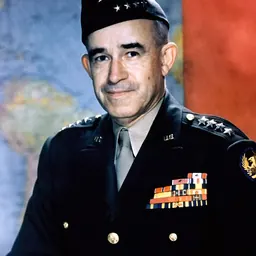
People in Henry Aurand's life
Named in this biography and alive at the same time





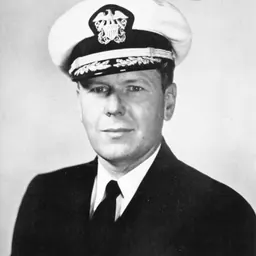
Related people
Same field, nearest in time
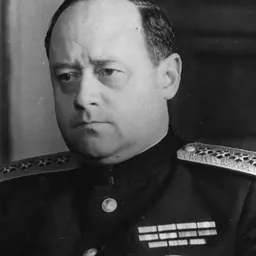



Contemporaries
People whose lives overlapped Henry Aurand's

Frequently asked questions
Who was Henry Aurand?
United States general (1894-1980)
When was Henry Aurand born?
Henry Aurand was born on 21 April 1894 in Tamaqua.
When did Henry Aurand die?
Henry Aurand died on 18 June 1980 in Laguna Hills.
What was Henry Aurand's occupation?
Henry Aurand was a military personnel.
What nationality was Henry Aurand?
Henry Aurand was American.
Sources & further reading
Cite this page
APA: Biography.guide. (2026). Henry Aurand. https://biography.guide/henry-aurand/
MLA: "Henry Aurand." Biography.guide, https://biography.guide/henry-aurand/.
Chicago: "Henry Aurand." Biography.guide. https://biography.guide/henry-aurand/.
Data last updated: 2026-09-24 · Spot an error? Report a correction.
Page generated 2026-09-27 05:01 UTC