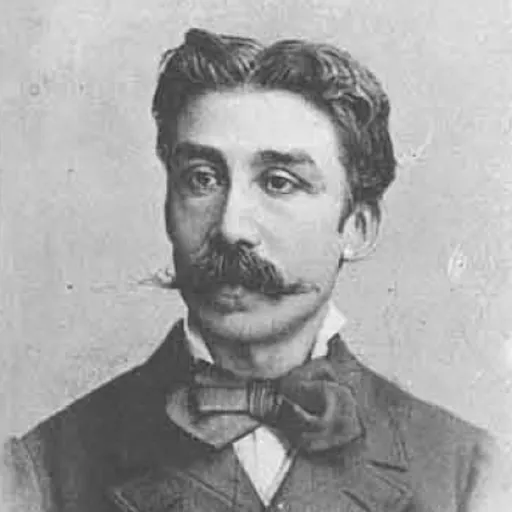
About Pedro Américo
Lived 1843 – 1905 (aged 62). Pedro Américo was a Brazilian painter, poet, novelist, politician, naturalist and writer.
Pedro Américo de Figueiredo e Melo (29 April 1843 – 7 October 1905) was a Brazilian novelist, poet, scientist, art theorist, essayist, philosopher, politician and professor, best remembered as one of the most important academic painters in Brazil. He showed an inclination towards the arts from a young age, being considered a child prodigy. Before the age of ten, he participated as a draftsman on an expedition of naturalists through the Brazilian northeast, and received government support to study at the Imperial Academy of Fine Arts. He furthered his artistic studies in Paris, but he also dedicated himself to science and philosophy. Soon after his return to Brazil, he began to teach at the academy and began a successful career, gaining prominence with great paintings of a civic and heroic character, inserting himself in the civilizing and modernizing program of the country fostered by emperor Pedro II, of which the Imperial Academy was the regulatory and executive arm in the artistic sphere.
His style in painting, in line with the great trends of his time, fused neoclassical, romantic and realistic elements, and his production is one of the first great expressions of Academicism in Brazil in its heyday, leaving works that remain alive in the collective imagination of the nation to this day, such as Batalha de Avaí, Fala do Trono, Independência ou Morte! and Tiradentes Esquartejado, reproduced in school books across the country. In the second half of his career, he concentrated on oriental, allegorical and biblical themes, which he personally preferred and whose market was expanding, but this part of his work, popular at the time, quickly went out of fashion, and did not receive much attention from specialists in recent times remaining little known.
He spent his career between Brazil and Europe, receiving favors from critics and the public but also raising controversies and creating tenacious opponents. For the new avant-gardes of his time, Pedro Américo was a painter of gifts.
He acquired an intellectual sophistication quite unusual for Brazilian artists of his time, taking an interest in a wide variety of subjects and seeking solid preparation. He obtained a Bachelor of Arts in Social Sciences from the Sorbonne and a PhD in Natural Sciences from the Free University of Brussels. He was director of the antiquities and numismatics section of the Imperial and National Museum; professor of drawing, aesthetics and art history at the Imperial Academy, and constituent deputy for Pernambuco. He left a large written production on aesthetics, art history and philosophy, where, inspired by the classical model, he gave special attention to education as the basis of all progress and reserved a superior role for art in the evolution of humanity. He won several honors and decorations, including the title of Historical Painter of the Imperial Chamber, the Order of the Rose and the Order of the Holy Sepulchre. He also left some poetry and four novels, but like his theoretical texts, they are little remembered today.
Biography
Early life
Pedro Américo was the son of the merchant Daniel Eduardo de Figueiredo and Feliciana Cirne; he was the brother of the also painter Francisco Aurélio de Figueiredo e Melo. His family was linked to the arts, although they did not have many resources, and from an early age he found at home the necessary stimulus for the development of an early talent. His father was a violinist and introduced him to music, as well as introducing him to drawing by giving him books on famous artists.
Pedro Américo drew very well and soon the fame of the little prodigy spread throughout the city. When a scientific expedition arrived there in 1852, its organizer, naturalist Louis Jacques Brunet, went to visit him and was able to appreciate a series of copies of classic works made by the boy, who was not yet ten years old. Wanting to test him to prove the skill that was claimed, Brunet got some objects and had Pedro Américo draw them in his presence; Américo was able to reproduce them with great resemblance. Impressed, Brunet decided to hire Américo as the expedition's draftsman, so the little artist accompanied the Frenchman on a twenty-month trip across much of northeastern Brazil.
Joining the academy's Industrial Design course in 1856, his progress was equally brilliant, winning 15 medals in drawing, geometry and live model, being nicknamed papa-medalhas (medal earner) by the director of the institution, artist and scholar Manuel de Araújo Porto-Alegre, who would be an important influence on him, and his future father-in-law. Even before finishing the course, Américo obtained a pension from emperor Pedro II to go and study in Europe. Shortly before boarding, he developed an illness diagnosed as "lead colic", supposedly an intoxication by the paints he used, and which would accompany him throughout his life. According to his scholarship contract, he was required to strictly obey the discipline of the academy and regularly send works to Brazil to attest to his progress, including studies of living models and copies of works by renowned masters, including Guido Reni and Théodore Géricault. but was not interested in the great academic halls, which he considered unrepresentative. As a result, by the end of the year he had become a famous painter throughout the country, receiving commissions and distinctions, such as the Imperial Order of the Rose in the degree of officer (later promoted to Grand Dignitary and Commander) and the title of Historical Painter of the Imperial Chamber, but also becoming the center of great controversy.
Fala do Trono, 1873. Emperor Pedro II's speech at the opening of the General Assembly
In this period and in the same spirit Américo also produced Fala do Trono, Ataque à Ilha do Carvoeiro, Passo da Pátria, Passagem do Chaco, and began the sketches for the government's of what was one of his greatest masterpieces, the large Batalha de Avaí, which was painted in Florence beginning in 1874 and being finished only in 1877. When first exhibited in Florence, still incomplete, it caused a sensation among art connoisseurs who had gathered in large numbers in the city for the celebrations of the fourth centenary of Michelangelo's birth. The work and a speech Américo delivered in two languages before the Renaissance master's statue of David, spread his fame throughout Europe, being celebrated in a number of articles and news as one of the greatest painters of his time. The Italian government, echoing the widespread praise, asked Américo for a portrait to appear with the luminaries of art of all times in the portrait gallery of the Uffizi, being exhibited among those of Ingres and Flandrin, Américo's own masters. When it was exhibited in Brazil, at the Imperial Academy General Exhibition of 1879, alongside the Batalha de Guararapes by Victor Meirelles, it aroused an even greater controversy than the previous battle. But the arguments were similar: the critics mainly attacked an alleged excess of fantasy and romanticism, as well as little historical accuracy in the representation of the scene.
Surprisingly, art critic Gonzaga Duque himself, the most influential opponent of the academics, despite heavily criticizing the work, found in it elements to say that Américo had finally managed to break free from the orthodoxy of academicism and create a new and personal language of great vigor. At the same time, Américo was accused of plagiarizing the composition Battle of Montebelo by Italian painter Andrea Appiani, and another controversy tried to decide which of the two battles, Americo's Batalha de Avaí or Meirelles's Batalha de Guararapes, was the best one. The case was epoch-making in Brazil and became known as the Artistic Question of 1879.
After the resounding repercussion of Batalha de Avaí, Américo tried to convince the government to support him in the painting of Batalha de 24 de Maio, depicting the Battle of Tuyutí, but even after offering the work for free the project did not bear fruit. Disenchanted, Américo resigned from the academy, which was denied.
Américo spent the following years mainly in Florence, abandoning civic matters that had a market only in the government itself and dedicating himself to works of a late and sentimental Romanticism, in allegories and scenes of oriental, historical or biblical themes, types that he personally preferred and that had greater penetration among the public, among them A Noite acompanhada dos gênios do Estudo e do Amor, Joana d'Arc ouve pela primeira vez a voz que lhe prediz o seu alto destino, A rabequista árabe, Os filhos de Eduardo IV and Dona Catarina de Ataíde e Jocabed levando Moisés até o Nilo. Several of these works participated in the academy's halls or were exhibited in Florence, and many were acquired by the Brazilian government.
Paintings
Context and academicism In Américo's generation, the Empire of Brazil was internally entering a phase of reasonable stability, it asserted itself as the greatest South American power and its economy and culture were diversifying and expanding. There were many problems, certainly, but they were sought to be overcome in an atmosphere of liberalism and scientism, in which the influence of the Church declined and the secular sectors of society were strengthened. It was in the interest of the nation, as well as the current monarchy, for the country to favorably insert itself into a world economy undergoing rapid transformation and which was structured on a capitalist model. To achieve this goal, emperor Pedro II, a lover of the arts and sciences who in 1856 had written that the two great works he needed to accomplish were "to morally organize the nationality and form an elite", As for the private market, it was just beginning to take shape.
Academicism systematized a repertoire of visual formulas possessing specific meanings, prescribing rules for their use, as if dictionarizing the history of visuality and organizing it in a peculiar grammar and semantics. More than that, it established a method of teaching art based on hierarchies of values largely derived from the philosophical and educational tradition of Classical Antiquity, with all its list of idealistic moral and civic virtues and all its rhetoric, manifested in art through beauty, harmony and a public utility. Functioning in close dependence on the States and elites, and having an idealistic philosophical basis, the European Academies naturally tended to be conservative, a characteristic that the Brazilian version shared with their European counterparts on whose imitation it was founded, but they were also agents of important artistic advances and on many occasions they were even avant-garde. He was always an academic, but a versatile and eclectic one in the most influential and most contradictory phase of international academicism, which defined itself as a complex mixture of classical, romantic and realist references. Américo's work expressed idealistic aspirations typical of classicism, reflected in his "didactic" historical paintings and moralizing allegories, in his sense of hierarchical composition, and even in his humanist writings; his detailed characterization of figures and objects sometimes approaches realism, but his stylistic expression is mostly romantic, But Brazilian Romanticism in painting, where Pedro Américo is included, was that of the third romantic generation, when the movement had already lost its original, passionate and revolutionary character, transforming itself into a softer and more conformist, more aesthetic and sentimental current, which quickly became bourgeois and in many ways genuinely "popular".
Among the artists who were possibly an influence on Américo's most important works are Horace Vernet, Antoine-Jean Gros, Eugène Delacroix, Théodore Géricault and François Gérard, as well as the Italian painters of the Risorgimento, such as Luigi Bechi. Some critics also find in him Baroque influences from Borgognone and Bernini.
Historical paintings
"History painting" did not just mean the representation of historical events, but it was the recreation of facts especially significant to a community or nation. It developed a symbolic visual rhetoric and had a moralizing didactic function. It was the most prestigious genre in the academic system, being the one that demanded the most from the artist in terms of creativity, general cultural knowledge and technical skill, it was also the one that could most easily convey an ethical message and the one that could most perfectly illustrate the discourse of the elites, consecrating its values, addressing itself above all to the general public. To achieve its goals, history painting could work with religious themes, properly historical, or absorb mythical figures from the classical past to allegorically lend greater brightness to current events, or to evoke exemplary virtues.
The genre did not take root in Baroque Brazil because there was no court that sponsored it or academies that taught it; the territory was a Portuguese colony and its painting, almost entirely based on religious worship, was made in a corporative and semi-artisanal system. When Joachim Lebreton, the leader of the French Artistic Mission, defined the structure of the first academy in Brazil in a memorandum to king John VI in 1816, historical painting was already "provided for" in the curriculum, since Lebreton, himself an academic, merely traced his project based on the structure of the academy in Paris, reputed to be the most advanced of all that existed at the time throughout the West.
However, as its tropical version took a long time to work and Brazil, an independent Empire since 1822, was in perennial upheaval and could not present anything too grandiose to be proud of in the face of a disaffected population still indifferent to the academic arts, the genre did not immediately prosper. The examples left by the French Mission painters, Jean-Baptiste Debret and Nicolas-Antoine Taunay, were rare, very modest in scale and did not always portray Brazilian events. Nationalism had not yet been added to the mix, the political usefulness of the academy at this point was not yet understood, there was little funding for it, and it was not even an official priority to maintain it. This unfavorable scenario was the simple expression of a frontal clash between two opposing realities: a Brazil still baroque, religious and semi-savage, and a neoclassical, secularized and sophisticated France.
The French knew the difference, and made a point of pointing out their "superiority",
Meanwhile, the styles changed once again, Brazil absorbed other European influences and romanticism began to predominate.
When the Empire of Brazil stabilized, from the maturity of Pedro II, national forces in Brazil were engaged under a defined nationalist program. With an Imperial Academy in stable operation, historical painting began to flourish, with Victor Meirelles and Pedro Américo as its pioneers and two of its main representatives, manifesting itself on a monumental scale.
Biblical paintings and other themes
Despite being best known for his civic paintings, these constitute but a fraction of Américo's complete work. When writing in 1864 for the painter Victor Meirelles, Américo stated that it was the biblical theme, especially the Old Testament, that most attracted him: "My nature is different. I don't think I bend easily to the passing demands of the customs of each age... my passion, only sacred history satisfies it." Américo devoted most of the second phase of his career to this genre, also highly regarded by academics, considered a branch of historical painting, starting in the 1880s. Despite their religious theme, biblical paintings typified their bourgeois romanticism by decorative emphasis and for the love for exoticism. In addition to being a personal preference, they were a reflection of a change in context and catered to the taste of a new, bourgeois and sentimental audience, which was not a market for traditional historical works, but began to appreciate images that were more related to their own reality or were consumables without further complications. Despite preferring the biblical themes as inspiration, Américo did not fail to penetrate other popular areas at the time, bringing literary and medievalist themes to the canvases as well.
In part, this shift in general preferences towards the prosaic and accessible were due to the rise of realistic aesthetics, progressively incorporated by academics at the end of the 19th century, and the popularization of photography, which painters such as Pedro Américo began to make use of as a painting aid. In this context, academic painting continued to be appreciated by the bourgeoisie, which did not despise either the prestige aura with which it was still covered, nor the high technical quality of its production. Ivan Coelho de Sá noted that: His first literary essays were poems written while he was studying at the Pedro II College, a thesis he defended at the Free University of Brussels. Considered the summary of his philosophical conception, he was well received and secured the position of adjunct professor at the university. The thesis dealt with the historical evolution of the arts, philosophy and science, seeking a Renaissance universality of thought, and handled a great number of erudite references from various areas of knowledge.
His other essays generally dealt with the same themes, pointing to education as the premise of progress, debating the nature of beauty and the ideal, affirming the primacy of art in the social order and its inherent educational and civilizing role, valuing the testimony of history and scientific investigation, and preaching an alliance between reason and sensitivity in the classical way. The same inclination can be seen in part of his correspondence and in the texts on aesthetics and art history that he published through newspapers, such as the Philosophical Considerations on Fine Arts among the Ancients: Art as an Educational Principle (1864), published as a series of 22 articles in the newspaper Correio Mercantil, in Rio de Janeiro, which constituted a pioneering milestone in the history of education and the press in Brazil. His writing is generally very articulate, moving quickly between diverse references. In these works, Américo also often made social, economic, historical and political criticism, complaining about Brazil's backwardness in relation to European nations, pointing out sources of problems and suggesting solutions, often challenging authorities and the government, and trying to understand the cultural phenomenon under a perspective integrated to the whole of society and to the complex of determinants at work in each historical moment. In the introduction to Holocausto, a "philosophical novel of character and customs", the best known of his novels, appreciated by Joaquim Nabuco, Giulio Piccini and other intellectuals from Brazil and Europe, In 1871, when Américo was less than 30 years old, his first biography appeared, written by Luís Guimarães Júnior, a laudatory and dramatic propaganda piece symptomatically entitled Um Milionário de Glórias, which was distributed throughout Brazil and also published abroad, placing Américo in the position of heroic founder of the Brazilian school of painting, and which is the primary source of the various biographies that emerged later, Laudelino Freire also remarked that: "The work of Pedro Américo... stands out in the creative unity of the manifestations of genius. At no time in our evolution, painting had brushes that translated it with accents of such high inspiration of the noblest thought and superiority of expression". And diplomat José Manuel Cardoso de Oliveira stated that he was "a noble and sympathetic figure, a hero through the power of will, a genius through his talent, a master through his wisdom, a model through his virtues, an athlete through his work". In any case, he was an active part of the cultural process that was underway in Brazil. In a speech he gave in 1870 in the presence of the emperor, on the occasion of the inauguration of the Aesthetics and Art History course at the Imperial Academy, Pedro Américo described the artists as "true prophets of civilization" engaged "in the battles of progress". As Rafael Cardoso analyzed:
The controversies that Américo's works often caused were aimed not only at him as an artist, but also as a symbol. For Cybele Fernandes, "in fact, the Academy of Fine Arts and the entire system that it represented, its methods, processes, teachers, and politics, as well as the maturation of society in relation to art and its social function were also evaluated". the artist found it very difficult to:
Decorations and homages While still alive, Pedro Américo received the honors of Historical Painter from the Imperial Chamber; Officer, Grand Dignitary and Commander of the Imperial Order of the Rose; Grand Knight of the Order of the Holy Sepulcher and was decorated by king William I of Prussia. His painting Fala do Trono was printed on a Telebrás system phone card. and has a bust in his honor in via Maggio in Florence. The cover art of the album As Days Get Dark by Arab Strap features one of his paintings.
Gallery
Don’t just read it —
keep it.
Full-length biographies made to live with: read them, listen on the way to work, watch them tonight.
- E-book
- Audio
- Video
Instant download · yours to keep · every purchase keeps this site free
Important facts
more
Pedro Americo De Figueiredo e Melo, Pedro Americo de Melo, Pedro Americo de Figueiredo e Mello, Pedro Americo de FigueiredoPeople in Pedro Américo's life
Named in this biography and alive at the same time





Related people
Same field, nearest in time
Contemporaries
People whose lives overlapped Pedro Américo's

Frequently asked questions
Who was Pedro Américo?
Brazilian painter (1843-1905)
When was Pedro Américo born?
Pedro Américo was born on 29 April 1843 in Areia.
When did Pedro Américo die?
Pedro Américo died on 7 October 1905 in Florence.
What was Pedro Américo's occupation?
Pedro Américo was a painter, poet, novelist, politician, naturalist and writer.
What nationality was Pedro Américo?
Pedro Américo was Brazilian.
Sources & further reading
Cite this page
APA: Biography.guide. (2026). Pedro Américo. https://biography.guide/pedro-americo/
MLA: "Pedro Américo." Biography.guide, https://biography.guide/pedro-americo/.
Chicago: "Pedro Américo." Biography.guide. https://biography.guide/pedro-americo/.
Data last updated: 2026-09-21 · Spot an error? Report a correction.
Portrait: Wikimedia Commons · author & licence
Page generated 2026-09-27 05:00 UTC