
About Pavel Shatev
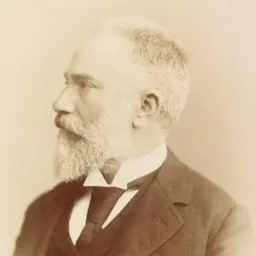
Lived 1882 – 1951 (aged 68). Pavel Shatev was a Turkish, Bulgarian and Yugoslav politician, revolutionary, lawyer, teacher and resistance fighter, known for Thessaloniki bombings of 1903.
Pavel Potsev Shatev (Bulgarian and ; July 15, 1882 – January 30, 1951) was an anarchist, socialist, revolutionary, lawyer, and member of the left wing of the Internal Macedonian Revolutionary Organization (IMRO) from Macedonia. As a member of the anarchist group Boatmen of Thessaloniki, he participated in the Thessaloniki bombings in 1903. Following World War I, Shatev worked as an agent of the Soviet Union and the Communist International. In 1945 he became Minister of Justice in the government of Democratic Federal Macedonia. After the Tito–Stalin split, he was persecuted by the Yugoslav authorities. His persona was considered a taboo in Yugoslav Macedonia but it was rehabilitated after the country gained its independence.
Biography The Thessalonica assassination and the exiles in Fezzan, published in 1927 in Sofia as the second edition of his prison memoir by the Macedonian Scientific Institute. Born in Kratovo on July 15, 1882, into a wealthy merchant family, in the Kosovo vilayet of the Ottoman Empire (present-day North Macedonia), Shatev graduated from the Bulgarian Men's High School of Thessaloniki in 1900. He became a member of the anarchist group Boatmen of Thessaloniki, being one of its youngest members. In 1901-1902, he was appointed as a teacher in the village Lesnovo. On April 28, Shatev bought a ticket, boarding the French passenger ship Guadalquivir with a suitcase full of dynamite, which he exploded as the ship left port. All of the passengers and crew survived, who were saved and moved to the shore in lifeboats, together with their possessions, along with Shatev. Shatev was later tracked down and arrested at the Skopje Railway station, He was tried by a Turkish military court along with fellow anarchists Marko Boshnakov, Georgi Bogdanov and Milan Arsov, which sentenced them to death. Under Russian and Austro-Hungarian pressure, He was a member of the left wing of the Internal Macedonian Revolutionary Organization (IMRO). After the war, he was a representative of the Kratovo Brotherhood at the Constituent Assembly of the Union of Macedonian Emigrant Organizations, held in Sofia. In 1921, Shatev became a member of the Macedonian Federative Organization. In 1923, Shatev became an intelligence officer of the Soviet Union and the Communist International. In 1927, the second edition of his prison memoir, titled The Thessalonica assassination and the exiles in Fezzan, was published in 1927 in Sofia by the Macedonian Scientific Institute (MSI), edited by Lyubomir Miletich. Shatev returned to Vardar Macedonia and joined Anti-fascist Assembly for the National Liberation of Macedonia's presidium. He signed the "Appeal to the Macedonians in Bulgaria", along with other leftists. In 1945, he became a member of MSI. Shatev (sitting second from right to left) as member of the first government of Democratic Federal Macedonia.
In early 1945, courts to try offenses against "Macedonian national honor" were created and show trials occurred in PR Macedonia. In late February 1945, Yugoslav leader Josip Broz Tito summoned him, Metodija Andonov-Čento, Dimitar Vlahov and Mihailo Apostolski for a meeting to try to dissuade demands for immediate action against Greece, although he also still had his own ambitions regarding northern Greece then. Shatev lost his position as minister of justice in the first reshuffle in January 1947. According to British sources, he later tried to negotiate with the Bulgarian authorities the frontiers of PR Macedonia, independently from Yugoslavia. The Tito–Stalin split resulted in the persecution of pro-Bulgarian Macedonians, such as him and Brashnarov. Shatev was detained in Skopje prison for 11 months, and then interned in Bitola, where he was kept under house arrest until his death on January 30, 1951.
Views and influences His memoirs were under Russian and anarchist influences. His memoirs were published in Macedonian in 1994. per Macedonian researcher Anastas Vangeli, he identified himself as Bulgarian. In North Macedonia, he was praised as a hero of the political right during the 2010s, who ignored his revolutionary anarchist and later communist views. In 2008, VMRO-DPMNE established a conservative institute bearing his name. In 2010, the government erected a monument of him and his anarchist terrorist group.
Gallery
Literature "В Македония под Робство; Солунското Съзаклятие (1903 г.), Подготовка и Изпълнение" "In Macedonia under Slavery", first edition "Бележки върху Българската Просвета в Македония" (Notes on the Bulgarian Enlightenment in Macedonia), публикувана в "Сборник Солун", Sofia, 1934
Don’t just read it —
keep it.
Full-length biographies made to live with: read them, listen on the way to work, watch them tonight.
- E-book
- Audio
- Video
Instant download · yours to keep · every purchase keeps this site free
Important facts
People in Pavel Shatev's life
Named in this biography and alive at the same time



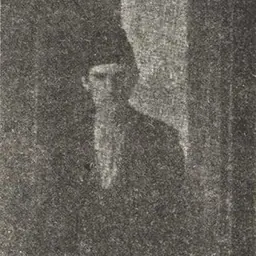
Related people
Same field, nearest in time





Contemporaries
People whose lives overlapped Pavel Shatev's


Frequently asked questions
Who was Pavel Shatev?
Revolutionary (1882–1951)
When was Pavel Shatev born?
Pavel Shatev was born on 15 June 1882 in Kratovo.
When did Pavel Shatev die?
Pavel Shatev died on 30 January 1951 in Bitola.
What was Pavel Shatev's occupation?
Pavel Shatev was a politician, revolutionary, lawyer, teacher and resistance fighter.
What was Pavel Shatev known for?
Pavel Shatev was known for Thessaloniki bombings of 1903.
What nationality was Pavel Shatev?
Pavel Shatev was Turkish, Bulgarian and Yugoslav.
Sources & further reading
Cite this page
APA: Biography.guide. (2026). Pavel Shatev. https://biography.guide/pavel-shatev/
MLA: "Pavel Shatev." Biography.guide, https://biography.guide/pavel-shatev/.
Chicago: "Pavel Shatev." Biography.guide. https://biography.guide/pavel-shatev/.
Data last updated: 2026-09-20 · Spot an error? Report a correction.
Page generated 2026-09-27 05:33 UTC