
About Metodija Andonov-Čento
Lived 1902 – 1957 (aged 54). Metodija Andonov-Čento was a Yugoslav statesperson, political commissar and politician.
Metodija Andonov-Čento (; ; 17 August 1902 – 24 July 1957) was a Macedonian politician, partisan leader and the chairman of the Anti-Fascist Assembly of the National Liberation of Macedonia and first president of the presidency of the people's assembly of the People's Republic of Macedonia in the Federal People's Republic of Yugoslavia. During the interwar period, he earned a living as a merchant. After World War II, he was persecuted by the Yugoslav Macedonian authorities for his desire to establish an independent Macedonia. The persona of Čento was a taboo in Yugoslav Macedonia, but it was rehabilitated during the 1990s, after the country gained its independence. In the Bulgarian historiography he is often considered a Bulgarian.
Biography
Early life Metodi Andonov was born on 17 August 1902 in Prilep, which was then part of the Manastir Vilayet of the Ottoman Empire. His father originated from Pletvar, while his mother originated from Lenište. After the Balkan Wars in 1913 the area was ceded to Serbia. During the World War I Bulgarian occupation, the authorities were popular enough there. After the war, the area was ceded to the new Kingdom of Serbs, Croats and Slovenes (later Yugoslavia). As a child, he worked in opium poppy fields and harvested tobacco. During his youth, he was considered to be an excellent gymnast. He graduated from trade school in Prilep and in 1926 he opened a grocery store and provided himself with a living. On 25 March 1930, in Novi Sad, he entered into a civil marriage with Vasilka Spirova Pop-Atanasova. In the 1938 Yugoslav elections, he was elected as a deputy from the United Opposition, but did not become a member of parliament because of a manipulation with the electoral system.
During World War II
He was imprisoned at Velika Kikinda for co-organizing the Ilinden demonstrations in Prilep in 1940. In the same year, he advocated for the introduction of the Macedonian language in school lectures and was therefore imprisoned at Bajina Bašta and sentenced to death by the government of the Kingdom of Yugoslavia. On 15 April 1941 he was presented to a firing squad, but was pardoned just before he could be shot during the invasion of Yugoslavia by the Axis powers. His friends attempted to convince him to collaborate with the Bulgarian authorities, but he stated: "I did not fight the Serbs to bring in the Bulgarians, but for the unification of Macedonia." In February 1942, he went to prison, first in Prilep. Afterwards he was transferred to Bitola, then later back to Prilep, then in Skopje, Sofia and Plovdiv, finally being incarcerated at the Bulgarian labor camp Chuchuligovo. However, he did not have any previous military experience and his role was purely political. He immediately tried to put Macedonian unification into the Yugoslav communists' agenda, and he managed to get it written in the General Staff Manifesto in October. At AVNOJ, Macedonia was recognized as one of the future six republics, which would be incorporated into communist Yugoslavia. In December 1943, Čento was elected as a chairman of the Initiative committee for the organization of the Antifascist Assembly of the National Liberation of Macedonia (ASNOM). In June, Čento along with Emanuel Čučkov and Kiril Petrušev, met with Josip Broz Tito on the island of Vis for consultations due to their activity. The meeting was held on 24 June, with the Macedonian delegation raising the idea of the creation of a United Macedonia after liberation, In the second session of ASNOM, on 29–30 December 1944 in Skopje, he was re-elected as president,
In late February 1945, Yugoslav leader Josip Broz Tito summoned him, Pavel Shatev, Dimitar Vlahov and Mihailo Apostolski for a meeting to try to dissuade demands for immediate action against Greece, although he also still had his own ambitions regarding northern Greece then. Čento wanted the unification of the entire Macedonian region, which would later become independent and be part of a Balkan Federation. Čento opposed the sending of Macedonian Partisans to the Syrmian Front. Čento wanted to send them to Thessaloniki (which he perceived as the historical capital of Macedonia), He later joined the Yugoslav Federal Assembly. According to an interview by his personal secretary at the time, Katerina Nurdzhieva, Čento's idea for the future state was to join Bulgaria.
In 1946, he went back to Prilep, where he established contacts with an illegal anti-Yugoslav group, with ideas close to these of the banned Internal Macedonian Revolutionary Organization, which insisted on an independent Macedonia. His arrest resulted in the police allegedly killing 37 pro-Andonov protesters in Resen. The court included the president of the judicial council, Panta Marina, as well as members Lazar Mojsov and Kole Čašule. The fabricated charges against him were of being a Western spy, working against the SR Macedonia as part of SFR Yugoslavia, and being in contact with IMRO terrorists, who supported a pro-Bulgarian independent Macedonia as envisaged by Ivan Mihailov. During the trial, he was accused of wanting to separate Macedonia from Yugoslavia and unite it with Greece, and that he sought Macedonia to become a protectorate of Britain and the United States. He rejected the first charge but did not deny the second one. He was imprisoned in the Idrizovo prison in Skopje. In 1990, at the request of his son Ilija Andonov, the trial against him was reviewed and on 22 October, the District Court in Skopje overturned the verdict from 1946. He is still considered as such in the Bulgarian historiography.
Čento had a son, Ilija, and a daughter, Marija. Ilija authored a book My Father Metodija Andovo-Čento in 1999. In it, he states that his father identified as a Macedonian and fought for Macedonian unity.
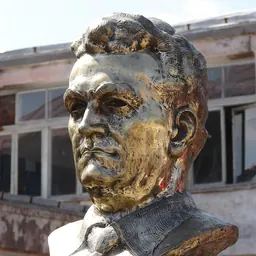
VMRO-DPMNE commemorated him as a martyr for the Macedonian national cause and in their second term, he began to be regarded as the most important Macedonian statesman in modern Macedonian history. In 2010, a five-meter-tall marble statue was erected in his honor in Skopje, depicting him in civilian clothes. Because he was the first president of ASNOM's presidium, he has been also described as the "first president of Macedonia".
Don’t just read it —
keep it.
Full-length biographies made to live with: read them, listen on the way to work, watch them tonight.
- E-book
- Audio
- Video
Instant download · yours to keep · every purchase keeps this site free
Important facts
People in Metodija Andonov-Čento's life
Named in this biography and alive at the same time






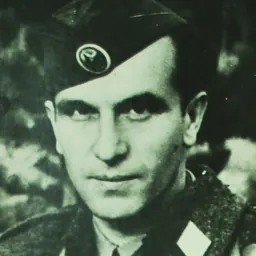

Related people
Same field, nearest in time

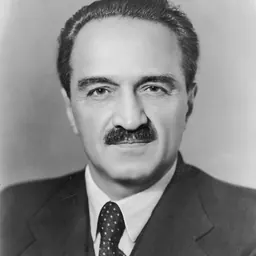


Contemporaries
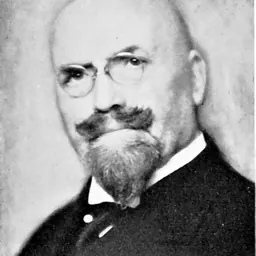
People whose lives overlapped Metodija Andonov-Čento's


Frequently asked questions
Who was Metodija Andonov-Čento?
Macedonian politician (1902-1957)
When was Metodija Andonov-Čento born?
Metodija Andonov-Čento was born on 17 August 1902 in Prilep.
When did Metodija Andonov-Čento die?
Metodija Andonov-Čento died on 24 July 1957 in Prilep.
What was Metodija Andonov-Čento's occupation?
Metodija Andonov-Čento was a statesperson, political commissar and politician.
What nationality was Metodija Andonov-Čento?
Metodija Andonov-Čento was Yugoslav.
Sources & further reading
· Wikipedia: Metodija Andonov-Čento
· DBpedia: Metodija Andonov-Čento
Cite this page
APA: Biography.guide. (2026). Metodija Andonov-Čento. https://biography.guide/metodija-andonov-cento/
MLA: "Metodija Andonov-Čento." Biography.guide, https://biography.guide/metodija-andonov-cento/.
Chicago: "Metodija Andonov-Čento." Biography.guide. https://biography.guide/metodija-andonov-cento/.
Data last updated: 2026-09-27 · Spot an error? Report a correction.
Page generated 2026-09-27 05:16 UTC