
About Paul Păun
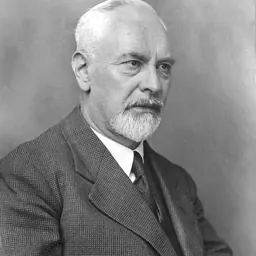
Lived 1915 – 1994 (aged 78). Paul Păun was a Romanian and Israeli painter, translator, poet, surgeon and writer.
Paul Păun (September 5, 1915 – April 9, 1994), born Zaharia Herșcovici and who later in life changed his legal name to Zaharia Zaharia, also signed his work Paul Paon and Paul Paon Zaharia. He was a Romanian and Israeli avant-garde poet and visual artist, who wrote in Romanian and French and produced surrealist and abstract drawings. He was also a medical doctor and surgeon. His work is registered with the ADAGP (Société des Auteurs dans les Arts Graphiques et Plastiques) and the SGDL (Société des Gens de Lettres).
Inspired in his youth by the poetry of Vladimir Mayakovsky and Sergei Yesenin and by the Romanian avant-garde magazine unu, he was a co-founder in the early 1930s of the magazines Alge and Viața Imediată. Păun set himself the goal of making poetry a living experience. He experimented briefly with licentious, ludic themes (and was thus prosecuted for pornography) before turning to Marxism and proletkult aesthetics. Like other avant-garde writers, including his friends Gherasim Luca and Dolfi Trost, he adhered to the then-illegal Romanian Communist Party.
Păun soon developed an interest in surrealism, and became a member of the surrealist group formed at the very start of World War II (alongside Gherasim Luca, Gellu Naum, Trost, and Virgil Teodorescu). This small community survived clandestinely during the war years, when Păun himself was marginalized due to his Jewish ethnicity. It reemerged as a short-lived but very active group after the war, with many of their collective works written in French. Păun also had at the time a noted debut as a surrealist painter and illustrator.
Like other artists and intellectuals in Romania and elsewhere, he found himself disenchanted with Stalinism already in the late 1930s, and subsequently with the post-war Romanian communist regime. Exposed to communist censorship, he stopped publishing or exhibiting his work. He emigrated to Israel when he was already in his late forties, and focused on his medical career, with occasional public contributions to art and literature.
Biography
Debut years Păun (whose pseudonym is the Romanian for "peacock") was a native of Bucharest. Both his parents were Jewish. The poet's paternal grandfather, Zaharia, was an observant Jew from the Russian Empire who had escaped the draft and was living incognito in Romania; his first name was passed on to his grandson, Zaharia. The family was registered as Herșcovici, which was Păun's first official surname.
Păun, his parents, and his older sister Nini lived in a suburb area just south of Dealul Mitropoliei. Nini was in school with another young Jewish future poet, Maria Banuș, who soon became affectionate friends, and one-time lovers, with Păun (whom she called Pepe, Bebe, or Bebică).
This led the youth to inaugurate, in September 1930, the magazine Alge ("Algae"), together with painter S. Perahim, who gave it its visual dimension. According to Swedish researcher Tom Sandqvist, the Alge group was already receiving its cultural inspiration from surrealism and Dada, "favoring more or less absurd puns and provocative, violent gestures". Scholar Giovanni Magliocco summarizes Alge-ist philosophy as "a still-embryonic kind of 'surrealism', incendiary and iconoclastic, [...] a literary extremism, verbally violent and delirious, but still confused as far as programs go".
Păun was probably the last to actually publish in Alge (starting with its 6th issue), which hosted some of his earliest work: a selection of strange, often erotic poetry. In October 1931, Păun was also a contributor to the Alge supplement provocatively titled Pulă ("Cock"), with a poem that referred to the ruling class as "shit".
The establishment was clamping down on the literary avant-garde, accusing it of pornography: Păun was in the audience as a court tried and acquitted the pioneer surrealist Geo Bogza (November 28, 1932), Pană referred to the other Alge supplement, titled Muci (Snot), as "pornography ... but not devoid of a certain humor." Păun's contributions to Pulă were discovered during a search of Pals' attic, when the supplement was confiscated as evidence. Despite becoming the objects of an antisemitic campaign in newspapers such as Cuvântul and Universul, the Alge contributors only received suspended sentences. Pals, the non-naturalized son of Ukrainian Jews, was threatened with deportation. but continued to publish more conventional verse in left-wing reviews: Facla, Cuvântul Liber, Azi, and even the more aesthetically traditionalist Viața Românească. Like the other unu writers, he clamored his belief in anti-capitalism and social justice, as well as in proletkult-style literature, and expressed alarm at the rise of fascism. With Perahim, Luca and Miron Radu Paraschivescu, Păun took directives from the illegal Communist Party, but not uncritically: on Labor Day (1 May) 1933, the party ordered them to show up for a demonstration carrying the red flag, which Păun and two others refused, noting that such a parade exposed them to useless risks. More principled cases of distancing from the Party and outright disobedience during the period 1938 to 1940 are also documented. This was a communist-inspired "proletarian magazine", partly modeled on Alexandru Sahia's Bluze Albastre. Păun was by then embarrassed by his Alge poetry, which he found childish, although Viața Imediată'''s manifesto on art reaffirmed the core Alge thesis. It read: "We aim to break out of this suave past and give poetry a push into life. [...] Poetry shall have to become elementary, the way water and bread are elementary." At Cuvântul Liber, where he met the experienced journalist and literary reviewer Dolfi Trost, Păun gave a versified version of the communist party ideology, with works such as Poem pentru oprimat ("Poem to the Oppressed One").
For the next years, Păun was a regular presence in the literary press. His 1938 translation from the Comte de Lautréamont's Songs of Maldoror accompanied Gherasim Luca's article on Lautréamont in the communist newspaper Reporter, which insisted on reading Lautréamont through the grid of Marxist literary criticism. Păun's first important work was the 1939 poem Plămânul sălbatec ("The Savage Lung"), originally published in the Summer 1938 issue of Azi and the following year in book form. His poetry was veering into the apocalyptic, and, according to scholars Yaari and Magliocco, seemed to harbor a presentiment of The Holocaust.
World War II and surrealist discoveries In early 1940, Păun graduated from the University of Bucharest Faculty of Medicine. Their private circle now included Marxist philosopher Constantin Ionescu Gulian, and poets Virgil Teodorescu and Tașcu Gheorghiu.
By 1940, Păun had made his choice. Both he and Teodorescu had joined the Bucharest surrealist group, whose founders were Luca and Gellu Naum. Trost followed suit, having probably been co-opted by Păun. was Romania's "third avant-garde" wave, and the first one to explicitly align itself with surrealism. Păun's was a "rather predictable conversion", according to Crohmălniceanu: "his own leanings and the very course of events" signaled a transition from generic avant-garde to specific surrealism. The members of the group carried out new experiments in collaborative writing, described by Păun in 1983 as the pinnacle of surrealist automatism: "the artist, now a modest one, admires the great art of the encounter, of the happening."
Their preference, as a group, to publish in French, signaling a thirst for international recognition and integration with European modernism, was made impractical by the Nazi occupation of Europe. The surrealist group survived clandestinely during the repressive fascist regimes of the National Legionary State and Ion Antonescu. Its leftist ideals and the Jewish origins of three of its affiliates made it impossible for the group to express itself openly: Trost, for instance, was explicitly banned by the authorities.
The surrealists were not physically harmed during the Bucharest pogrom, but were exposed during those years to the antisemitic restrictions: Luca was conscripted into a forced labor detachment, while Trost was employed as a schoolteacher for the segregated Jewish schools. They were still in contact with communist affiliates such as the old-time friend, poet Stephan Roll, and, according to some interpretations, still adhered to Marxist ideology.
Although prevented from publishing, the Romanian surrealists produced handwritten and typewritten manuscripts, some of which, including Păun's, were conceived as an artist's book.
Surrealist revival, communist repression The 1944 coup d'état which toppled Antonescu's fascist regime, and the subsequent Soviet occupation of Romania, allowed the Romanian surrealist group to briefly come out of hiding, before the second totalitarian regime experienced by their country, this one from the left, would curtail their activities. In 1945, Păun changed his surname from Herșcovici to Zaharia. as well as to visual art: he illustrated with drawings (called lovaje) Teodorescu's Butelia de Leyda plaquette and held his first personal exhibition of surrealist drawings (see Hasan 2011, Yaari 2012 and 2014, and Stern 2011). The surrealist group had contacts with other writers, such as the Holocaust survivor Paul Celan, who would settle in Paris soon after the war and serve as a link between the Romanian and French surrealist groups, namely between Luca and André Breton.
Păun's 1945 exhibition served as the basis for a surrealist happening engineered by his university colleague, poet Alexandru Lungu. Lungu plastered the drawings with labels proclaiming Păun as "not a peacock, but an angel". Art critics were also enthusiastic; for example, Ion Frunzetti praised “the attitude of artistic probity and authenticity that emanates from [the work] of this impassioned [conveyor] of human nightmare.” In September 1946, Păun exhibited, alongside Luca and Trost, his ink and pencil drawings at Căminul Artei gallery, Bucharest, and co-wrote, with the four other group members, its catalog, L'Infra-Noir: préliminaires à une intervention sur-thaumaturgique dans la conquête du désirable (The Infra-black...). His art, some of which is semi-abstract but sometimes evoking anatomical drawings, intrigued chroniclers of the day, one of whom described Păun as "the most chaotic of the [Romanian surrealist] group [in the fight against] our daily logic". Of the figurative drawings, a few are portraits and many include nude figures, depicting strange and morbid occurrences in imaginary seascapes and fantasy gardens. This is evidenced by their collective 1946 text ("Infra-noir: Préliminaires..."), analyzed in this light by Eburne in Yaari, ed., under a motto taken from Păun's 1947 La Conspiration du silence: "The Revolution is ungraspable." According to Yaari, this second view applies to Păun as well, who, in the somewhat hermetic style that had become characteristic of the group, wrote, also in 1947, in Les Esprits animaux: "only the systematic blinding toward the partial lights of the has-been, of political and theoretical déjà-vus, will provide us with the (magic) practical freedom of influencing the future with our movements. It is the dialectics of despair, its miracle, that sets now automatic action against the conspiracy of asphyxiation [...]".
By 1947, the Romanian surrealists were in direct contact with Breton, who, thanks to Brauner's intervention, included their French-language collective text, "Le Sable nocturne" ("Nocturnal Sand") in the catalogue of the 1947 Paris international surrealist exhibition Păun contributed to the "Group of Five"'s volume Éloge de Malombra ("Malombra's Eulogy"). Turning to translation work and children's literature, Naum infused his conventional poetry with surrealist elements, before making a full return to the avant-garde in the liberal year 1968. Luca and Trost both managed to leave legally for France via Israel in the early 1950s, where their earlier friendship degenerated into outright enmity: Trost declared Luca a "counterrevolutionary" A final, self-published, volume of his poetic prose came out in Haifa in 1975. Called La Rose parallèle ("The Parallel Rose"), it is infused with the language of alchemy and Kabbalah mysticism.
In Romania, Păun's work remained the least publicized contribution to Romanian surrealism. Pană, writing under communism, included only minimal samples of his work in an anthology of Romanian avant-garde, careful not to draw any attention to "politically incorrect" facts such as Păun's emigration. In 1983, Păun entered a dialogue with anticommunist poet and scholar Ștefan Baciu, and was interviewed by Baciu's MELE newsletter (one of the very rare interviews Păun ever gave).
Păun continued to exhibit his surrealist drawings in Israel and France. In 1985, he had a show of "Infra-noir Drawings" in Paris. A year later, his work was featured in the international exhibition La Planète affolée: Surréalisme, dispersion et influences, 1938-1947, Marseille. But it is in Paris that Păun had his last exhibition while still alive, in autumn 1989. Păun did maintain an enduring presence in the poetry of his colleagues: with the surrealist preference for intertextuality and autofiction, he made appearances in poems by Luca after the Jewish Historical Museum in Amsterdam (see Stern). Some of his drawings and papers, kept in Teodorescu's personal collection, were improperly preserved after the latter's death in 1987, and are presumed lost.
Literary work In his early youth, Păun declared that his poems from that period could only be read at the top of one's voice—a demand that, according to literary historian Geo Șerban, may show Păun's debt at the time to Russian Futurism. According to the literary reviewer at Revista Fundațiilor Regale, Plămânul sălbatec was "confusing" and "prolix", with echoes from Sergei Yesenin and Vladimir Mayakovsky, but with individual "qualities worth noting"—such as "a convincing and robust literary impetus." Magliocco, while considering the earlier texts as "minor experiments," "well-constructed mechanisms destined to shock 'the bourgeoisie,'" finds in Plămânul sălbatec similarities with the more famous works of Benjamin Fondane and Yvan Goll. The moral of the work, he argues is: "a desegregation of the Self. The dissolution of one's identity, also a destruction and a rebirth of one's own poetic verb." Also impressed with the poem, Crohmălniceanu evidences its "cyphered lyricism" and "fresh associations": Verse translation| In Malombra, Păun and his colleagues invented a female erotic archetype, the "pure love of the absolute essence", which (critic Cristian Livescu notes), "meant to substitute to the plain woman, the predictable, limited woman". According to Crohmălniceanu, with the Kabbalistic language of La Rose parallèle, Păun reinterpreted some of the core themes of Jewish mythology, in the same spirit as the entire surrealist movement, which "believed in universal analogy and in the other principles of magic, especially the magic of the word." Examples are the eulogizing of Lilith as the Mother of Man, and the black moon personified:
Most importantly, as Crohmălniceanu points out, Păun's "graphic work cannot be separated from his poetic works, together constituting a valuable whole."
Don’t just read it —
keep it.
Full-length biographies made to live with: read them, listen on the way to work, watch them tonight.
- E-book
- Audio
- Video
Instant download · yours to keep · every purchase keeps this site free
Important facts
People in Paul Păun's life
Named in this biography and alive at the same time





Related people
Same field, nearest in time

Contemporaries
People whose lives overlapped Paul Păun's



Frequently asked questions
Who was Paul Păun?
Romanian artist (1915-1994)
When was Paul Păun born?
Paul Păun was born on 5 September 1915 in Bucharest.
When did Paul Păun die?
Paul Păun died on 9 April 1994 in Haifa.
What was Paul Păun's occupation?
Paul Păun was a painter, translator, poet, surgeon and writer.
What nationality was Paul Păun?
Paul Păun was Romanian and Israeli.
Sources & further reading
Cite this page
APA: Biography.guide. (2026). Paul Păun. https://biography.guide/paul-paun/
MLA: "Paul Păun." Biography.guide, https://biography.guide/paul-paun/.
Chicago: "Paul Păun." Biography.guide. https://biography.guide/paul-paun/.
Data last updated: 2026-09-20 · Spot an error? Report a correction.
Page generated 2026-09-27 05:07 UTC