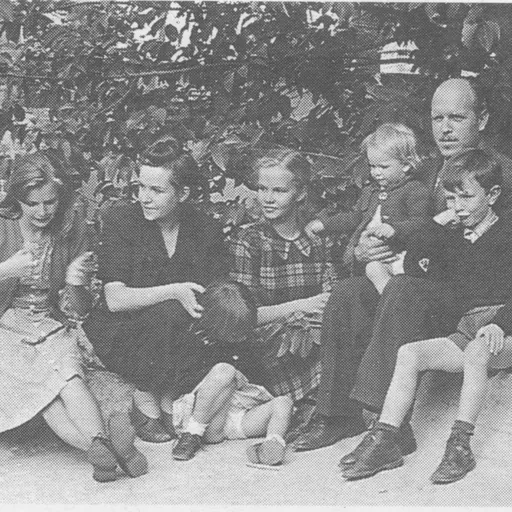
About José Renau
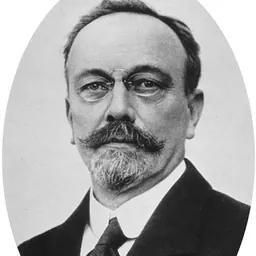
Lived 1907 – 1982 (aged 75). José Renau was a Spanish painter, academic, professor, writer, graphic artist and poster artist.
Josep Renau Berenguer (17 May 1907 — 11 November 1982) was a Spanish artist and communist revolutionary, notable for his propaganda work during the Spanish Civil War. Among his production, he is remarkable for his art deco period, his political propaganda during the Spanish Civil War, the photomurals of the Spanish Pavilion in the International Exhibition of 1937 in Paris, a series of photomontages titled Fata Morgana or The American Way of Life, and murals and paintings made in Mexico, such as Tropic, dated in 1945.
Biography He was the son of José Renau Montoro, a drawing teacher at the San Carlos School of Fine Arts in Valencia, where he studied between 1919 and 1925. He alternated his studies with his work at Litografía D’Ortega, where he learned the lithographer's trade,
In 1935, he and other left-wing Spanish Marxist intellectuals founded the magazine Nueva Cultura, which would remain active until 1937. In September 1936, he was named general director of Fine Arts. In this period, he commissioned Pablo Ruiz Picasso in 1937 to create a work for the Pavilion of the Spanish Republic at the International Exhibition of Arts and Techniques in Paris, which would result in Guernica. Likewise, he made a series of photomontages for the Pavilion. As part of his action as general director, he also created the National Orchestra of Spain and made the decision to transfer part of the Prado Museum's masterpieces to the Torres de Serranos in Valencia to save them from the bombings of Madrid. He later organized for the pieces to be transferred to Switzerland.
He held the position until the end of the war in 1939. At the end of the war, he went to France and was interned in the Argelès-sur-Mer concentration camp. In the same year, he obtained a visa to move to Mexico, where he worked for Spanish magazines in exile, continued designing posters for films, and collaborated with the well-known Mexican muralist David Alfaro Siqueiros. The murals at the Casino de la Selvain Cuernavaca, commissioned by Manuel Suárez y Suárez, date from this period.
In 1958, he left Mexico to settle in East Berlin, capital of the German Democratic Republic. There he created murals and photomontages such as Fata Morgana USA (1967) and The American Way of Life (1977). Benefiting from the general amnesty of 1976, he returned to Spain, later returning to Berlin, where he died in 1982. His funds were bequeathed to the Valencian Institute of Modern Art.
Don’t just read it —
keep it.
Full-length biographies made to live with: read them, listen on the way to work, watch them tonight.
- E-book
- Audio
- Video
Instant download · yours to keep · every purchase keeps this site free
Important facts
more
Josep Renau Ballester, Josèp Renau, Josep Renau, José Renau Berenguer, Josep Renau Berenguer, José Renan Berenguer, José Renau Ballester, Jose Renau BerenguerPeople in José Renau's life
Named in this biography and alive at the same time



Related people
Same field, nearest in time


Contemporaries
People whose lives overlapped José Renau's


Frequently asked questions
Who was José Renau?
Spanish painter and academic (1907-1982)
When was José Renau born?
José Renau was born on 17 May 1907 in Valencia.
When did José Renau die?
José Renau died on 11 October 1982 in East Berlin.
What was José Renau's occupation?
José Renau was a painter, academic, professor, writer, graphic artist and poster artist.
What nationality was José Renau?
José Renau was Spanish.
Sources & further reading
Cite this page
APA: Biography.guide. (2026). José Renau. https://biography.guide/jose-renau/
MLA: "José Renau." Biography.guide, https://biography.guide/jose-renau/.
Chicago: "José Renau." Biography.guide. https://biography.guide/jose-renau/.
Data last updated: 2026-09-23 · Spot an error? Report a correction.
Portrait: Wikimedia Commons · author & licence
Page generated 2026-09-27 05:05 UTC