
About Sergei Yesenin
Lived 1895 – 1925 (aged 30). Sergei Yesenin was a Russian poet and lyrical poet.
Biography
Life and work
Sergei Yesenin was born in the village of Konstantinovo in Ryazan County, Ryazan Governorate of the Russian Empire (now Rybnovsky District, Ryazan Oblast) into a peasant family. His father was Alexander Nikitich Yesenin (1873–1931), his mother was Tatyana Fyodorovna Yesenina, née Titova, (1875–1955).
Both his parents spent most of their time looking for work, his father in Moscow, his mother in Ryazan, so at age two Sergei was moved to the nearby village of Matovo to join Fyodor Alexeyevich Titov and Natalya Yevtikhiyevna Titova, his relatively well-off maternal grandparents, who essentially raised him.
The Titovs had three grown-up sons, who were Yesenin's companions in his early life. "My uncles taught me horse riding and swimming, one of them... even employed me as a hunting dog when he went duck hunting in local ponds," he later remembered. He started to read at age five, and at nine began to write poetry, inspired originally by chastushkas and folklore, provided mostly by his grandmother, whom he also remembered as a highly religious woman who used to take him to every single monastery she visited. He had two younger sisters, Yekaterina (1905–1977), and Alexandra (1911–1981).
In 1912, with a teacher’s diploma, Yesenin moved to Moscow, where he supported himself working as a proofreader's assistant at Sytin's printing company. The following year he enrolled in Shanyavsky Moscow City People's University to study history and philology as an external student (вольнослушатель), but had to leave after eighteen months due to lack of funds.
1913 saw Yesenin becoming increasingly interested in Christianity, and biblical motives became frequent in his poems. "Grisha, what I am reading at the moment is the Gospel and I find a lot of things which for me are new," he wrote to his close childhood friend G. Panfilov. That was also the year when he became involved with Moscow revolutionary circles: for several months his flat was under secret police surveillance and in September 1913 it was raided and searched. Around this time he became a member of the Surikov Literary and Music circle. and his verse as "fresh, pure and resounding", even if "wordy".
The same year he joined the Krasa (Beauty) group of peasant poets which included Klyuyev, Gorodetsky, Sergey Klychkov and Alexander Shiryayevets, among others. It was Klyuyev who introduced Yesenin to the publisher Averyanov, who in early 1916 released his debut poetry collection Radunitsa which featured many of his early spiritual-themed verse. "I would have eagerly relinquished some of my religious poems, large and small, but they make sense as an illustration of a poet's progress towards the revolution," he would later write. a friendship that lasted several years, and indeed it is likely they became lovers.
Later in 1915, Yesenin became a co-founder of the Krasa literary group and published numerous poems in the Petrograd magazines Russkaya Mysl, Ezhemesyachny Zhurnal, Novy Zhurnal Dlya Vsekh, Golos Zhizni and Niva.
On 25 March 1916 Yesenin was drafted for military duty and in April joined a medical train based in Tsarskoye Selo under the command of Colonel D.N. Loman. On 22 July 1916, at a special concert attended by the Empress Alexandra Fyodorovna (the train's patron) and her daughters, Yesenin recited his poems "Rus" and "In Scarlet Fireglow". "I never joined the RKP, being further to the left than them," he maintained in his 1922 autobiography. was written. There is today a street and a museum house in memory of the poet in Mardakan, Azerbaijan.
In early 1925 Yesenin met and married Countess Sophia Andreyevna Tolstaya (1900–1957), a granddaughter of Leo Tolstoy. In May, what proved to be his final large poem, Anna Snegina, came out. During that year he compiled and edited The Works of Yesenin in three volumes which were published by Gosizdat posthumously.
Sergey Yesenin in his coffin. The second woman on the left, hand raised, is Zinaida Reich
An alternate translation of the final stanza reads: After the funeral in Leningrad, Yesenin's body was transported by train to Moscow, where a farewell for relatives and friends of the deceased was also arranged. He was buried on 31 December 1925, in Moscow's Vagankovskoye Cemetery. His grave is marked by a white marble sculpture.
There is a theory that Yesenin's death was actually a murder by OGPU agents who had staged it to look like a suicide. The novel Yesenin: Story of a Murder by Vitali Bezrukov, is devoted to that version of Yesenin's death. In 2005, a TV serial simply titled Yesenin, based on the novel, was shown on Channel One Russia, with Sergey Bezrukov playing Yesenin. Facts tending to support the assassination hypothesis were cited by Stanislav Kunyaev and Sergey Kunyaev in the final chapter of their biography of Yesenin.
Enraged by his death, Mayakovsky composed a poem called To Sergei Yesenin, where the resigned ending of Yesenin's death poem is countered by these verses: "in this life it is not hard to die, / to mold life is more difficult." In a later lecture on Yesenin, he said that the revolution demanded "that we glorify life." However, Mayakovsky himself would commit suicide on 14 April 1930 at the age of 36.
Cultural impact Yesenin's suicide triggered an epidemic of copycat suicides, which reached its peak in 1926. Although he was one of Russia's most popular poets, some of his writings were banned by the Kremlin during the reigns of Joseph Stalin and Nikita Khrushchev. Nikolai Bukharin's criticism of Yesenin contributed significantly to the banning.
Only in 1966 were most of his works republished. Today Yesenin's poems are taught to Russian schoolchildren; many have been set to music and recorded as popular songs. His early death, coupled with unsympathetic views by some of the literary elite, adoration by ordinary people, and sensational behavior, all contributed to the enduring and near mythical popular image of the Russian poet.
Ukrainian composer Tamara Maliukova Sidorenko (1919–2005) set several of Yesenin’s poems to music.
German composer Bernd Alois Zimmermann included Yesenin's poetry in his Requiem für einen jungen Dichter (Requiem for a Young Poet), completed in 1969.
The Ryazan State University is named in Yesenin's honor.
British metalcore band Bring Me the Horizon quoted Yesenin's farewell poem "Goodbye, my friend, goodbye" in their song "It Was Written In Blood" from 2008 album Suicide Season.
Multilanguage editions Anna Snegina (Yesenin's poem translated into 12 languages; translated into English by Peter Tempest)
Works Yesenin on a 1958 stampDuring Yesenin's lifetime, his works were translated into 18 languages: German, English, Swedish, French, Italian, Polish, Croatian, Czech, Bulgarian, Serbian, Slovenian, Ukrainian, Belarusian, Latvian, Armenian, Georgian, Japanese and Yiddish. Only Yiddish translations were out of print at the time (a separate book of Esenin in Yiddish would be published in 1931). In total, there are 132 publications of lifetime translations of 47 of Esenin's works (and/or fragments of them). Some have been published more than once.
He wrote a novella Яр (The Ravine, 1916) and two tales: У белой воды (At the White Waters, 1916) and Бобыль и Дружок (The Poor Man and his Pal, 1917).
List of Sergei Yesenin's works: The Scarlet of the Dawn (1910) The High Waters Have Licked (1910) The Birch Tree (1913) Autumn (1914) Russia (1914) A Song About a Dog/The Bitch (1915) I'll glance in the field (1917) I left the native home (1918) Hooligan (1919) Hooligan's Confession (1920) (Italian translation sung by Angelo Branduardi) I am the last poet of the village (1920) Prayer for the First Forty Days of the Dead (1920) I don't pity, don't call, don't cry (1921) Pugachev (1921) Land of Scoundrels (1923) One joy I have left (1923) A Letter to Mother (1924) Tavern Moscow (1924) Confessions of a Hooligan (1924), A Letter to a Woman (1924), Desolate and Pale Moonlight (1925) The Black Man (1925) To Kachalov's Dog (1925) Who Am I, What Am I (1925) Goodbye, my friend, goodbye (1925) (His farewell poem)
Don’t just read it —
keep it.
Full-length biographies made to live with: read them, listen on the way to work, watch them tonight.
- E-book
- Audio
- Video
Instant download · yours to keep · every purchase keeps this site free
Important facts
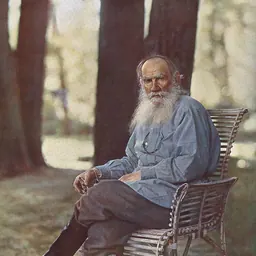
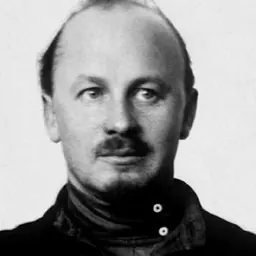
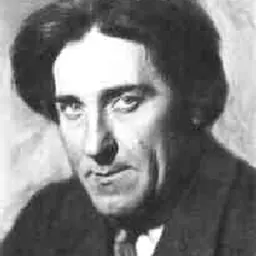
People in Sergei Yesenin's life
Named in this biography and alive at the same time




Related people
Same field, nearest in time

Contemporaries
People whose lives overlapped Sergei Yesenin's

Frequently asked questions
Who was Sergei Yesenin?
Russian poet (1895–1925)
When was Sergei Yesenin born?
Sergei Yesenin was born on 21 September 1895 in Konstantinovo.
When did Sergei Yesenin die?
Sergei Yesenin died on 28 December 1925 in Saint Petersburg, Angleterre Hotel.
What was Sergei Yesenin's occupation?
Sergei Yesenin was a poet and lyrical poet.
What nationality was Sergei Yesenin?
Sergei Yesenin was Russian.
Sources & further reading
Cite this page
APA: Biography.guide. (2026). Sergei Yesenin. https://biography.guide/sergei-yesenin/
MLA: "Sergei Yesenin." Biography.guide, https://biography.guide/sergei-yesenin/.
Chicago: "Sergei Yesenin." Biography.guide. https://biography.guide/sergei-yesenin/.
Data last updated: 2026-09-26 · Spot an error? Report a correction.
Page generated 2026-09-27 05:13 UTC