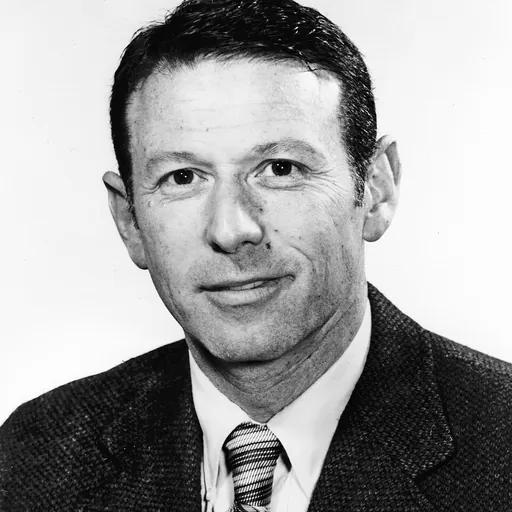
Paul Berg
American biochemist, Professor emeritus at Stanford University & Nobel laureate in Chemistry
About Paul Berg
Lived 1926 – 2023 (aged 96). Paul Berg was an American biochemist, molecular biologist, chemist, researcher, university teacher and biologist, known for Recombinant DNA.
Paul Berg (June 30, 1926 – February 15, 2023) was an American biochemist and professor at Stanford University. He received the 1980 Nobel Prize in Chemistry "for his fundamental studies of the biochemistry of nucleic acids, with particular regard to recombinant-DNA".
Berg received his undergraduate education at Penn State University, where he majored in biochemistry. He received his PhD in biochemistry from Case Western Reserve University in 1952. Berg worked as a professor at Washington University School of Medicine and Stanford University School of Medicine, in addition to serving as the director of the Beckman Center for Molecular and Genetic Medicine.
In addition to the Nobel Prize, Berg was presented with the National Medal of Science in 1983 and the National Library of Medicine Medal in 1986. Berg was a member of the Board of Sponsors for the Bulletin of the Atomic Scientists.
Early life and education Berg was born in Brooklyn, New York City. He was the son of a Russian Jewish immigrant couple, Berg graduated from Abraham Lincoln High School in 1943, received his Bachelor of Science degree in biochemistry from Penn State University in 1948 and PhD in biochemistry from Case Western Reserve University in 1952. He was a member of the Jewish fraternity, ΒΣΡ.
Research and career
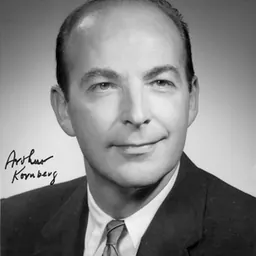
Academic posts After completing his graduate studies, Berg spent two years (1952–1954) as a postdoctoral fellow with the American Cancer Society, working at the Institute of Cytophysiology in Copenhagen, Denmark, and the Washington University School of Medicine, and spent additional time in 1954 as a scholar in cancer research with the department of microbiology at the Washington University School of Medicine. He worked with Arthur Kornberg, while at Washington University. He was a professor at Washington University School of Medicine from 1955 until 1959. After 1959, Berg moved to Stanford University, where he taught biochemistry from 1959 until 2000 and served as director of the Beckman Center for Molecular and Genetic Medicine from 1985 until 2000.
Research interests Berg's postgraduate studies involved the use of radioisotope tracers to study intermediary metabolism. This resulted in the understanding of how foodstuffs are converted to cellular materials, through the use of isotopic carbons or heavy nitrogen atoms. Paul Berg's doctorate paper is now known as the conversion of formic acid, formaldehyde and methanol to fully reduced states of methyl groups in methionine. He was also one of the first to demonstrate that folic acid and B12 cofactors had roles in the processes mentioned.
Berg is arguably most famous for his pioneering work involving gene splicing of recombinant DNA. Berg was the first scientist to create a molecule containing DNA from two different species by inserting DNA from another species into a molecule. This gene-splicing technique was a fundamental step in the development of modern genetic engineering. After developing the technique, Berg used it for his studies of viral chromosomes.
Berg was a professor emeritus at Stanford.
Berg was a member of the Board of Sponsors of the Bulletin of the Atomic Scientists. Berg was recognized for "his fundamental studies of the biochemistry of nucleic acids, with particular regard to recombinant DNA", while Sanger and Gilbert were honored for "their contributions concerning the determination of base sequences in nucleic acids."
Other awards and honors He was elected a Fellow of the American Academy of Arts and Sciences and a member of the United States National Academy of Sciences in 1966. In 1983, Ronald Reagan presented Berg with the National Medal of Science. That same year, he was elected to the American Philosophical Society. In 1989, he received the Golden Plate Award of the American Academy of Achievement. He was elected a Foreign Member of the Royal Society (ForMemRS) in 1992. In 2005 he was awarded the Biotechnology Heritage Award by the Biotechnology Industry Organization (BIO) and the Chemical Heritage Foundation. In 2006 he received Wonderfest's Carl Sagan Prize for Science Popularization.
Death Berg died on February 15, 2023, at the age of 96.
Don’t just read it —
keep it.
Full-length biographies made to live with: read them, listen on the way to work, watch them tonight.
- E-book
- Audio
- Video
Instant download · yours to keep · every purchase keeps this site free
Important facts
People in Paul Berg's life
Named in this biography and alive at the same time


Related people
Same field, nearest in time




Contemporaries
People whose lives overlapped Paul Berg's


Frequently asked questions
Who was Paul Berg?
American biochemist, Professor emeritus at Stanford University & Nobel laureate in Chemistry (1926–2023)
When was Paul Berg born?
Paul Berg was born on 30 June 1926 in Brooklyn.
When did Paul Berg die?
Paul Berg died on 15 February 2023 in Stanford.
What was Paul Berg's occupation?
Paul Berg was a biochemist, molecular biologist, chemist, researcher, university teacher and biologist.
What was Paul Berg known for?
Paul Berg was known for Recombinant DNA.
What nationality was Paul Berg?
Paul Berg was American.
Sources & further reading
Cite this page
APA: Biography.guide. (2026). Paul Berg. https://biography.guide/paul-berg/
MLA: "Paul Berg." Biography.guide, https://biography.guide/paul-berg/.
Chicago: "Paul Berg." Biography.guide. https://biography.guide/paul-berg/.
Data last updated: 2026-09-20 · Spot an error? Report a correction.
Portrait: Wikimedia Commons · author & licence
Page generated 2026-09-27 04:57 UTC