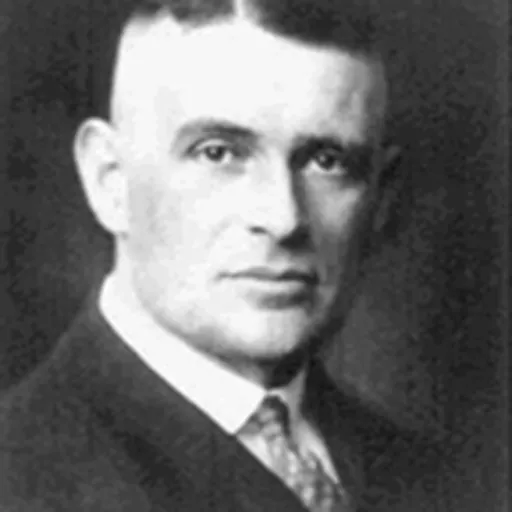
About Hermann Stieve
Lived 1886 – 1952 (aged 66). Hermann Stieve was a German physician, anatomist, histologist, university teacher and medical officer, known for Menstrual cycle and Nazi Germany.
Hermann Philipp Rudolf Stieve (22 May 1886 – 5 September 1952) was a German physician, anatomist and histologist. Following his medical studies, he served in the German Army during World War I and became interested in the effect of stress and other environmental factors on the female reproductive system, the subject of his later research. In 1921, he became the youngest doctor to chair the medical department of a German university. He taught medicine at the Humboldt University of Berlin, and was Director of the Berlin Institute of Anatomy at the Charité teaching hospital in the later years of his life.
Much of Stieve's research was conducted during the 1930s, after the Nazi Party had come to power in Germany. He did not join the party himself, but as an ardent German nationalist supported Adolf Hitler in the hope of restoring national pride. The Nazis imprisoned and executed many of their political opponents, and their corpses became Stieve's primary research material, with his full awareness of their origin.
While much of his work is still considered valuable—among other things, he provided scientific evidence that the rhythm method was not effective in preventing pregnancy—it is considered tainted by his effective collaboration with the Nazi regime's political repression, especially in light of its later genocides.
Early life Born to a Protestant family in Munich in 1886, he was the son of historian Felix Stieve. His elder brother was future diplomat Friedrich Stieve and his younger sister was future social worker Hedwig Stieve.
Hermann Stieve graduated from that city's Wilhelmsgymnasium in 1905. After a medical internship at Rechts der Isar Hospital, medical studies at the Ludwig-Maximilians-Universität München (LMU) and the University of Innsbruck in nearby Austria and a year's service in the military, he became a physician in 1912. He worked in anatomical research for a year before the First World War began in 1914.
Stieve returned to the Army, where he both tended to patients at the front and taught at the military medical school in Munich. His service was recognized with several awards. After the war he habilitated, writing a paper on the development of the jackdaw's ovary. He took a chair as a lecturer and researcher in anatomy and anthropology at the University of Leipzig. There he was known for giving his lectures in a black academic robe.
Stieve, who had accepted a professorship at what is now Humboldt University of Berlin as well as the directorship of its anatomical institute, reached an agreement with administrators at Plötzensee Prison outside the city to accept all bodies of those shot, hanged or beheaded, many of them political prisoners. Others were "Polish and Russian slave laborers executed for such acts as socializing with German women," according to Seidelman. Approximately 12,000 to 16,000 civilians were executed during the Nazi regime from 1933 to 1945 in Germany.
For the female corpses he was particularly interested in, Stieve made use of the prison's detailed recordkeeping. He got histories that included information about how the women had reacted to their death sentences, how well they had adjusted to prison life, and the timing of their menstrual cycles. When a woman of reproductive age was to be executed by the Gestapo, Stieve was informed, a date of execution was decided upon, and the prisoner told the scheduled date of her death. Stieve then studied the effects of the psychic trauma on the doomed woman's menstrual pattern. Upon the woman's execution, her pelvic organs were removed for histological (tissue) examination. Stieve published reports based on these studies without hesitation or apology. He wrote 230 papers on the effect of stress on the female reproductive system. Women facing execution ovulated less predictably, he found, and sometimes experienced what he called "shock bleedings". One paper argued that the Knaus–Ogino rhythm method of contraception was ineffective due to the variations of the cycle. Despite Stieve's errors in understanding the physiology, his conclusion is still accepted as correct. which tried to thwart Germany's invasion of the Soviet Union in 1941, were taken there after their executions near the end of 1942. The next year the body of Elfriede Scholz, sister of novelist Erich Maria Remarque, was also released to Stieve after her execution for "undermining morale" after saying that the war was lost.
When the bodies of Harnack and the Schulze-Boysens were in the examining room, one of Libertas' friends, Charlotte Pommer, who had gone into medical studies, recognized them and quit the program on the spot, since she knew that Libertas wanted to be buried somewhere quiet and tranquil. Later Pommer became a dissident herself, hiding a family member of one those involved in the 1944 assassination attempt on Hitler and eventually being jailed herself near the end of the war. She is the only one of Stieve's students or assistants known to have left the program for moral reasons. Stieve himself claimed to have refused the bodies of some of the assassination plotters but reportedly had no problem dissecting the body of Walter Arndt, a longtime friend who was executed in 1944. He reputedly kept Arndt's heart. He continued to manage his university's Institute of Anatomy and only his death broke his work in 1952. Despite their being involved in different war crimes half of Germany's doctors who were the members of the Nazi Party continued practicing after the war.
For his work, he was elected to the German Academy of Sciences at Berlin and the German Academy of Sciences Leopoldina. The Royal Swedish Academy of Sciences also extended membership to him. The hospital erected a bust of Stieve and named a lecture hall after him. He died from a stroke in 1952 while serving as the institute's director. He had wanted to leave his own body to science, but after his wife objected he was buried.
Legacy
Stieve's work continues to be both scientifically important and controversial, as its full circumstances become known. On his centennial in 1986, he was praised as "a great anatomist who revolutionised the basis of gynaecology through his clinical-anatomical research." In a 2009 review, German medical historians Andreas Winkelmann and Udo Schagen conclude that "Stieve was neither a murderer nor a fervent Nazi. Nevertheless, his research results were flawed by their ethical and political context."
Stieve's research, although not in a form directly attributed to him, was the basis of a controversy over rape and pregnancy during the 2012 U.S. Senate elections. In Missouri, Rep. Todd Akin, the Republican candidate, justified his opposition to allowing women impregnated during rapes to have abortions, asserted that in cases of "legitimate rape" the stress would make conception unlikely. The basis for the claim was a 1972 book by antiabortion activist Fred Mecklenburg, which cited a purported Nazi experiment in which women put under traumatic stress did not ovulate. , a historian and anatomist at Harvard Medical School recognized this as apparently an imperfect understanding of Stieve's findings.
Don’t just read it —
keep it.
Full-length biographies made to live with: read them, listen on the way to work, watch them tonight.
- E-book
- Audio
- Video
Instant download · yours to keep · every purchase keeps this site free
Important facts
People in Hermann Stieve's life
Named in this biography and alive at the same time



Related people
Same field, nearest in time


Contemporaries
People whose lives overlapped Hermann Stieve's


Frequently asked questions
Who was Hermann Stieve?
German physician, anatomist, and histologist (1886–1952)
When was Hermann Stieve born?
Hermann Stieve was born on 22 May 1886 in Munich.
When did Hermann Stieve die?
Hermann Stieve died on 5 September 1952 in Berlin.
What was Hermann Stieve's occupation?
Hermann Stieve was a physician, anatomist, histologist, university teacher and medical officer.
What was Hermann Stieve known for?
Hermann Stieve was known for Menstrual cycle and Nazi Germany.
What nationality was Hermann Stieve?
Hermann Stieve was German.
Sources & further reading
Cite this page
APA: Biography.guide. (2026). Hermann Stieve. https://biography.guide/hermann-stieve/
MLA: "Hermann Stieve." Biography.guide, https://biography.guide/hermann-stieve/.
Chicago: "Hermann Stieve." Biography.guide. https://biography.guide/hermann-stieve/.
Data last updated: 2026-09-21 · Spot an error? Report a correction.
Portrait: Wikimedia Commons · author & licence
Page generated 2026-09-27 04:59 UTC