
About Patrick de Silva Kularatne
Lived 1893 – 1976 (aged 83). Patrick de Silva Kularatne was a Sri Lankan politician and barrister.
Patrick de Silva Kularatne (31 March 1893 – 16 November 1976) (known as P de S Kularatne) was a Sri Lankan educationist and politician. He was a Member of the State Council of Ceylon (1942–1947) and Member of Parliament (1960–1965). He served as Principal of Ananda College and Dharmaraja College and established Nalanda College Colombo, Ananda Balika Vidyalaya, Moratuwa Vidyalaya and Dharmapala Vidyalaya. As a member of the executive committee on Education, he played an instrumental role in the realisation of free education from kindergarten to university.
Early life and education Born Sella Kapu Pamis de Silva in Ambalangoda on 31 March 1893, to Sella Kapu Isaac Appu, later known as Sella Kapu Isaac de Silva and Pinnaduwa Hewa Alonchihamy Lokuhamy. His father was a master carpenter and an owner of a small plantation. He was the youngest of five siblings and his mother died when he was two. He had three elder sisters and one elder brother Heron, who became a proctor in Galle.
Receiving his early education at the village school, he attended Richmond College in Galle, where his form master was C. W. W. Kannangara. He had passed the Cambridge Junior Local exam with distinction in arithmetic and mathematics in 1907 and Cambridge Senior Local exam with distinction in Latin and mathematics in 1909, and won the Ceylon Mathematics Prize in 1910. In 1912, he transferred to Wesley College, Colombo and won the Government Arts Scholarship to study in Britain. He left Ceylon in March 1913 and entered University of London. He gained a BA in mathematics and a BSc in 1916; having enrolled in the University College, London, he gained an LL.B in 1917, becoming a barrister from the Middle Temple in November 1917. He had adopted the name Patrick de Silva Kularatne by this time. He was offered the post of principle of Ananda College by D. B. Jayatilaka and returned to Ceylon.
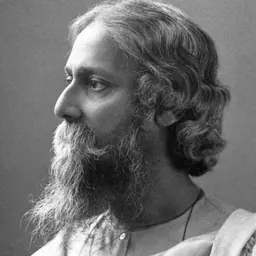
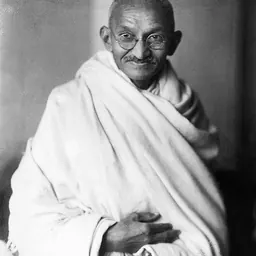
Educationist career Principal of Ananda College On 1 January 1918, following his return to Ceylon, he began his duties as principal of Ananda College. In 1919, the Dutugemunu fund was inaugurated. The funds raised paid for the first building of the Kularatne era, with nine classrooms. That same year, eight classes for Buddhist monks began. In the same month a block of land was made available for the college playground at Campbell Place. He was able to win the cooperation of current British Governor Sir Graeme Thomson, Sir Herbert Stanley and Sir Murchison Fletcher in his effort to acquire more space for Ananda College and Nalanda College Colombo. On 31 March 1922, Thompson laid the foundation stone for a sixteen classroom building at Campbell Place. In August of the same year the first stage of the two storied hostel was opened. Nobel laureate Rabindranath Tagore visited the college on 10 November 1922, as chief guest at the annual prize giving. He declared on that occasion: "I acknowledge that the life of Ananda is its humility and unassuming nature." Mahatma Gandhi visited Ananda in 1927. In 1928 the college won the Herman Loos cup for the best cadet platoon and the Stubs challenge shield for boxing. In 1929 Ananda won the CVRA shield for rifle shooting. Dr. Evans-Wendtz, an American Buddhist, visited Ceylon on the invitation of Kularatne and took part in a series of debates on Buddhist topics. Rev. Highfield of Wesley College and Rev. Father Legoc of St. Joseph's College contributed to this discussion. In a novel experiment for that era, Kularatne encouraged his staff to write textbooks in English on geography, history, botany, and other sciences. Under his auspices, the study of science became popular. Kularatne started classes for teaching Tamil to Sinhalese students and Sinhala to Tamil students. C. Suntharalingam, professor of mathematics of the Ceylon University stated: "Kularatne has helped the people of Ceylon to shed their inferiority complex, at least in the secondary schools. He contributed directly to a Buddhist revival and indirectly to a national revival in this Lanka of ours." Under his stewardship Ananda was registered as a collegiate school with a separate primary school. Students were coached to sit the University of London intermediate, pre-medical and entrance examinations. He introduced teaching kindergarten in the mother tongue him well before it was required by the Department of Education. He instilled a national consciousness in students and laid emphasis on a Buddhist education. The school became a viable alternative to missionary schools for Buddhist students. Kularatne promoted racial unity and co-existence. The teachers in his schools included Hindus, Muslims, Christians and Indians. The staff included C. Sundaralingam (a mathematician), Professor. G.P. Malalasekera, Dr. T.B Jayah, D. W. J. Perera and J. N. Jinendradasa. Jayah and Jinendradasa later took over the administration of Zahira College, Colombo and Nalanda College, Colombo respectively.
Principal of Dharmaraja College Kularatne served as the principal at Dharmaraja College from 1932 and 1936, on request of the Buddhist Theosophical Society. Dharmaraja was facing a financial crisis when Kularatne assumed duties, and even the Lake View premise was under threat of being sold. But Kularatne, was able to save the land and secure a home for Dharmaraja for the future. He restored the hostel and transformed the principal's quarters at the city premises to classrooms and a laboratory complex, and Dharmaraja started teaching science subjects in 1933. The first academic buildings in Lake View were built around this time and a part of the students were taken there. The roads and other facilities were also developed so that Lake View transformed from a shrubbery into a property any school would be proud to own. Cadetting in Dharmaraja also began during Kularatne's office and so did many other sports including tennis, swimming etc. In 1935 Dharmaraja was visited by four distinguished visitors from India; Rabindranath Tagore, Nandalal Bose, Uday Shankar and Kalki Krishnamurthy.
Later work He returned to Ananda in 1936, where he served as principal till his retirement in 1943. From 1943 to 1944, he served as the Manager of the Buddhist Theological Society Schools and again from 1949 to 1954. The society ran over 300 schools.
Political career State Council Kularatne, who had gained a reputation as an educationist, was active in pre-independence politics of Ceylon. He was a member of the Ceylon National Congress and served as its president. He contested the 1936 State Council election from Balapitiya electorate and was elected to the 2nd State Council of Ceylon. There he joined the executive committee on Health.
Post-independence He contested the 1947 general election from the Ambalangoda-Balapitiya electorate from the United National Party, but lost. He left the United National Party and joined the Sri Lanka Freedom Party when S. W. R. D. Bandaranaike formed the party in 1951. He was the second party secretary of Sri Lanka Freedom Party. He contested the 1952 general election from the Colombo Central electorate from the Sri Lanka Freedom Party, but lost. He played a major role in the Bandaranaike's landslide victory in the 1956 general election. Following the death of Bandaranaike and the political upheaval that followed, Kularatne joined the United National Party. He contested and lost the March 1960 general election from the Ambalangoda electorate, but was elected to the House of Representatives in the July 1960 general election and sat in the opposition. He crossed over and sat as an independent member, having resigned from the United National Party over its opposition to the governments move to take over private schools run by the Church by the Assisted Schools and Training Colleges (Special Provisions) Act No 5 of 1960, which he supported. He lost his seat in the 1965 general election when he contested from the Ambalangoda electorate from the Sri Lanka Freedom Party.
Don’t just read it —
keep it.
Full-length biographies made to live with: read them, listen on the way to work, watch them tonight.
- E-book
- Audio
- Video
Instant download · yours to keep · every purchase keeps this site free
Important facts
People in Patrick de Silva Kularatne's life
Named in this biography and alive at the same time





Related people
Same field, nearest in time




Contemporaries
People whose lives overlapped Patrick de Silva Kularatne's
Frequently asked questions
Who was Patrick de Silva Kularatne?
Sri Lankan politician (1893–1976)
When was Patrick de Silva Kularatne born?
Patrick de Silva Kularatne was born on 31 March 1893 in Ambalangoda.
When did Patrick de Silva Kularatne die?
Patrick de Silva Kularatne died on 16 November 1976.
What was Patrick de Silva Kularatne's occupation?
Patrick de Silva Kularatne was a politician and barrister.
What nationality was Patrick de Silva Kularatne?
Patrick de Silva Kularatne was Sri Lankan.
Sources & further reading
· Wikipedia: Patrick de Silva Kularatne
· DBpedia: Patrick de Silva Kularatne
Cite this page
APA: Biography.guide. (2026). Patrick de Silva Kularatne. https://biography.guide/patrick-de-silva-kularatne/
MLA: "Patrick de Silva Kularatne." Biography.guide, https://biography.guide/patrick-de-silva-kularatne/.
Chicago: "Patrick de Silva Kularatne." Biography.guide. https://biography.guide/patrick-de-silva-kularatne/.
Data last updated: 2026-09-22 · Spot an error? Report a correction.
Page generated 2026-09-27 04:58 UTC