
About Okumura Masanobu
Lived 1686 – 1764 (aged 77–78). Okumura Masanobu was a Japanese painter, graphic artist, xylographer, ukiyo-e artist, publisher and writer.
Okumura Masanobu (; 1686 – 13 March 1764) was a Japanese print designer, book publisher, and painter. He also illustrated novelettes and in his early years wrote some fiction. At first his work adhered to the Torii school, but later drifted beyond that. He is a figure in the formative era of ukiyo-e doing early works on actors and bijin-ga ("pictures of beautiful women").
Life and career
While Masanobu's early life is largely undocumented, he is believed to have been born about 1686, possibly in Edo (modern Tokyo). Edo was a small fishing village when Tokugawa Ieyasu chose it as his administrative capital of the Tokugawa shogunate, and by the early 17th century the city had prospered and its population had grown to half a million.
Masanobu appears to have been self-taught painter (though he did study poetry under Tachiba Fukaku); he is not known to have belonged to any artistic school. Over his career he used several gō art names, including Bunkaku, Genroku, Hōgetsudō, Shidōken and Tanchōsai.
Masanobu was known for staying true to his time and what he was good at. He created many new styles that are used today; without him art wouldn't be the same.
Masanobu's ukiyo-e were mostly produced in the Kyōhō era. They display the printmaker's sense of line, colour, and composition. The subjects are most often humorous and are executed in a lively manner with figures in brightly coloured, fashionable clothing.
Gallery
Legacy
The era Masanobu was born into was a prosperous and creatively fertile one, in which flourished the haiku poets Matsuo Bashō and Ihara Saikaku, the bunraku dramatist Chikamatsu Monzaemon, and the painter Ogata Kōrin. Masanobu was one of the most influential innovators of the ukiyo-e form, introducing the comic album, the pillar, two-colour, and lacquer prints, and popularizing Western-style perspective drawing. His career saw ukiyo-e evolve from its monochromatic origins to the verge of the full-colour nishiki-e revolution of Suzuki Harunobu's time.
Though less known to the public than masters such as Sharaku and Hokusai, Masanobu has gained the regard of connoisseurs as one of the greatest ukiyo-e artists, held in esteem by Japanese collectors such as Kiyoshi Shibui and Seiichirō Takahashi, and Westerners such as Ernest Fenollosa, Arthur Davison Ficke, and James A. Michener.
Don’t just read it —
keep it.
Full-length biographies made to live with: read them, listen on the way to work, watch them tonight.
- E-book
- Audio
- Video
Instant download · yours to keep · every purchase keeps this site free
Important facts
more
Shimmyō, Genpachi, Baiō, Masanobu Okumura, Akahyōtan, Masanonu Okumura, Okamura MasanobuPeople in Okumura Masanobu's life
Named in this biography and alive at the same time
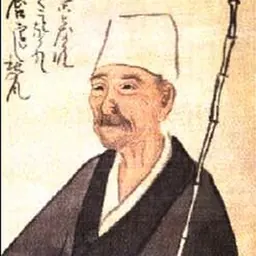




Related people
Same field, nearest in time




Contemporaries
People whose lives overlapped Okumura Masanobu's



Frequently asked questions
Who was Okumura Masanobu?
Japanese artist
When was Okumura Masanobu born?
Okumura Masanobu was born in 1686 in Edo.
When did Okumura Masanobu die?
Okumura Masanobu died in 1764.
What was Okumura Masanobu's occupation?
Okumura Masanobu was a painter, graphic artist, xylographer, ukiyo-e artist, publisher and writer.
What nationality was Okumura Masanobu?
Okumura Masanobu was Japanese.
Sources & further reading
Cite this page
APA: Biography.guide. (2026). Okumura Masanobu. https://biography.guide/okumura-masanobu/
MLA: "Okumura Masanobu." Biography.guide, https://biography.guide/okumura-masanobu/.
Chicago: "Okumura Masanobu." Biography.guide. https://biography.guide/okumura-masanobu/.
Data last updated: 2026-09-20 · Spot an error? Report a correction.
Page generated 2026-09-27 05:29 UTC