
About Norman Jaques
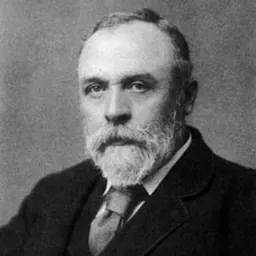
Lived 1880 – 1949 (aged 68). Norman Jaques was a Canadian politician and farmer.
Norman Jaques (June 29, 1880 – January 31, 1949) was a Canadian farmer and federal politician. Jaques represented the electoral district of Wetaskiwin in the House of Commons of Canada from 1935 to 1949. Jaques was a member of the Social Credit Party.
Early life and career
Jaques was born in London, England, and attended Eastborne College in Sussex. He moved to Canada in 1901, and became a farmer in Mirror, Alberta. He sought to establish a horse-breeding farm at one stage, but later abandoned the project. He had retired from farming before starting his political career.
Member of Parliament Jaques first ran for the Canadian House of Commons in the 1935 federal election, and defeated Cooperative Commonwealth Federation incumbent William Irvine amid a landslide victory for Social Credit candidates in Alberta. He was re-elected in the general elections of 1940 and 1945, receiving less than 40% of the vote on both occasions. Near the end of his career, he was a member of an external affairs committee that attended United Nations meetings at Lake Success. He died in office in 1949, having been re-nominated as a Social Credit candidate for the 1949 federal election. Social Credit had little standing outside of Alberta during this period, and elected few legislators at the national level. Jaques spent his entire parliamentary career as an opposition member.
The Social Credit movement gained a reputation for antisemitism in its early years, and Jaques was widely regarded as the most antisemitic member of the party's parliamentary grouping. He promoted C.H. Douglas's belief in an international financial Jewish conspiracy, and attempted to read excerpts from Protocols of the Elders of Zion into the Canadian parliamentary record. In private correspondence, he told a Saskatchewan resident that "the Jews control all means of gathering news and of propaganda". Jaques also believed that an international Jewish conspiracy was responsible for both communism and Zionism. He opposed allowing Jewish refugees into Canada prior to World War II on the argument that they constituted a communist invasion force, and once dismissed the charge of anti-Semitism against him as a "communist smokescreen". He was a vocal opponent of the creation of the State of Israel in 1947–1948, and described Zionism as "a political movement... to dominate the world". Janine Stingel has written that Jaques, in common with other ideologues in his party, "was either unwilling or unable to separate anti-Zionism from anti-Semitism".
Jaques met with American antisemitic leader Gerald L. K. Smith in 1947, and was quoted by the Montreal Gazette as saying that "Gerald Smith is truly a great Christian gentleman who has been cruelly maligned. He stands for Christian nationalism. But, of course, the Communists have smeared him as anti-semitic.... Smith believes in America for the Americans and in the American way of life.... I have tried to do the same with the Canadian way of life and Canadian freedom and I will keep right on trying". Jaques later retracted his support for Smith, and said that most of the quotations attributed to him by the Gazette were fabrications. He did, however, describe Smith as having "done more to expose communist plots that any other public man in the United States of America", and said that he would try to do the same in Canada. The Anti-Defamation League described Jaques as a "notorious anti-semite who has abused the privilege of entry into the United States by stirring up misunderstanding and tensions among racial and religious groups."
Jaques was also an opponent of the Canadian Broadcasting Corporation, which he accused of promoting communism.
Some other members of the Social Credit Party attempted to distance themselves from Jaques. Solon Earl Low, who became national party leader in 1944 and himself made antisemitic statements alleging a conspiracy of Jewish bankers, nevertheless said in private correspondence that Jaques "considered himself above party discipline and [...] absent[ed] himself from all caucuses". Toward the end of his life, Jaques's writings were banned from the official Social Credit party journal.
Jaques died of a heart attack in early 1949.
Electoral record
Don’t just read it —
keep it.
Full-length biographies made to live with: read them, listen on the way to work, watch them tonight.
- E-book
- Audio
- Video
Instant download · yours to keep · every purchase keeps this site free
Important facts
People in Norman Jaques's life
Named in this biography and alive at the same time

Related people
Same field, nearest in time





Contemporaries
People whose lives overlapped Norman Jaques's



Frequently asked questions
Who was Norman Jaques?
Canadian politician
When was Norman Jaques born?
Norman Jaques was born on 29 June 1880 in London.
When did Norman Jaques die?
Norman Jaques died on 31 January 1949.
What was Norman Jaques's occupation?
Norman Jaques was a politician and farmer.
What nationality was Norman Jaques?
Norman Jaques was Canadian.
Sources & further reading
Cite this page
APA: Biography.guide. (2026). Norman Jaques. https://biography.guide/norman-jaques/
MLA: "Norman Jaques." Biography.guide, https://biography.guide/norman-jaques/.
Chicago: "Norman Jaques." Biography.guide. https://biography.guide/norman-jaques/.
Data last updated: 2026-09-20 · Spot an error? Report a correction.
Page generated 2026-09-27 04:58 UTC