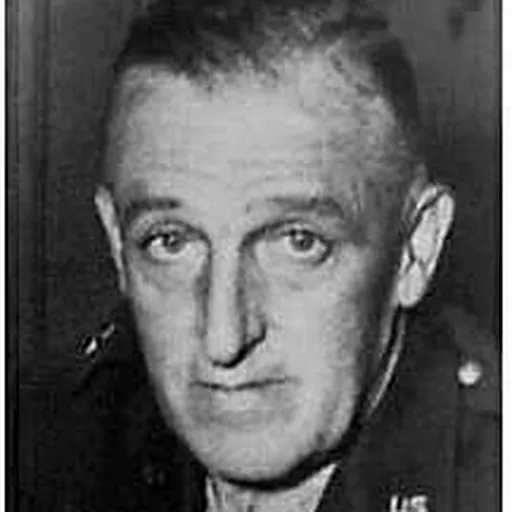
About Norman Cota
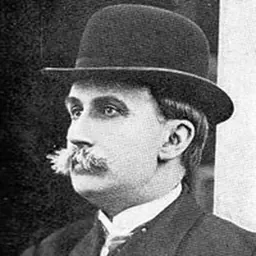
Lived 1893 – 1971 (aged 78). Norman Cota was an American military personnel.
Norman Daniel Cota Sr., nicknamed "Dutch" (May 30, 1893 – October 4, 1971) was a senior United States Army officer who fought during World War II. Cota was heavily involved in the planning and execution of the Allied invasion of Normandy, in June 1944, codenamed Operation Neptune, and the subsequent Battle of Normandy. He is known for rallying demoralized troops on Omaha Beach on D-Day, by engaging in combat beside them and personally leading their first successful breakout, for which he was awarded the Distinguished Service Cross (DSC).
Early life and military career Cota was born in Chelsea, Massachusetts, son of George William Cota, a former railroad telegrapher (later a merchant), and Jessie H. Mason, a school teacher whose family lines can be traced to Capt. Hugh Mason and Hester Welles (Wells) on "The Francis", part of "The Winthrop Fleet", the secord or third ship that arrived after the arrival of "The Mayflower". He attended Worcester Academy for three years beginning in the fall of 1910. While playing football there, his teammates nicknamed him "Dutch;" the name stuck with him, but its origins remain unclear.
In June 1913, he was accepted to the United States Military Academy (USMA) at West Point, New York. The U.S. entered World War I on 6 April 1917, so the Class of 1917 graduated on 20 April, seven weeks ahead of schedule. Cota played for the Army Cadets football team, where he was a teammate of Dwight D. Eisenhower and Omar Bradley.
Cota, graduating 79th in a class of 139, was commissioned as a second lieutenant in the Infantry Branch, and his first assignment was with the 22nd Infantry Regiment. Due to the outbreak of war, Cota was quickly promoted to first lieutenant, then captain after only a few months. By the time he had accumulated 18 months of active duty, he was a major.
Between the wars In 1919, the Army downsized and Cota reverted to captain from his temporary wartime rank of major. It took an appeal to Congress for him to be absolved of having to personally repay the stolen funds. He then became the executive officer (XO) for the 16th Infantry Regiment He was promoted to the one-star general officer rank of brigadier general in the Army of the United States (AUS) on February 2, 1943 was commanded by his fellow West Point classmate, Major General Charles H. Gerhardt. During the planning for D-Day, he opposed daylight landings, believing a pre-dawn assault would stand a better chance of success. A year before the invasion, at the Conference on Landing Assaults, Cota had argued in favor of striving for tactical surprise:
It is granted that strategical surprise will be impossible to attain. Tactical surprise is another thing however...tactical surprise is one of the most powerful factors in determining success. I therefore, favor the night landing. I do not believe the daylight assault can succeed.
Cota was not alone in his opposition. Major General Leonard T. Gerow, commander of V Corps, and Admiral John L. Hall Jr., commander of Amphibious Force "O" (the naval force responsible for delivery of the 1st Infantry Division to the beach), both fought to change the Operation Overlord plan, pleading for a nighttime assault.
However, the high command decided otherwise, concluding that naval and air bombardment would hopefully neutralize, or in the best case, eradicate, enemy opposition. The plan for Omaha essentially called for hurling infantry directly at a prepared enemy position, a position that was enhanced by the concave shape of the beach (effectively promoting enemy crossfire into the "basin" of the concavity), natural and man-made obstacles, bad weather and other factors.
Most D-Day commanders assured their men that the Germans would be annihilated by the Allies' pre-invasion firepower, and that the defenders were, in any case, outnumbered, inexperienced and demoralized. All of these beliefs were to be proved woefully inaccurate. On the afternoon of June 5, Cota gave an accurate assessment to the staff of the 29th Infantry Division:
This is different from any of the other exercises that you've had so far. The little discrepancies that we tried to correct on Slapton Sands are going to be magnified and are going to give way to incidents that you might at first view as chaotic...You're going to find confusion. The landing craft aren't going in on schedule and people are going to be landed in the wrong place. Some won't be landed at all...We must improvise, carry on, not lose our heads.
While Cota had a far less optimistic view of the plan than the high command, even he did not completely predict the extent of the near-catastrophe that awaited V Corps (composed of the 29th Infantry Division and the famous "Big Red One" 1st Infantry Division) on Omaha Beach.
Cota landed with a part of the 116th Infantry Regiment, part of the 29th Division, in the second wave, approximately one hour after H-Hour Two quotes Cota spoke during the initial fighting later became famous:
In a meeting with Max Schneider, commander of the 5th Ranger Battalion, Cota asked "What outfit is this?" Someone yelled, "5th Rangers!" In an effort to inspire Schneider's men to leave the cover of the seawall and advance through a breach, Cota replied, "Well, God damn it, if you are Rangers, then get up there and lead the way!" He was also credited with calmly rallying his troops with the statement "Gentlemen, we are being killed on the beaches. Let us go inland and be killed."
For his heroic leadership on D-Day and in the days and weeks afterwards, he was awarded the Distinguished Service Cross (DSC), the citation for which reads:
With the coast of Normandy eventually secured, Allied forces advanced toward Paris. On August 14, 1944, Cota was replaced as assistant division commander by Leroy H. Watson and assigned to command the 28th Infantry Division, succeeding Brigadier General James Edward Wharton, who had been killed in action by a sniper, just hours after assuming command.
In the late 1950s, he was the civil defense director for Montgomery County, Pennsylvania.
He died in Wichita, Kansas, on 4 October 1971, and he is buried with his first wife Connie at the West Point Cemetery in West Point, New York.
Personal life Cota married writer and teacher Constance Martha "Connie" Alexander at the Episcopal Church of the Incarnation in New York City on November 1, 1919.
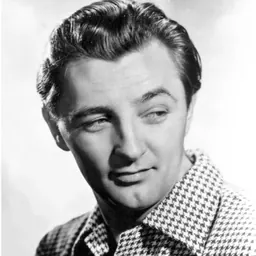
The Cotas were the parents of two children, Ann (23 October 1920 – 31 August 1996), the first girl born at the cadet hospital at West Point and Norman Daniel "Dan" Cota Jr. (15 December 1921 – 18 March 1988). He received a Purple Heart and a second Silver Star in the attack at Saint-Lô. spoke Cota's "let us go inland" quote. Robert Mitchum, who portrayed Cota, delivered another quote in his dialogue, one actually attributed to Colonel George A. Taylor: "There are only two kinds of people who are staying on this beach: those who are already dead and those that are gonna die. Now get off your butts, you guys are the fightin' 29th."
Don’t just read it —
keep it.
Full-length biographies made to live with: read them, listen on the way to work, watch them tonight.
- E-book
- Audio
- Video
Instant download · yours to keep · every purchase keeps this site free
Important facts
People in Norman Cota's life
Named in this biography and alive at the same time




Related people
Same field, nearest in time




Contemporaries
People whose lives overlapped Norman Cota's

Frequently asked questions
Who was Norman Cota?
U.S. Army Major General (1893–1971)
When was Norman Cota born?
Norman Cota was born on 30 May 1893 in Chelsea.
When did Norman Cota die?
Norman Cota died on 4 October 1971 in Wichita.
What was Norman Cota's occupation?
Norman Cota was a military personnel.
What nationality was Norman Cota?
Norman Cota was American.
Sources & further reading
Cite this page
APA: Biography.guide. (2026). Norman Cota. https://biography.guide/norman-cota/
MLA: "Norman Cota." Biography.guide, https://biography.guide/norman-cota/.
Chicago: "Norman Cota." Biography.guide. https://biography.guide/norman-cota/.
Data last updated: 2026-09-24 · Spot an error? Report a correction.
Portrait: Wikimedia Commons · author & licence
Page generated 2026-09-27 05:08 UTC