
About Murray MacLehose
Lived 1917 – 2000 (aged 82). Murray MacLehose was a British politician, diplomat, linguist, sinologist and farmer.
Crawford Murray MacLehose, Baron MacLehose of Beoch, (; 16 October 1917 – 27 May 2000), was a British politician, diplomat and colonial official who served as the 25th Governor of Hong Kong, from 1971 to 1982. He was the longest-serving governor of the colony, with four successive terms in office. He previously worked for the British Council in China and was the British ambassador to South Vietnam and Denmark.
Although MacLehose came from a diplomatic background and lacked colonial administrative experience, he was generally regarded as one of the most successful and popular governors of Hong Kong due to the number of social reforms enacted during his time and for Hong Kong's economic success during his time in office. Although his tenure as governor finished before formal British-Sino negotiations over Hong Kong commenced, he sought to improve diplomatic relations with China and held talks with Deng Xiaoping.
Early life and career Murray MacLehose was born in Glasgow, Scotland, on 16 October 1917, the second child of Hamish Alexander MacLehose who owned a printing business and Margaret Bruce Black. He was born whilst his father was away serving with the 8th Battalion of the Scottish Rifles during the First World War. MacLehose attended Rugby School in 1931 and Balliol College, Oxford where he read modern history. trained Chinese guerrillas to operate behind Japanese lines to carry out sabotage. He was detained by the Japanese army in December 1941 before being repatriated back to Britain in 1942. He returned to China to work with British naval intelligence. During one episode, he reportedly walked into a club in Shantou controlled by the Japanese army where he calmly ordered a gin and tonic before leaving without obstruction. MacLehose returned to Britain in 1950 in the aftermath of the Chinese Civil War in which the Chinese Communist Party took power. and allowed MacLehose to proceed to his next post as British ambassador to the Republic of Vietnam in 1967.
MacLehose, who stood well over six feet tall, avoided wearing his gubernatorial uniform, which made him ill at ease but wore a traditional colonial office uniform when he was sworn in as Governor by Hugh Selby Norman-Walker.
A diplomat with a British Labour Party background, MacLehose introduced a wide range of reforms during his time in office that laid the foundation of Hong Kong as a cohesive, self-aware society. He had Chinese recognised as an official language for communication, alongside English. He greatly expanded welfare and set up a massive public housing programme. Under intense public pressure, he created the ICAC to root out corruption. By establishing the District Boards, he greatly improved government accountability. He oversaw the construction of the Mass Transit Railway, Hong Kong's transportation backbone, and other major infrastructure projects. On his watch, community and arts facilities were expanded, and public campaigns, such as against litter and violent crime, were introduced.
These changes required approval from the UK Government Treasury for increased expenditure, and it was against some opposition that, in his first two years in office, Hong Kong government expenditure grew by over 50%.
In private, MacLehose was a supporter of gay rights and was urged by activist Elsie Tu and members of the Hong Kong Anglican Church to reform laws that made homosexual acts illegal in line with international human rights standards. However, MacLehose chose not to change the laws out of concern that it would be met with hostility by the more socially conservative Chinese population. Homosexuality was later decriminalized in Hong Kong by the British administration and Legislative Council in 1991.
MacLehose was convinced China would eventually reclaim Hong Kong and opposed any significant move towards constitutional democracy in Hong Kong.
Under MacLehose's tenure, Hong Kong faced significant problems with illegal immigration from mainland China due to political turmoil following the Chinese Cultural Revolution. MacLehose issued the Immigration Ordinance of 1971 which mandated only those who have lived in Hong Kong for seven years can be issued a Hong Kong permanent resident identity card. He also initiated the "catch and release" policy of deciding to repatriate all captured illegal immigrants to China. MacLehose also listed 24 to 26 October 1979 as a three-day grace period to allow illegal immigrants who had already come to Hong Kong to apply for Hong Kong identity cards while police and border patrols with the mainland were intensified. His tenure also saw the arrival of Vietnamese boat people following the Fall of Saigon. MacLehose found sites across Hong Kong to set up twelve refugee centers, which were jointly managed by the Hong Kong government and the United Nations High Commissioner for Refugees. After MacLehose left office, the Vietnamese refugee problem continued to plague Hong Kong. Although the Hong Kong government later announced the implementation of a "lockdown policy" in July 1982 to prevent refugees from leaving refugee centers and reduce the impact of refugees on society. The refugee camps remained in operation until the Government of the Hong Kong Special Administrative Region closed the final camp in 2000.
Other notable policies Other major policies introduced during the MacLehose era included:
The introduction of nine years of compulsory education. The introduction of the Ten-year Housing Programme in 1972 to alleviate housing problems. The establishment of satellite 'new towns', such as Sha Tin and Tuen Mun. The establishment of the Country Parks. The establishment of the social assistance scheme. The construction of the Mass Transit Railway. An expansion of community facilities. The adoption of Chinese as an official language. The introduction of paid holidays. An increase in social service provision for the elderly. The introduction of redundancy payments for workers. The introduction of a major rehabilitation programme for the disabled and disadvantaged. An increase in the number of schools and hospitals. The introduction of Criminal and Law Enforcement Injuries Compensation. The introduction of Traffic Accident Victims Assistance. The establishment of the Jubilee Sports Centre The establishment of the Hong Kong Academy for Performing Arts
Relations with China In order to cooperate with the improvement of Sino-British relations, MacLehose took a series of actions to repair the tense relations between China and Hong Kong since the Cultural Revolution and the 7 June riots. MacLehose was the first Governor of Hong Kong to make an official visit to China since the founding of the People's Republic of China. Alexander Grantham had been the first Hong Kong governor had visited Beijing in 1955, but in a private capacity.
Hong Kong sovereignty negotiations
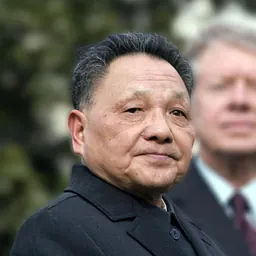
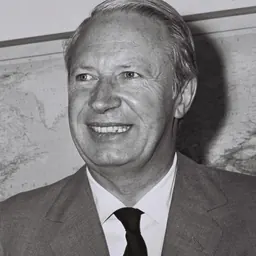
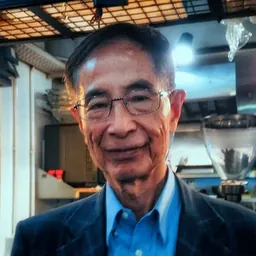
In 1979, MacLehose raised the question of Britain's 99-year lease of the New Territories (an area that encompasses all territories north of Boundary Street on the Kowloon Peninsula), with Deng Xiaoping. After returning to Hong Kong with the talks, MacLehose wished to avoid a public panic and did not publicly disclose the nature of the talks. He only quoted Deng Xiaoping as "telling Hong Kong investors to rest assured" but abandoned plans to reform Hong Kong's democratic model out of fear of provoking the Chinese government. Democratic Party politician Martin Lee once criticized MacLehose for not taking the lead in implementing further democratic reforms before China and Britain discussed the handover of Hong Kong and stated that this was a missed opportunity. MacLehose later insisted he did not "give Hong Kong away" to China but admitted out of concern of angering the Chinese government he felt an "obvious sense of powerlessness" in implementing democratic reforms and believed the implementation of universal suffrage for the Hong Kong Legislative Council during his time in office would have intensified conflict between the Chinese Communist Party and the Kuomintang. MacLehose often emphasized that his mission as the Governor of Hong Kong was to ensure that its citizens led a prosperous and peaceful life. When he was 80 years old, he, alongside former Prime Minister Sir Edward Heath and former Deputy Prime Minister and Foreign Secretary Lord Howe, attended the official swearing-in ceremony of the Hong Kong Special Administrative Region's Chief Executive on 1 July 1997, which was boycotted by the British Government.
Arms
Honours and recognition Member of the Most Excellent Order of the British Empire (MBE) (1946) Companion of the Most Distinguished Order of Saint Michael and Saint George (CMG) (1964) Knight Commander of the Most Distinguished Order of Saint Michael and Saint George (KCMG) (1971) Knight of the Most Venerable Order of the Hospital of St. John of Jerusalem (KStJ) (1972) Knight Commander of the Royal Victorian Order (KCVO) (1975) Knight Grand Cross of the Most Excellent Order of the British Empire (GBE) (1976) Life Peerage (1982) (Barony of MacLehose of Beoch, of Maybole in the District of Kyle and Carrick, and of Victoria in Hong Kong) Knight of the Thistle (KT) (1983) Honorary Doctor of Laws, University of Hong Kong The 100-kilometre MacLehose Trail, stretching from Sai Kung Peninsula to Tuen Mun in the New Territories, was named after him (Maclehose was an enthusiastic hiker) The MacLehose Medical Rehabilitation Centre, the MacLehose Dental Centre, the Lady MacLehose Holiday Village, and the Sir Murray MacLehose Trust Fund was also named to commemorate him or his wife
Don’t just read it —
keep it.
Full-length biographies made to live with: read them, listen on the way to work, watch them tonight.
- E-book
- Audio
- Video
Instant download · yours to keep · every purchase keeps this site free
Important facts
People in Murray MacLehose's life
Named in this biography and alive at the same time




Related people
Same field, nearest in time





Contemporaries
People whose lives overlapped Murray MacLehose's

Frequently asked questions
Who was Murray MacLehose?
British politician (1917–2000)
When was Murray MacLehose born?
Murray MacLehose was born on 16 October 1917 in Glasgow.
When did Murray MacLehose die?
Murray MacLehose died on 27 May 2000 in Ayrshire.
What was Murray MacLehose's occupation?
Murray MacLehose was a politician, diplomat, linguist, sinologist and farmer.
What nationality was Murray MacLehose?
Murray MacLehose was British.
Sources & further reading
· DBpedia: Murray MacLehose, Baron MacLehose of Beoch
Cite this page
APA: Biography.guide. (2026). Murray MacLehose. https://biography.guide/murray-maclehose/
MLA: "Murray MacLehose." Biography.guide, https://biography.guide/murray-maclehose/.
Chicago: "Murray MacLehose." Biography.guide. https://biography.guide/murray-maclehose/.
Data last updated: 2026-09-20 · Spot an error? Report a correction.
Page generated 2026-09-27 05:29 UTC